Choose artificial grass for sports fields as a complete system matched to your sport, playing level, use schedule, and site. Compare the turf, infill, shock pad, base, installation, and supporting test documents together before approving a proposal.
The roll with the most impressive specification can still leave you with an incomplete field quotation. A price may cover the carpet while excluding drainage, installation, testing, or equipment needed to maintain it. Those gaps become the buyer’s responsibility unless the contract assigns them clearly.
If you’re comparing artificial grass for sports fields, you need a common set of questions for every supplier. Photos and samples help narrow the choice, but they can’t establish how the finished playing surface will perform. Nor can one pile-height number tell you which sports the system supports.
This guide explains how to choose sports turf through seven connected decisions. You’ll build a use brief, read the specs, check evidence, assign site work, and compare complete costs. Use it to compare synthetic sports turf systems and plan care before you place an order.
Key Takeaways
- Select artificial grass for sports fields for the primary sport and required playing level before comparing products.
- Pile height, infill, backing, and any shock pad must match the proposed system and its evidence.
- FIFA’s football-turf programme distinguishes laboratory assessment from testing the final installed pitch.
- Compare quotations with the same area, civil works, freight, installation, testing, and care scope.
- Synthetic sports turf needs an operating plan, including inspection, compatible maintenance, and eventual renewal.
Choose artificial grass for sports fields by use
Set the primary sport and playing level
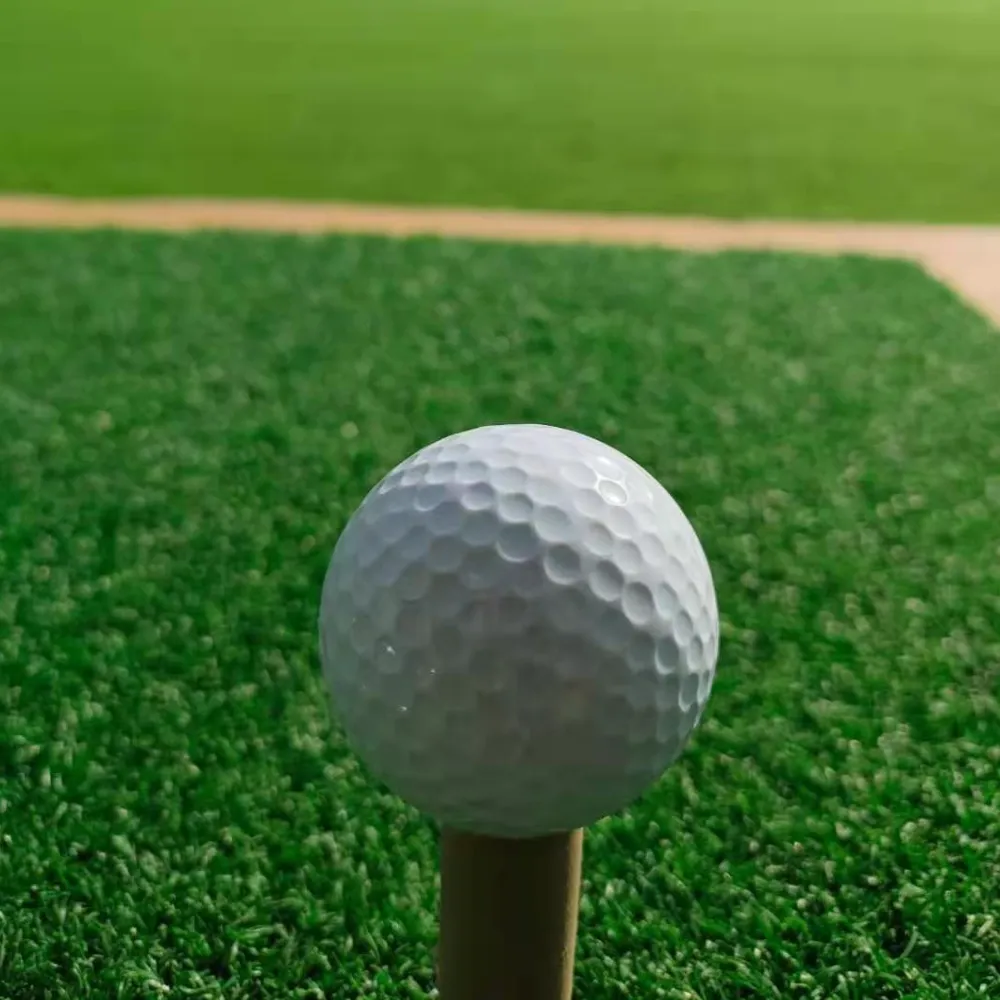
Start with the activity the field must serve. Association football, also called soccer, has different requirements from American football, rugby, hockey, and tennis. A school games area also needs a clearer description than simply “multi-sport.”
When specifying artificial grass for sports fields, record the primary sport, secondary activities, age groups, footwear, and competition requirements. Identify who will confirm that the proposed system meets the relevant rules. Recreational use and a sanctioned competition should not be treated as interchangeable.
To see the available product families, explore X-Nature’s sports turf alongside your project brief.
| Proposed use | Priorities to put in the brief | Decision to resolve |
|---|---|---|
| Association football / soccer | Ball roll and rebound, traction, impact response | Required playing level and applicable field-testing route |
| American football or rugby | Sport-specific player-surface requirements and markings | Relevant governing-body requirements for the exact system |
| Hockey or tennis | Ball behaviour, surface consistency, and court-specific construction | Whether a dedicated surface is required |
| Shared school or community field | Primary activity, secondary sports, footwear, and booking pattern | Which compromises each user accepts |
This table helps frame questions about artificial grass for sports fields; it is not a list of approved applications for one model. If two sports need conflicting surface characteristics, ask the designer to document the compromise. Separate activity areas may be more appropriate than one shared specification.
Count bookings and maintenance access
Hypothetical planning example: Alex manages a community sports ground with four teams. Each team trains twice weekly for 1.5 hours, creating 12 training hours; matches add another three hours. The planned total is 15 hours before school use, warm-ups, or other bookings.
Alex adds those extra activities to the brief and reserves access for inspection and care. The outcome is a clearer operating requirement, not a claim that any particular product can support that schedule.
Artificial grass for sports fields still needs time for maintenance and repairs. Identify concentrated wear at entrances, goalmouths, and repeated drill areas, rather than relying only on total weekly hours. For a soccer-specific project, the football turf buying guide develops the procurement questions further.
Compare artificial grass for sports fields as a system
Read the carpet specification in context
A useful sports artificial grass datasheet explains the fiber, backing, structure, and planned use. When comparing artificial turf for sports, read these details together. Each number describes part of the product; none proves how the finished field will play.
For artificial grass for sports fields, ask for these details in consistent units:
- Fiber material and construction: for example, polyethylene (PE), polypropylene (PP), monofilament strands, fibrillated tape, or combinations.
- Pile height: the fiber height above the backing, stated in millimetres.
- Gauge: spacing between tufting rows, with the unit specified.
- Stitch density: the number of stitches per square metre, using the same measurement basis across offers.
- Backing and coating: the construction that holds the tufts and connects to the proposed installation method.
- Mass and roll dimensions: distinguish yarn mass from total product mass and confirm the roll layout.
Monofilament describes individual strands; fibrillated yarn starts as a tape that opens into a network of strands. These construction labels help identify products, but they do not establish which system will perform better on your site. Ask what the quoted fiber construction contributes and which relevant tests support the proposal.
Compare sports field turf specifications as a set. A higher stitch count with a different gauge or yarn construction is not a direct quality ranking. Likewise, an unexplained number in a material description should not be assumed to have a particular unit.
When you shortlist artificial grass for sports fields, ask for a labelled sample and its datasheet. Match the product code, build, and version to the quote. If a part changes, check the affected system documents again.
Identify the infill and any shock pad
Infill is material placed among the turf fibers. Depending on the design, it can help support the pile, provide ballast, and contribute to the surface’s playing response. The material, grading, quantity, and installed depth belong in the system specification.
Artificial grass for sports fields may use sand, performance infill, both, or a design without loose infill. The label “non-infill” does not prove equal grip or impact response across products. It also does not define how much care each field needs.
Ask whether a shock pad forms part of the proposed assembly. If it does, identify the exact pad and confirm how it works with the carpet and infill. Thickness or a soft sample cannot substitute for appropriate whole-system performance evidence.
Two published X-Nature examples show why height alone is insufficient. The MCDS30 product sheet describes 30 mm infill-free turf; the DW50 product sheet lists 50 mm football turf. These are manufacturer-published specifications, not proof that either assembly meets a particular competition requirement.
For artificial grass for sports fields, compare the proposed use, complete construction, and supporting reports before choosing between those heights. The existing non-infill football turf guide explains additional suitability questions. Keep the material choice tied to the field brief rather than assuming that fewer components always mean a better project.
Verify sports-turf documents before ordering
Match each document to the quoted assembly
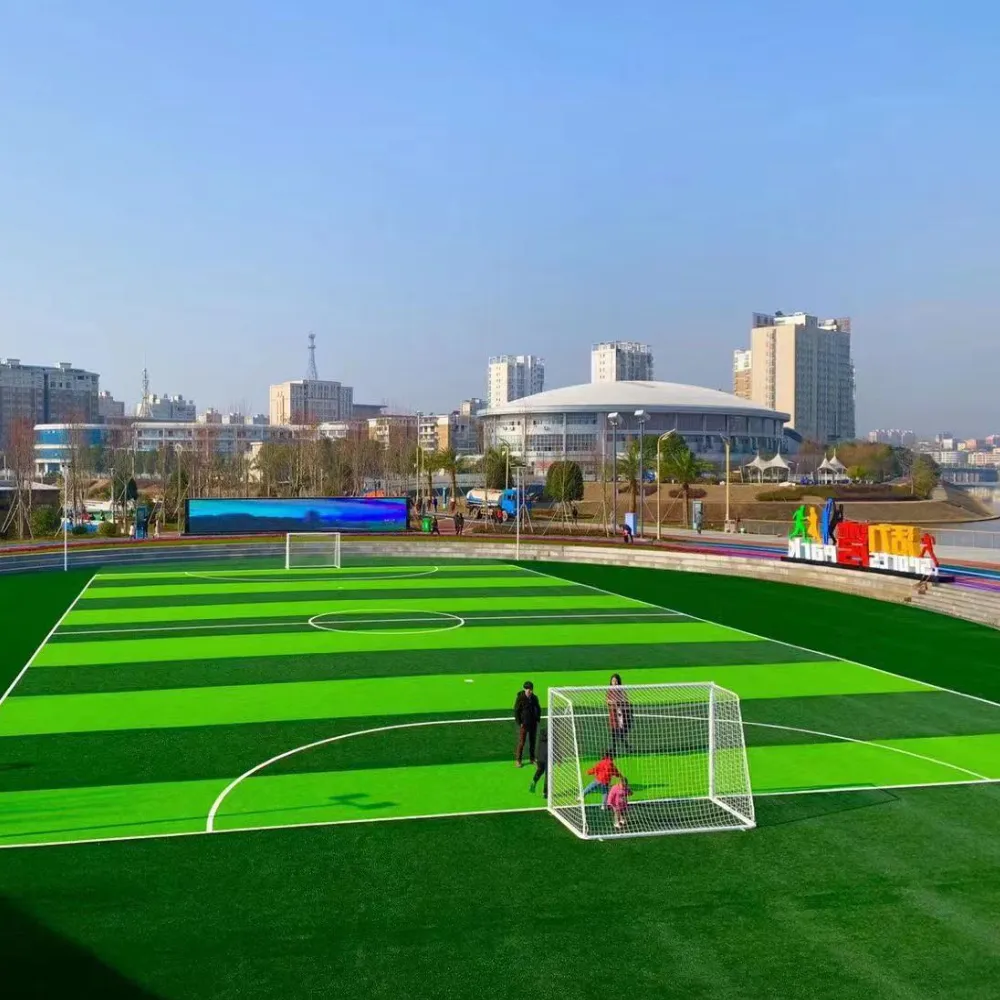
The report must match what you buy. Check the maker, product code, infill type and amount, and any pad details. Then check who ran the test, its date, and the method or programme edition.
For artificial grass for sports fields, keep a simple evidence register beside the quotation. Record which document supports each important claim and who will resolve any mismatch. A report for another carpet, pad, or infill combination should not close the review without an explanation.
| Document | What to check | What it does not establish alone |
|---|---|---|
| Product datasheet | Product identity, dimensions, construction, and units | Finished-field performance or competition approval |
| System laboratory report | Exact tested assembly, methods, results, and report scope | Acceptance of a field that has not been installed and tested |
| Installed-field test report | Pitch identity, date, test scope, and results | Ongoing performance after wear or changes |
| Warranty | Covered parties, defects, exclusions, use limits, and remedies | A guaranteed useful life under every operating condition |
| Care manual | Equipment, methods, restrictions, and record requirements | Suitability of unapproved machines or chemicals |
Make document checks part of purchasing artificial grass for sports fields, rather than an administrative task after delivery. If evidence is missing, record the affected decision as open. The supplier, designer, and buyer should know what must be resolved before work proceeds.
Separate programme status from general marketing language
The FIFA Quality Programme for Football Turf describes laboratory testing and testing of the final installation. Its overview explains that the final installation receives a quality mark when the relevant testing requirements are met. A laboratory report alone therefore does not certify your completed pitch.
When buying artificial grass for sports fields, ask whether a claimed status concerns a company, a tested system, or a named installed field. Check the applicable programme, edition, current status, and project requirements with the responsible body. FIFA documentation for association football should not be presented as approval for another sport.
Keep chemical and environmental evidence separate from playing-performance evidence. For example, EPA’s recycled tire-crumb research overview states that its characterization and exposure reports are not a risk assessment. Those reports do not establish a blanket safe-or-unsafe verdict for every infill or turf model.
Specific claims about artificial grass for sports fields need specific supporting evidence. A material label, certification logo, or test from a different assembly cannot answer every question about heat, chemical content, injury risk, or end-of-life handling.
Assign responsibility for the base and installation
Trace drainage through the whole site
Drainage starts at the surface and ends at an appropriate discharge or infiltration route. Water must pass through or across the relevant layers and leave the installation as designed. Permeable backing cannot correct an unsuitable base, a blocked outlet, or an unresolved site drainage problem.
Before ordering artificial grass for sports fields, have the site designer review ground conditions, levels, rainfall exposure, access, and the proposed outfall. Existing hard surfaces need assessment too. A base that appears flat may still have cracks, local depressions, or drainage details that conflict with the new system.
Ask how the supplier’s needs fit the civil design. Name who designs and checks the base, who fits the drains, and who seeks any required discharge approval. Base depth and slope must follow the site design. A generic drawing may not suit the ground or water route.
For artificial grass for sports fields, an existing base or pad is a candidate for assessment, not an automatic saving. Reuse depends on condition, compatibility, drainage, and the requirements of the proposed assembly. Include investigation and any remedial work in the project scope.
Agree hold points and acceptance responsibilities
A hold point is a stage where agreed checks must be completed before the next work begins. Useful project stages include base acceptance before covering, material checks on delivery, and inspection before final handover.
| Project stage | Name the responsible party | Record before moving on |
|---|---|---|
| Survey and design | Owner’s appointed designer | Site levels, ground assumptions, drainage route, and design scope |
| Civil works | Civil contractor and supervising designer | Base condition and compliance with the agreed design |
| Surface installation | Turf installer | Delivered materials, layout, seams, markings, and installation checks |
| Testing and handover | Appointed tester, installer, and owner | Required results, defects, care instructions, and acceptance decision |
Contracts for artificial grass for sports fields should explain how the parties handle discrepancies. If the delivered pad differs from the approved proposal, pause the affected work and confirm compatibility. If an inspection identifies a seam defect, assign the correction and any necessary follow-up check before acceptance.
FIFA’s installation guidance also connects planning, base work, drainage, installation, certification, and maintenance. Use that sequence to frame responsibilities, then follow the current requirements applicable to your project. Do not let an overall “installation included” line hide who is accountable for each stage.
Compare complete sports-field costs and quote scope
Separate turf supply from an installed field
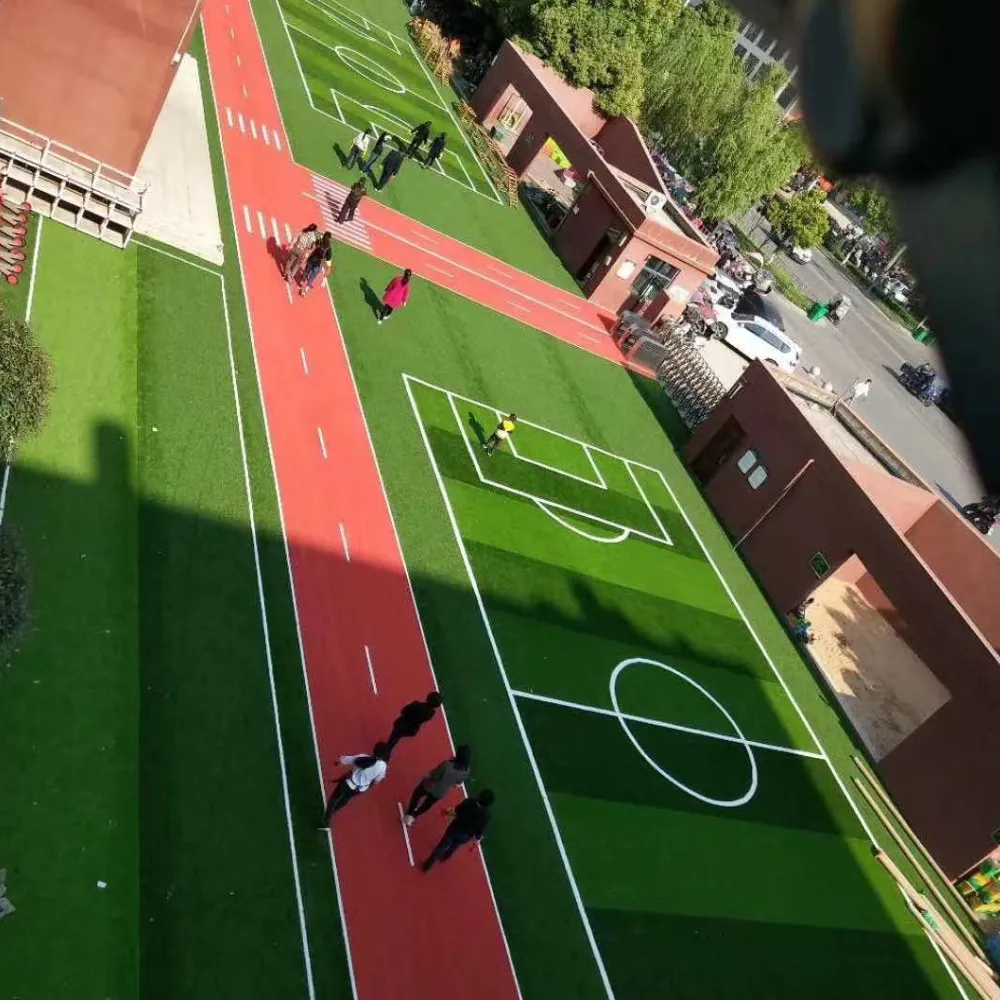
A price for artificial grass for sports fields needs a clear scope. Costs depend on the site, area, ground, chosen system, local labour, and freight. Include the agreed handover checks too. A roll price covers just one part of the budget.
Give every bidder the same request for quotation, or RFQ. Include a measured plan, intended use, destination, proposed programme, site information, and required documents. Ask bidders to identify exclusions and assumptions beside each price rather than leaving them in general terms.
Use this worksheet to compare artificial grass for sports fields on the same basis:
| Budget line | Input to request from every bidder |
|---|---|
| Carpet supply | Exact product, ordered area, roll layout, unit price, and currency |
| Infill and pad | Exact materials and quantities, or explicit confirmation that they are excluded |
| Ground and drainage work | Survey assumptions, excavation, base, drains, outlets, and remedial allowances |
| Installation and markings | Labour, seams, adhesives, lines, equipment, and site access |
| Freight and import costs | Named delivery point, unloading, customs responsibilities, duties, and taxes |
| Testing and handover | Required tests, documentation, corrective work, and retesting responsibility |
| Operation and renewal | Care equipment, labour, services, repairs, removal, and replacement assumptions |
Hypothetical quotation example: Jordan is comparing two offers for a 1,000 m² training area. One quote lists 1,000 m² of carpet; the other includes 50 m² of layout allowance, giving an ordered quantity of 1,050 m². Jordan initially treats the second offer as more expensive.
They request both roll layouts and ask each supplier to price the same required coverage and scope. The outcome is a comparable quantity basis before choosing a supplier. The 50 m² allowance is illustrative, not a standard waste rate or an X-Nature quote.
When purchasing artificial grass for sports fields, confirm the quantity basis as carefully as the unit price. Boundary strips, markings, cuts, and roll orientation can affect the order. Keep measured playing area separate from purchased material area.
Add operating and renewal assumptions
Compare artificial grass for sports fields over the same budget horizon, using the same treatment of labour, inflation, and taxes. Include routine care, specialist work, inspection or testing, repairs, and renewal where relevant. Do not assume the annual running cost is zero.
A total-cost sheet adds the first works, running costs, repairs, and any renewal or removal in the chosen period. State when each cost falls due and which quote or estimate supports it. If the replacement date is unknown, compare a few labelled plans. Don’t treat one plan as a promised service life.
Warranty duration and expected service life are different questions. Read the actual warranty for playing-hour conditions, maintenance requirements, exclusions, and available remedies. A long headline period does not tell you who pays for removal, labour, freight, or lost access.
For a football-specific comparison, use the football-field budget guide to separate supply, site works, delivery, and operating costs. It provides a budgeting structure; a current project price still requires a scoped quotation.
Plan sports turf maintenance and handover
Put tasks, owners, and records in the operating plan
Artificial grass for sports fields removes mowing from the surface-care routine, but it still needs inspection, cleaning, and system-specific maintenance. Decide who performs the work and who checks it. Confirm that the operator has the required training, access, and compatible equipment before opening.
Start with the care guide for the installed system. Plan to remove debris, check seams and edges, and groom the turf as directed. Include infill checks if the field has infill. Set the methods and timing to suit the system, use, weather, and relevant rules.
Keep a dated log of observations, work completed, materials added, repairs, and specialist visits. Note concentrated wear and any repeated pooling after rain. A photograph with a marked location is more useful for follow-up than a general note saying the surface looks worn.
The care plan for artificial grass for sports fields should also state when to restrict access and request specialist assessment. Open seams, displaced material, unusual surface behaviour, or unresolved drainage problems need an assigned response. Cleaning alone does not resolve structural or performance concerns.
The football turf maintenance checklist provides a more detailed record structure for football installations. Apply the instructions for your own system rather than transferring machine settings or chemicals from another field.
Prepare for heat, wear, and eventual renewal
Heat planning belongs in the care plan for artificial grass for sports fields. Cornell’s synthetic-turf guidance discusses heat and field care. Set checks, bookings, and access rules based on local conditions and relevant guidance. Color retention or UV resistance does not prove a cool playing surface.
Plan renewal using condition and performance information alongside the budget. The carpet, pad, infill, base, and drainage may require different decisions. Assess each layer before assuming it can remain in place or be reused with a replacement system.
End-of-life handling for artificial grass for sports fields also needs a local plan. Ask who will remove and separate materials, where they will go, and what route is actually available. A general recyclability claim is not evidence that a processor will accept your removed assembly.
Sports-field turf questions and buying checklist
What makes sports turf different from landscape grass?
Artificial grass for sports fields must be selected for the intended activity and relevant playing-performance requirements. Landscape appearance alone does not establish ball behaviour, traction, or impact response. Compare the complete assembly and its evidence rather than assuming similar-looking products are interchangeable.
Which pile height should I choose?
There is no universal best pile height for artificial grass for sports fields. Choose within the proposed sport-specific system, considering fiber construction, infill, any pad, and the applicable evidence. A taller pile or denser sample is not, by itself, proof of a better field.
Can non-infill turf be used for football?
It depends on the particular system, intended activity, and applicable requirements. A non-infill label alone does not establish competitive suitability or equivalent performance. Ask the supplier to define the use and supporting assembly evidence, including any pad or base conditions, before approving the proposal.
Does a laboratory report certify my pitch?
A laboratory report alone does not certify the final installed pitch under FIFA’s football-turf programme. The programme also assesses the final installation. Check that the project follows the applicable current process and that any claimed installed-field status identifies the correct pitch.
How much maintenance will the surface need?
Maintenance for artificial grass for sports fields depends on construction, use, weather, and the supplier’s instructions. Budget for routine inspection and care, plus repairs and specialist work when needed. Ask for the proposed care manual and equipment requirements before comparing operating costs.
Can one artificial surface serve several sports?
Sometimes, but the proposed sports may require different ball behaviour, traction, markings, or impact performance. Define the primary activity and document compromises for secondary uses. A “multi-sport” description should not replace a suitability review for each intended activity and level.
Prepare your buying brief
The clearest route to choosing artificial grass for sports fields is to settle the project requirements before comparing final prices. Start with the primary sport, playing level, secondary activities, and realistic booking schedule. Then describe the site and agree who will design, install, test, and maintain each part of the field.
Use the same brief for every proposal. Request an identifiable carpet, infill and pad arrangement where relevant, a defined civil-works scope, and documents that match the assembly. Compare material quantities, delivery responsibilities, installation, and handover on that common basis.
Keep open questions visible until someone resolves them. A missing drainage responsibility or unmatched report can affect the decision more than a small difference in the carpet price. Your operating budget should also cover the work needed after the first day of play.
To discuss artificial grass for sports fields for your project, send X-Nature your specification and quote inquiry. Include the sport, area, destination, current base condition, use schedule, and required documents. Ask the team to confirm suitable options, available support, sample availability, and the exact scope of its offer.