Introduction
Football stadiums around the world are shifting from natural grass to artificial turf. If you are a field manager looking for outdoor turf, or a club owner comparing football turf prices, understanding the nuances of polymer technology, grass fiber height, and infill materials is crucial. In this guide, we will provide the technical definition of modern football turf, offer a step-by-step installation process, and present comparative charts to help you understand the price structure.
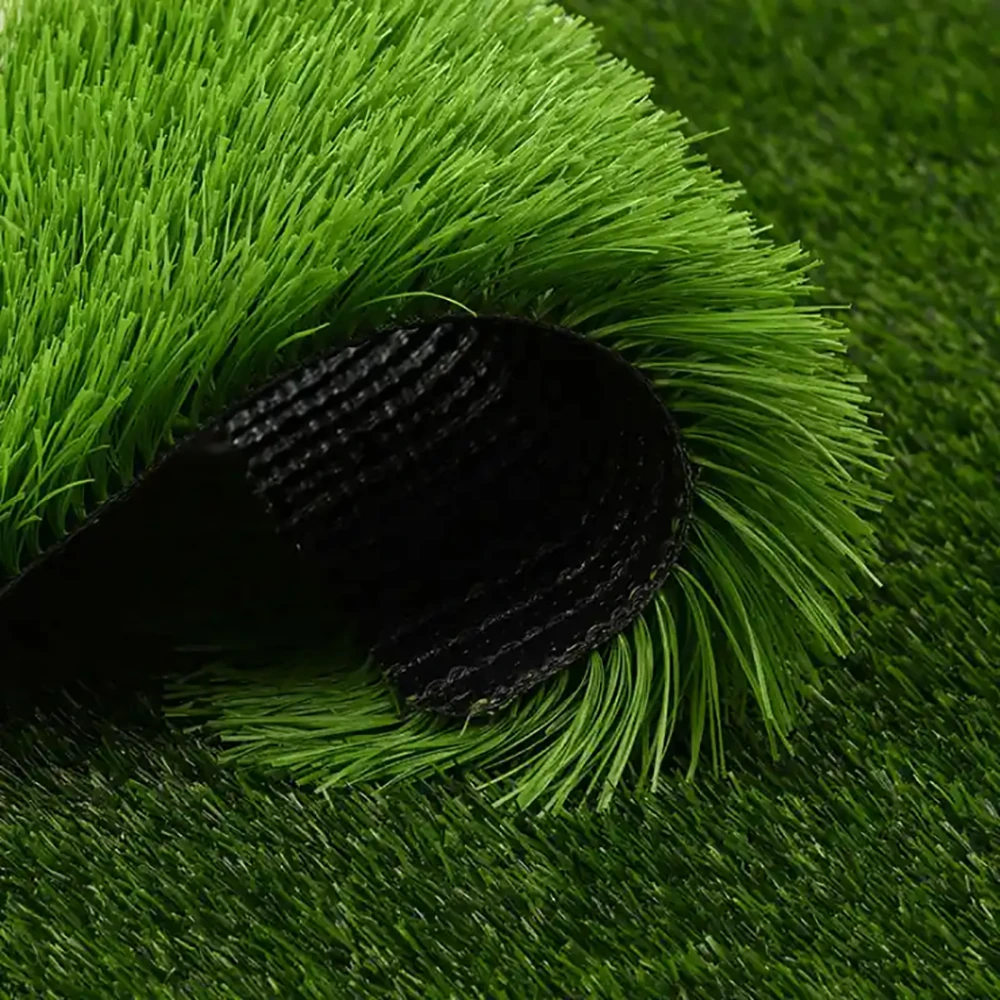
Part 1: Defining Modern Artificial Turf for Football
FIFA certification and competitive leagues require artificial turf for football to meet specific technical specs.
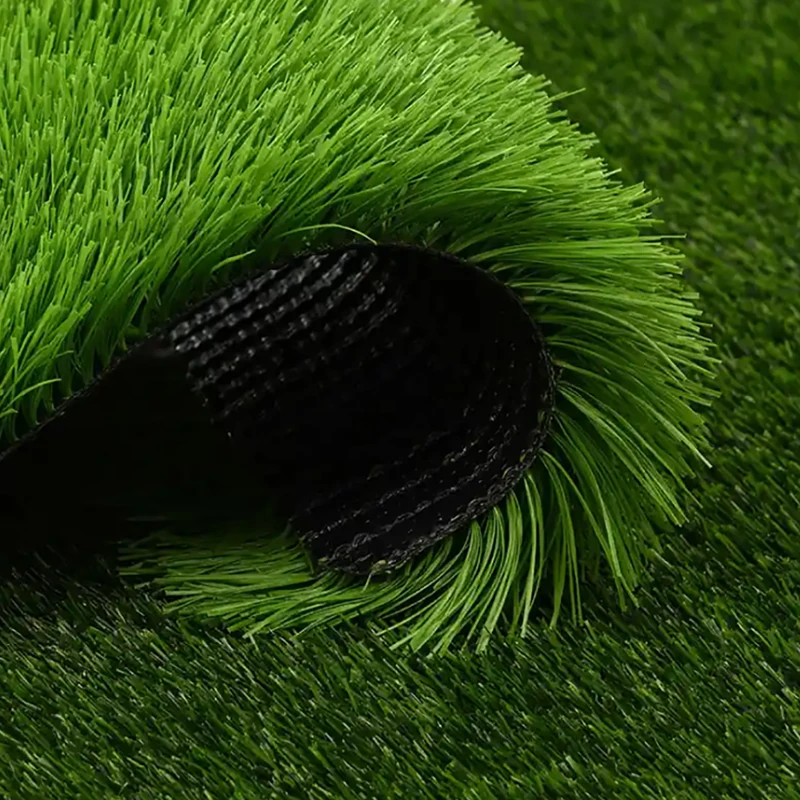
Definition: Football turf uses PP/PE fibers to mimic natural grass. Unlike landscape turf, sports turf features 40–60mm pile height, stitch density, and infill (silica sand, SBR rubber, or cork) to control ball roll, shock absorption, and traction.
50mm standard: The optimal height. At 30mm, the surface is too fast and hard (better for hockey). At 60mm, ball speed decreases excessively. The 50mm series (DW50, DS50, DJK50) offers the ideal balance—long enough for boot studs, short enough for predictable ball bounce.
Part 2: Hard Data & Comparative Chart
Price lists for soccer turf are among the most frequently searched queries in the industry. Prices will fluctuate depending on density (number of stitches per square meter), backing material (XPU and latex), and UV additives.
In the first quarter of 2026, the market reported that the average wholesale price of professional-grade 50mm turf ranged from 5.50 to 15.00 per square meter, depending on the specifications.
Chart: Performance Matrix (50mm Football Turf)
| Model | Pile Height | Density (Stitches/m²) | Weight (kg/m²) | Backing Material | Key Feature |
| DW50 (Value) | 50mm | 10,500 | 1.64 | XPU + Mesh | UV-Resistant / Non-toxic |
| DJK50 (Pro) | 50mm | 10,500 | 1.70 | XPU + Reinforced Mesh | Wear-Resistant / Shape Stability |
| DS50 (Elite) | 50mm | 10,500 | 2.51 | XPU + Heavy Mesh | Flame-retardant / High Realism |
Part 3: Step-by-Step Paving Process (For Outdoor Playground Turf & Fields)
Step 1: Site Leveling & Sub-Base Hardening
Requirement: A hard, impermeable foundation is mandatory.
● Action: Pour a concrete or asphalt base, or compact a “hardcore” (crushed stone) base with a 15mm sand leveling layer.
● Why: Unlike natural grass, artificial turf transfers impact directly to the sub-base. A soft base leads to ripples and unsafe play. For outdoor playground turf for kids, often a shock pad is installed under the turf at this stage (adds 3−5/m²).
Step 2: Panel Layout & Fiber Orientation
● Action: Roll out the large turf panels (standard width 4m). Do not stretch the turf; let it relax naturally in the sun for 1 hour to remove shipping creases.
● Critical Checklist: Check the fiber “lay.” All turf fibers have a natural grain. Ensure all panels face the same direction.
● Pro Tip: From the main entrance/stand, fibers should lean away from the viewer to eliminate glare.
Step 3: Seaming (The “Invisible Join”)
1. Procedure: Fold the edges of two adjacent lawn patches backward. Apply seam tape (a special fabric). Apply the XPU or PU adhesive evenly using a toothed spatula.
2. Waiting time: Wait for the adhesive to become “sticky” (slightly dry to the touch) – usually takes 15-20 minutes, the exact time depends on the humidity.
3. Compact: Lay the lawn onto the tape. Use heavy rollers (50 kg or more) or vibratory plate compactors to compact the joints.
4. Professional bonding techniques: For DS50 (2.51 kg lawn), to achieve a weld-like bonding effect, apply adhesive to both the tape and the lawn backing.
Step 4: Grooming & Infill (If applicable)
● Action: Once adhesive is set (2 hours), groom the fibers with a power brush to lift them upright.
● Infill: For 50mm football turf, infill is required. First spread silica sand (to weigh it down), then rubber granules (for shock). Brush again to settle the infill 10mm below the fiber tips.
Part 4: Specific Product Applications (DW50, DS50, DJK50, MCDS30)
When searching for artificial turf for football, you will encounter these specific models:
● DW50 (The All-Rounder): The three-color blend (Dark/Light/White) offers a professional TV broadcast look. Its “automatic water permeation” rate is 60+ liters/min/m², making it ideal for rainfall outdoor climates.
● DS50 (The Heavy Duty): Weighing in at 2.51kg/m², this is “armor grade.” It has flame-retardant properties (meets Class C flame-retardant standards), making it ideal for comprehensive high school sports fields that are used for more than 60 hours per week.
●DJK50 (Special Protection): Made with fibers specifically designed for sports protection, it has a slightly soft touch and reduces pressure on joints. Ideal for older players or rugby crossover fields.
● MCDS30 (Sand-Free Solution): 30 mm thick, theoretically suitable for non-commercial use (e.g., home backyard sports fields). Its density of 29,400 stitches per square meter creates an extremely dense “carpet” that requires no filling and prevents skin irritation for young children.
Part 5: Frequently Asked Questions (FAQ)
Q1: Is there a color difference between production batches?
A: Yes, slight color variation is an objective possibility in synthetic textile production. Factors include lighting during photography, display calibration, and batch dye lots. Recommendation: Calculate your total square footage (including 10% waste for cuts) and order all turf in a single production batch. Once laid, ensure fibers are brushed in the same direction; brushing against the grain creates an optical dark/light contrast. If you must join two batches, install a dividing line (like a white sideline stripe) to mask the seam.
Q2: How long does 50mm artificial turf last?
A: Based on UV-resistant data sheets provided by manufacturers (such as the DW50/DS50 specs), expected lifespan is 8-12 years for heavy competitive play (15-20 hours/week) and 15-20 years for light recreational play or outdoor playground turf applications. The primary failure point is not the fiber, but the backing and infill compaction.
Q3: Why does the football grass pricelist vary so much between suppliers?
A: The football grass pricelist is volatile because it depends on three raw material costs: Polyethylene (oil-derived), Polyurethane backing (chemicals), and logistics. Additionally, “FIFA Preferred” certification adds 1−2/m² to the price. Always ask for the “Dtex” (fiber thickness); a 13,500 Dtex fiber (like DW50) is much more durable than a 9,000 Dtex fiber.
Conclusion
Investing in artificial turf for football is a long-term decision. Although the price of soccer turf ranges from budget to high-end, the main considerations when choosing a turf are “stitch density” and “weight per square meter”.
For professional clubs, the DS50 (2.51 kg/m²) offers unparalleled durability under high-intensity use. For schools or outdoor venues, safety and low maintenance costs are primary considerations, making the sand-free MCDS30 or the balanced DW50 a better choice.
Final advice: Before purchasing, be sure to request a physical sample (at least 20 cm x 20 cm) from the artificial turf supplier. Spread it on the ground, wet it, and then kick the ball. You can judge the color by sight, and you can judge the safety by the feel of the foot.