Football turf maintenance starts with identifying the installed system, following its care instructions, and recording changes in field condition. Cleaning, brushing, and inspection belong in that plan, but the right equipment and tasks depend on the carpet, infill where present, and supporting construction.
For schools, clubs, and facility operators, the practical goal is a clear workflow: inspect the surface, carry out approved work, record the result, and escalate defects that need specialist attention. A tidy appearance alone does not establish that a field meets its performance requirements.
This football turf maintenance guide provides an operator framework and blank record fields. It does not replace the manufacturer’s instructions or set universal brushing intervals, infill depths, machine settings, or reopening criteria. Agree on those details for your field and keep the approved documents available to the people doing the work.
Five points to keep:
- Identify the installed carpet, system layers, and applicable care manual.
- Base inspections on use, site conditions, and relevant events.
- Separate routine cleaning from specialist work and repairs.
- Apply infill tasks only where the installed system requires them.
- Record defects, actions, restrictions, and the person approving follow-up.
Start football turf maintenance with the handover file
Before scheduling work, assemble the field’s handover records. Identify the carpet model and revision, installation date, base, any shock pad, infill components if applicable, and the installer. Obtain the maintenance manual, approved equipment guidance, warranty terms, and relevant inspection or test reports.
For a new project, the football turf buying guide helps organize the procurement questions. For an existing field, begin with the actual installed construction. A current catalogue cannot establish what was supplied several years earlier.
Confirm who does each task
Assign a person to inspect, another role where needed to approve specialist work, and a contact for defects. Some facilities combine those roles; others use a contractor. Football turf maintenance responsibilities should be clear before a problem appears.
Your football turf maintenance file should distinguish routine care, specialist treatment, repair, and performance testing. The FA’s 3G pitch guide separates routine and specialist maintenance and emphasizes manufacturer guidance. That February 2020 guide concerns 3G pitches; its examples should not be treated as instructions for every system.
Keep the latest approved manual alongside earlier revisions and note what changed. If you are unsure which documents apply, ask X-Nature for the relevant maintenance information with the model, order reference, installation details, and available photographs. Ask what is known about the supplied version rather than requesting a generic care promise.
Build a football turf maintenance inspection schedule
Use the manufacturer’s schedule as the starting point. Record actual use, weather, nearby vegetation, dust, and events that may affect the surface. Those records help the responsible operator review whether the inspection and work plan remains appropriate.
The table below is a planning framework, not a prescribed daily or weekly service interval. Agree on the checks and response times for your facility. Avoid changing machine settings or adding treatments simply because the booking calendar has become busier.
| Inspection trigger | Questions to check | Record |
|---|---|---|
| Before opening for planned use | Is there debris, visible damage, or a change requiring review? | Area, observation, and opening decision |
| After intensive use or an event | Are traffic zones, seams, edges, or markings different? | Location and follow-up action |
| After unusual weather | Is there standing water, displaced material, or visible damage? | Conditions and escalation |
| At planned service visits | Which approved tasks and checks are due? | Work completed and unresolved items |
| After repair | What checks are required before release? | Repair reference and authorized decision |
Give high-use areas their own map
Keep the existing high-wear areas in your football turf maintenance plan: goal areas, penalty spots, entrances, exits, and repeated training zones. Mark them on a simple field plan so different staff can record observations in the same place.
Include seams, inlaid lines, perimeter edges, and transitions in the walk-through. Where the system contains infill, record its condition using the approved method. Do not turn an uneven-looking patch into a diagnosis without checking the construction and maintenance history.
Illustrative scenario: A school moves repeated training drills to one corner of its field. The operator notes the change in use and adds that zone to the inspection map. This hypothetical example illustrates record keeping, not proof that the new schedule prevents wear.
Keep inspection and treatment separate in football turf maintenance. A check may identify a need for work, but it does not mean every listed treatment should be performed at every visit. Record why an action was selected and who authorized it.
Clean and brush using the approved method
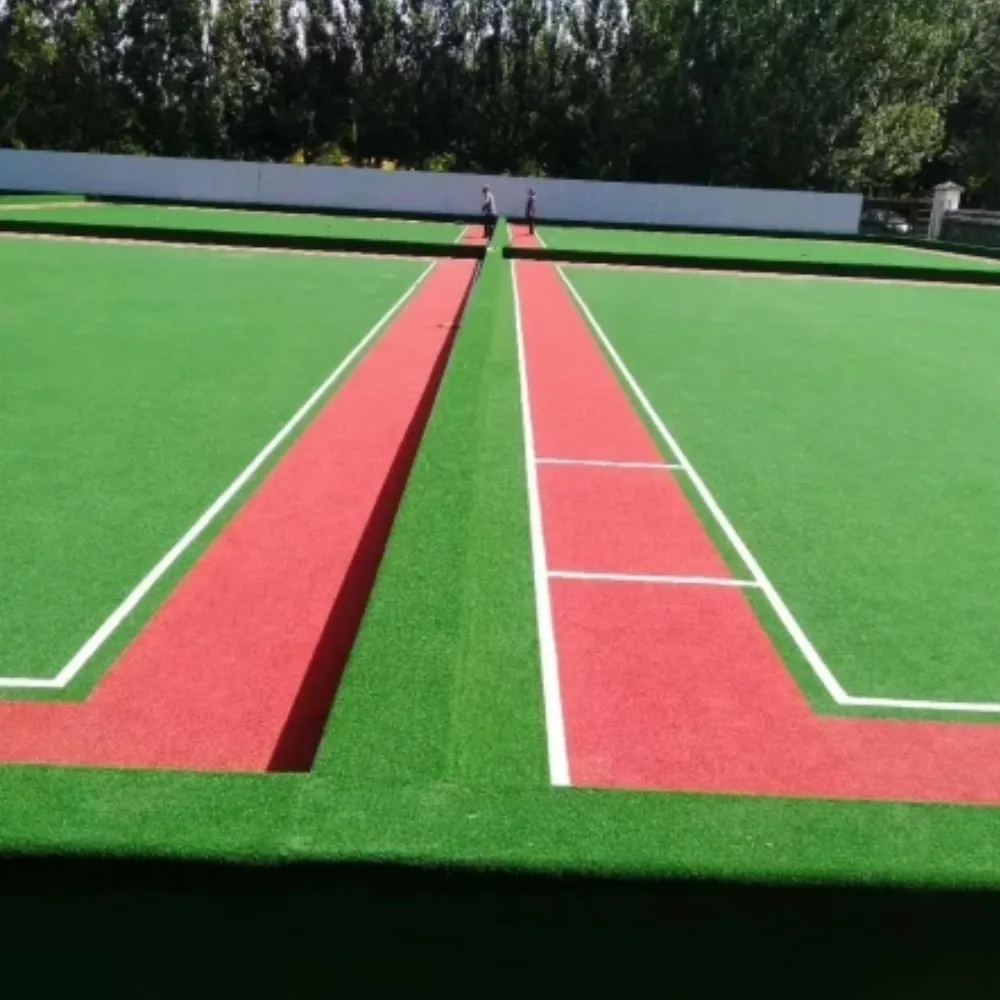
Remove visible litter and loose foreign objects through the agreed routine. Check the area before running grooming equipment. If sharp debris, unusual contamination, or an uncertain condition is present, follow the site’s response procedure rather than driving over it.
For football turf maintenance, cleaning and brushing serve different purposes. Cleaning addresses debris or contamination; brushing may address fiber orientation or redistribute material where appropriate. Neither should be described as a guaranteed cure for every change in surface condition.
Check equipment before work
Confirm the permitted brush, attachments, vehicle access, loading, and settings for the installed system. Use trained football turf maintenance staff and retain the equipment instructions. Do not copy a competitor’s tine depth, brush pressure, speed, or treatment interval into your field’s plan.
FieldTurf’s spring maintenance article illustrates the sequence of walking the field and removing debris before grooming. It is manufacturer guidance for its own systems, originally published in 2018. Its specific equipment and treatment details are not MCDS30 instructions.
Keep football turf brushing records simple: date, area, equipment, approved setting reference, operator, and observations before and after work. If the result differs from what the manual describes, stop repeating the treatment and ask the responsible specialist to review it.
Avoid broad cleaning assumptions
Do not assume that all cleaning chemicals, pressure washing, or mechanical tools are suitable. Ask for the permitted product and method before treating stains, biological growth, or other contamination. Keep the response tied to the material and the site’s procedures.
Artificial turf does not need mowing, but that does not make all water use unnecessary. Cleaning or other operating needs depend on the field and its instructions. Football turf maintenance should describe the approved task, not promise “no water” or a fixed saving without supporting project data.
Separate infill maintenance from non-infill care
Confirm whether the installed field uses stabilizing infill, performance infill, another specified material, or no loose infill. Use the handover schedule rather than deciding from a product label or a photograph. The distinction changes which maintenance tasks apply.
For an infilled system, football turf maintenance may include checking material distribution and depth against the approved specification. If replenishment or specialist work is needed, confirm the required material, method, and quantity basis. Do not substitute a different granule or add material to an unidentified system.
For a non-infill system, do not automatically carry over topping-up or infill decompaction tasks. It still needs the cleaning, inspection, and other care required by its own instructions. “Non-infill” does not mean maintenance-free.
Where MCDS30 belongs in the review
The MCDS30 product page describes a 30 mm sand-free football turf and lists 29,400 stitches/m². These manufacturer-published fields identify a product enquiry; they do not specify a brushing schedule or prove professional field suitability.
Use the non-infill suitability guide for selection questions. In this football turf maintenance plan, request the instructions for the exact supplied MCDS30 construction, including any supporting layers and permitted care methods.
Illustrative scenario: A contractor is asked to service two fields, one infilled and one described as sand-free. Before starting, the contractor checks their handover files and separates the task lists. This invented example does not establish the correct equipment or treatment for either field.
If the records are incomplete, mark the missing item in the football turf maintenance log. Obtain clarification before carrying out a treatment that depends on it. Submit the system details and proposed task to X-Nature when requesting information about a supplied product.
Escalate defects and record the reopening decision

Routine football turf maintenance is not a substitute for repair. When staff find an open seam, raised edge, persistent wrinkle, displaced material, unusual drainage, or another change, record the location and condition. Use the site’s procedure to decide whether access should be restricted while the issue is reviewed.
Football turf maintenance should define the escalation route before work begins. Name who receives a defect report, who can approve repair, and who decides whether the affected area or field can return to use. This guide does not set a universal defect size or closure threshold.
| Step | Operator record |
|---|---|
| Identify | Location, observation, date, and photographs |
| Control | Access decision and person responsible |
| Refer | Installer, maintenance contractor, or other assigned specialist |
| Repair | Approved scope, materials, and completion record |
| Review | Required checks, unresolved items, and release decision |
Keep installation issues in the acceptance process
Loose cut fibers or wrinkles may be seen after delivery or installation, but appearance alone does not establish their cause or acceptability. Retain the batch and roll information, record the condition, and ask the installer to address it against the agreed acceptance requirements.
Do not repeatedly brush a raised seam or persistent wrinkle in an attempt to hide it. Ask for the relevant review and repair instructions. A neat surface after grooming does not show that the underlying issue has been resolved.
For football turf maintenance involving drainage concerns, note where and when water remains, the weather, and recent work. Avoid diagnosing the problem solely from carpet drainage holes. The base, supporting layers, outlets, and their condition may also need investigation by the responsible party.
Illustrative scenario: A club records a raised seam during its opening check. The assigned manager restricts the affected area under the club’s procedure and refers the issue to its installer. The hypothetical example shows a reporting route, not a universal closure rule or a verified repair outcome.
Keep a football turf maintenance log and service budget
Use one field reference across inspection sheets, work orders, photographs, and contractor reports. A football pitch maintenance log should make it possible to see what was observed, what action followed, and which questions remain open.
| Blank log field | Entry to complete |
|---|---|
| Field and system | Site, model, construction reference, and manual revision |
| Use and conditions | Booking or use record, weather, and relevant event |
| Inspection | Date, inspector, area, and observation |
| Work | Approved task, operator, equipment, and instruction reference |
| Follow-up | Defect reference, responsible person, and response date |
| Status | Open item, completed action, or authorized release record |
This is a blank template, not a customer maintenance record. Keep completed sheets with relevant photographs and reports. Do not mark a task complete because it was scheduled; record what was actually done and any part that could not be completed.
Budget by scope rather than a broad saving claim
Separate staff time, approved equipment, consumables, specialist visits, repairs, and any testing required for your field. Review the football turf maintenance budget when use changes. A low-maintenance product description does not identify the actual annual budget.
Keep football turf maintenance records alongside the written warranty. Ask which duties, documents, exclusions, and reporting arrangements apply to the supplied system. A general company certification or product test does not replace those terms or establish the present condition of an installed field.
For document requests, use X-Nature’s company information, football grass category, sports grass range, or product directory to identify the relevant contact and product family. Return to the exact order and installed version when asking for care information.
Football turf maintenance questions from operators
How often should the field be brushed?
Use the approved system instructions and review actual use and condition. There is no interval in this guide that applies to every field. Record inspections and work so the responsible operator can review the plan with the supplier or maintenance contractor.
Can infill be added wherever the surface looks low?
First identify the installed system and the cause of the condition. Infill maintenance must use the specified material and approved method where applicable. Do not add loose material to a non-infill system or use topping-up to conceal a defect that needs investigation.
Does regular cleaning prove the field is compliant?
No. Cleaning records show work performed, not the results of every required performance check. Keep inspections, repairs, and any applicable testing as separate records. Ask the responsible authority or specialist which evidence the field needs for its intended use.
What if the maintenance manual is missing?
Gather the order reference, model, installation details, and available system records. Ask the supplier or installer for the applicable revision. Mark uncertain tasks for clarification; do not create machine settings or chemical instructions from a general internet guide.
What should an operator send with a support enquiry?
Include the site and system identity, problem location, photographs, use history, recent work, and the manual or equipment references available. Explain whether access has been restricted and who manages follow-up. That information makes the request more specific than “the turf needs brushing.”
Build football turf maintenance around the installed system and a traceable sequence of checks, approved work, and follow-up. Contact X-Nature with your field details and maintenance questions to request the relevant product documents. Keep unresolved items visible until the responsible people have reviewed them.