Introduction
For sports facility contractors, property developers, golf course operators, and commercial project purchasers, selecting qualified artificial sports turf manufacturers is the core premise of high-quality sports venue construction.
This guide combines national sports grass industry standards, practical construction experience, and authentic product parameters to provide a systematic selection method for global purchasers, covering parameter verification, performance evaluation, product matching, construction standards, and common problem solutions.
What Is Standard Artificial Sports Turf?
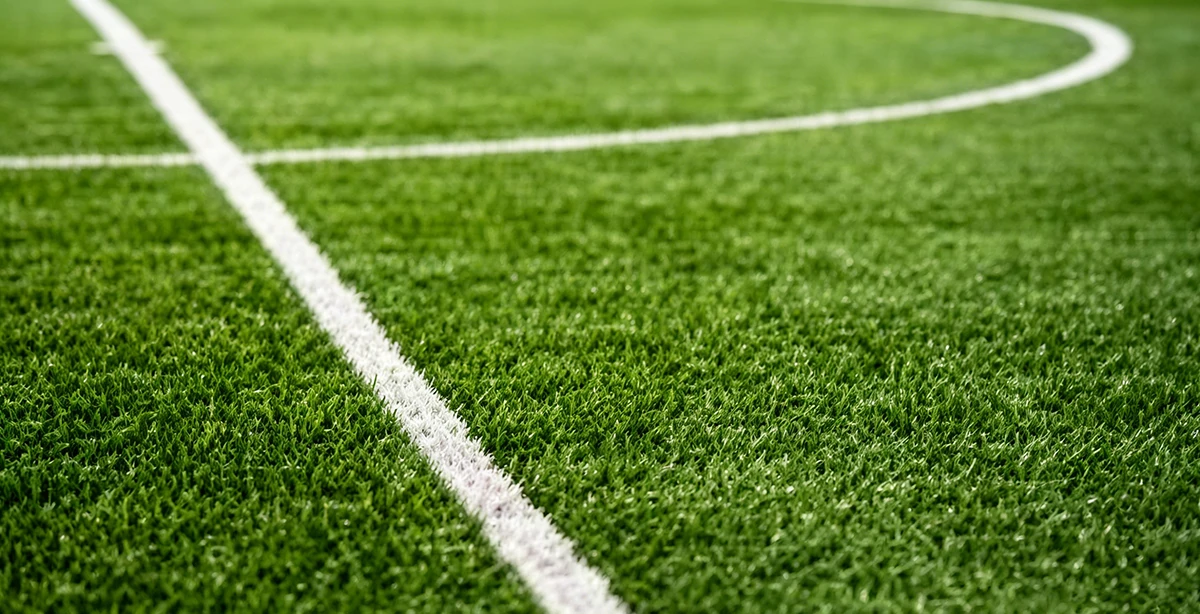
Professional sports turf is divided into multiple categories according to application scenarios, among which soccer field turf and golf putting green turf are the two most widely used commercial types with the most stringent performance standards. Different sports scenarios correspond to exclusive technical parameters and production processes, which is a key reference for buyers to select products and manufacturers.
Global Artificial Sports Turf Market Statistics and Industry Insights
With the global expansion of sports infrastructure construction and the growing demand for low-maintenance outdoor pavement materials, the artificial sports turf industry has maintained robust growth. According to the latest 2026 official industry report released by Mordor Intelligence, a leading global market research institution, the global artificial turf market was valued at USD 7.31 billion in 2026 and is projected to reach USD 13.16 billion by 2031, registering a strong compound annual growth rate (CAGR) of 12.46% during the forecast period. (Source: https://www.mordorintelligence.com/industry-reports/artificial-turf-market)
The report specifically points out that sports field applications dominate the market demand, with soccer field turf and golf sports turf accounting for the largest consumption proportion.
Core Technical Specification Verification: The Key to Distinguishing High-Quality Turf
Most novice purchasers only focus on the pile height of artificial turf when comparing artificial sports turf manufacturers, ignoring core parameters that determine durability and sports experience. In fact, pile height only affects the visual layering of the turf, while Dtex, density, gauge, and backing structure directly determine the service life, wear resistance, and sports comfort of the turf. Professional manufacturers will provide a complete TDS (Technical Data Sheet) for product verification, and buyers must strictly check the following indicators when purchasing factory-direct artificial turf.
1. Dtex Value (Fiber Fineness)
Dtex refers to the weight in grams of 10,000 meters of turf yarn fiber, which is a core indicator of fiber thickness and tensile resistance. The higher the Dtex value, the thicker the turf fiber, the stronger the fracture resistance and compression resistance, and the more suitable it is for high-frequency sports scenarios. For football applications, turf yarns typically range from 8,000–12,000 Dtex, depending on the required durability, player traffic, and system design. For low-frequency leisure sports venues and golf putting green venues, a Dtex value of 6000-8000 can meet daily use needs.
2. Turf Density and Gauge
Density refers to the number of turf stitches per square meter, which directly affects the foot feel, ball speed stability, and overall flatness of the sports field. Gauge represents the spacing between turf tufts, determining the uniformity of turf distribution. High-density and standard-gauge turf can disperse sports pressure evenly, reduce local wear, and ensure a consistent sports experience in all areas of the venue.
Take the classic customized golf turf Rainbow Putting Green Turf—GOLF7016G as an example; its technical parameters reach the industry high standard of 70560 stitches/㎡ density and 5/32 inch gauge. The ultra-high density ensures that the turf surface is flat and tight without gaps, perfectly adapting to the high-precision rolling needs of golf balls and avoiding uneven ball speed caused by sparse turf tufts.
3. Professional Core Parameter Comparison Table for Sports Turf
| Inspection Item | Standard Reference | Core Procurement Focus |
| Turf Fiber Type | Monofilament, reinforced, curly type | Soccer field turf priority chooses reinforced type to enhance resilience and anti-lodging performance |
| Dtex Value | 8000 – 12000 | High-frequency sports venues shall not be lower than 8000 to ensure wear resistance |
| Backing Structure | Double-layer or three-layer composite backing | Reinforced backing prevents turf displacement and tearing during intense sports |
| Drainage Rate | ≥ 60L/min/㎡ | Uniform drainage hole distribution to avoid venue water accumulation and backing aging |
| Color Fastness | Grade 4-5 | Colorful turf series focus on UV resistance and batch color consistency |
Weather Resistance and Environmental Performance Evaluation
Most artificial sports venues are exposed to outdoor environments for a long time, and ultraviolet radiation, high temperature, rain erosion, and seasonal temperature changes are the main factors leading to turf aging and scraping. Many low-cost factory direct artificial turf ignores weather resistance treatment, resulting in severe fading, fiber brittleness, and backing peeling within 1-2 years of use. Therefore, weather resistance and environmental safety are essential evaluation indicators when screening artificial sports turf manufacturers.
1. UV Resistance and Heat Insulation Performance
High-intensity ultraviolet rays will destroy the molecular structure of turf fibers, leading to fading, reduced toughness, and accelerated aging. Qualified artificial sports turf manufacturers will add high-efficiency UV-resistant additives and heat-insulating materials in the production process. According to professional aging test standards, qualified sports turf can withstand 3000 hours of UV-accelerated aging test with a color change value △E ≤ 3, ensuring no obvious fading within 5-8 years of outdoor use .
The GOLF7016G rainbow putting green turf fully adopts UV-resistant and heat-insulating technology. Whether it is used for outdoor golf courses, rooftop leisure areas or resort leisure zones, it can maintain stable color and physical performance under long-term sun exposure, avoiding visual inconsistency caused by partial fading.
2. Flame Retardant and Environmental Protection Performance
Sports venues have high safety requirements for fire prevention and environmental protection. Standard sports turf must have excellent flame-retardant performance, with a burning damage distance ≤ 50mm, which can effectively prevent flame spread and ensure venue safety . In terms of environmental protection, formal manufacturers strictly comply with SGS environmental certification standards, with no heavy metal residues, no harmful volatile substances, and no health risks to the human body.
Different from ordinary turf, GOLF7016G colorful artificial turf has passed strict factory quality inspection, with a flame-retardant function and eco-friendly materials. It requires no watering, no mowing, zero pesticide use in the whole life cycle, which is in line with the green environmental protection concept of modern sports venues.
3. High-Stability Backing Structure
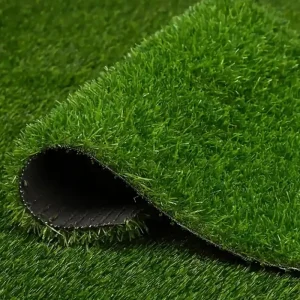
The backing is the foundation of turf stability, determining the anti-tear performance and fiber fixation effect. Inferior turf adopts a single-layer thin backing, which is easy to crack and fall off after rain soaking and temperature change. High-quality sports turf represented by GOLF7016G adopts a three-layer fiberglass high-stabilization anti-aging black-green base fabric. The multi-layer composite structure greatly enhances the tensile and anti-tear strength, effectively prevents fiber shedding, and adapts to all-weather outdoor use.
Product Matching: Select Turf According to Actual Application Scenarios
Different sports and leisure scenarios have completely different requirements for turf hardness, elasticity, flatness, and visual effect. Professional artificial sports turf manufacturers will recommend targeted products according to customer project needs, while irregular manufacturers often sell universal turf blindly, resulting in mismatched product performance and project needs. Purchasers need to distinguish venue positioning and select supporting factory-direct artificial turf products.
Professional Soccer Field Scenario
Professional and amateur football venues prioritize sports performance and durability. Standard soccer field turf adopts a reinforced fiber design with high resilience and anti-lodging properties, suited for high-intensity athletic movements.
Unlike football artificial turf, golf putting green venues prioritize surface flatness, color uniformity and flexible cutting performance over high-impact resilience. Ideal for backyards, golf training academies, hotel resorts, rooftop mini golf courses and indoor simulator venues, Rainbow Putting Green Turf—GOLF7016G is a premium customized option for high-end leisure golf scenarios.
This turf features a 16mm pile height and four classic color options (red, yellow, blue, purple), supporting personalized pattern and color customization. It delivers unique layered landscapes, widely applicable in luxury communities, corporate rooftop terraces, indoor golf supporting venues and mini golf courses.
Boasting excellent all-weather adaptability and free-cuttable design, GOLF7016G requires no watering or mowing, with ultra-low daily maintenance and long-term operating costs. Its flexible size and shape adjustment fully meet personalized construction demands for diverse golf leisure scenarios.
System Design and Accessory Material Evaluation
Many purchasers mistakenly believe that high-quality artificial sports turf alone can guarantee the quality of sports venues. In fact, artificial turf is only the surface material of the sports system, and auxiliary accessories, construction technology and drainage system design directly determine the overall stability and service life of the venue. When cooperating with artificial sports turf suppliers, purchasers must inspect the supporting auxiliary materials and professional construction guidance services provided by manufacturers, especially for factory-direct artificial turf procurement. Complete supporting systems can effectively avoid later venue problems.
1. Key Auxiliary Material Standards
Sports artificial turf is divided into filling type and non-filling type, with completely different auxiliary material requirements. For conventional filling-type soccer field turf, matched graded quartz sand and rubber particles are required for filling, which can stabilize turf fibers, enhance field elasticity and reduce athlete sports injury risks. The particle size and gradation of fillers must meet industry standards to avoid hardening, pulverization or uneven filling.
For non-filling leisure turf such as GOLF7016G rainbow putting green turf, the product itself has high structural support and toughness, so no filler is needed. However, high-strength jointing tape and special professional adhesive are essential auxiliary materials. High-quality accessories can ensure tight splicing of turf joints, no warping or cracking after long-term use, and maintain the overall flatness of the venue.
2. Drainage Performance and Construction Guidance
Drainage performance is a core hidden indicator affecting venue durability. Poor drainage will lead to long-term water accumulation on the turf surface, accelerate the aging, cause mildew and odor, and even lead to fiber falling off. Qualified sports turf is equipped with scientific and evenly distributed built-in drainage holes, with a standard drainage rate of ≥60L/min/㎡, which can quickly drain rainwater and realize all-weather normal use.
The GOLF7016G turf is designed with built-in uniform drainage holes, with excellent rapid drainage capacity, completely adapting to rainy and humid environments. Meanwhile, professional artificial sports turf manufacturers will provide standardized drainage construction guidance according to venue types, ensuring that the foundation slope and drainage pipeline layout meet the operating standards of sports venues.
Frequently Asked Questions (FAQ) for Artificial Sports Turf
Q1: Does the artificial turf have color difference problems?
A: All products are photographed in kind. Color discrepancy may objectively exist due to differences in lighting conditions, display devices, and personal perception of colors. We sincerely ask for your understanding.
(Note: Slight color variation may occur between different production batches, so please try to make a one-time purchase. Additionally, lay the turf flat along the direction of the fibers; otherwise, color difference may also occur.)
Q2: Will the new artificial turf have a peculiar smell? Is it harmful to health?
A: All artificial turf products are packaged and sealed immediately after production. A slight normal plastic odor may be detected when opening the package for the first time, which is a common physical phenomenon of new polymer materials. The odor will completely dissipate within a few days after paving and ventilation, with no residual odor. All products of regular artificial sports turf manufacturers have been verified by SGS laboratory testing, contain no harmful substances, volatilize no toxic gases, and have no health risks for long-term contact use.
Q3: Why is there so much loose grass/fluff on the edges?
A: Since the artificial turf is not shipped in full rolls, customized cutting is required. A small amount of loose fibers and debris may be found along the trimmed edges, and simply cleaning them up will suffice.
Inevitable creases and wrinkles may occur on the turf due to cutting and shipping. These will recover naturally after a period of time, and we sincerely appreciate your understanding. All products are inspected thoroughly before leaving the factory and will not affect normal use.
Final Summary
To sum up, the core logic of selecting high-quality sports turf is to abandon superficial appearance judgment and carry out systematic screening from technical parameters, weather resistance, scenario matching and construction supporting services.
For high-end customized scenarios such as golf putting greens, the GOLF7016G rainbow customized turf, with its stable three-layer backing structure, excellent UV resistance and flame retardancy, low maintenance cost and flexible customization advantages, is an ideal choice for high-end leisure sports venues. For professional sports venues dominated by football sports, high-standard soccer field turf with Dtex above 8800 and high wear resistance should be selected. Choosing formal factory-direct artificial turf can effectively reduce intermediate costs, ensure product authenticity and stability, and lay a solid foundation for the long-term stable operation of sports venues.