Non infill football turf is sold as an alternative to systems that use loose infill within the carpet. Before selecting it, confirm exactly what the supplier means: no performance granules, no sand, or no loose infill of any kind. Then review the complete proposed field system.
MCDS30 is listed by X-Nature as 30 mm sand-free football turf. Its published specifications provide a starting point for an enquiry. They do not establish that the carpet alone meets every sport, competition, or site requirement. Ask which construction, supporting layers, and documents apply to your project.
This guide explains how to compare non infill football turf, read MCDS30’s published fields, and identify the questions to settle before ordering. It is intended for buyers planning training areas, community facilities, and other projects that need a clear specification rather than a broad list of benefits.
Five points to keep:
- Define what “non-infill” excludes before comparing offers.
- Confirm the proposed carpet, base, pad, drainage, and fixing details.
- Treat MCDS30’s published numbers as manufacturer specifications.
- Check each sport and intended use against relevant requirements.
- Obtain maintenance instructions and compare costs on the same scope.
What non infill football turf means in a quotation
The label describes an approach to the playing surface, but it does not provide a complete construction drawing. A buyer still needs to know which materials are present and which functions the system must deliver. Ask for a written layer schedule and installation instructions for the quoted version.
When reviewing non infill football turf, separate the loose materials within the pile from the layers beneath the carpet. A product label does not answer whether a shock pad is required, how the carpet is fixed, or how water leaves the site. Those questions belong in the system review.
Compare the stated construction
| Description in an offer | Question to settle |
|---|---|
| No performance infill | Is any stabilizing sand or other loose material still specified? |
| Sand-free turf | Are other loose materials required, and what does the term cover? |
| Completely infill-free system | Which layers and fixing details provide the intended functions? |
| Non-infill carpet | What additional components are included in the installed system? |
These are quotation checks, not a claim that every supplier uses the same terminology. Copy the supplier’s definition into the approved specification so later documents can be checked against it. If the wording changes between the brochure and the offer, ask for clarification.
For the broader buying process, see the football turf procurement guide. Keep this non infill football turf review focused on the construction and evidence needed for your use. Send X-Nature your project brief with the sport, location, dimensions, and any tender requirements when requesting a model recommendation.
Reading the MCDS30 non infill football turf specifications
The MCDS30 product page publishes the fields below. They were checked on October 19, 2026. Request the current order specification and its tolerances before approving a sample or quotation.
| Published field | MCDS30 value | Buyer check |
|---|---|---|
| Pile height | 30 mm | Measurement basis and tolerance |
| Material label | PE+PP/11000+6600 | Meaning and unit of each part of the label |
| Gauge | 3/8 inch | Row-spacing basis |
| Density | 29,400 stitches/m² | Counting method and tolerance |
| Back coating | XPU | Supplied construction and revision |
| Product mass | 2.86 kg/m² | Components included in the mass |
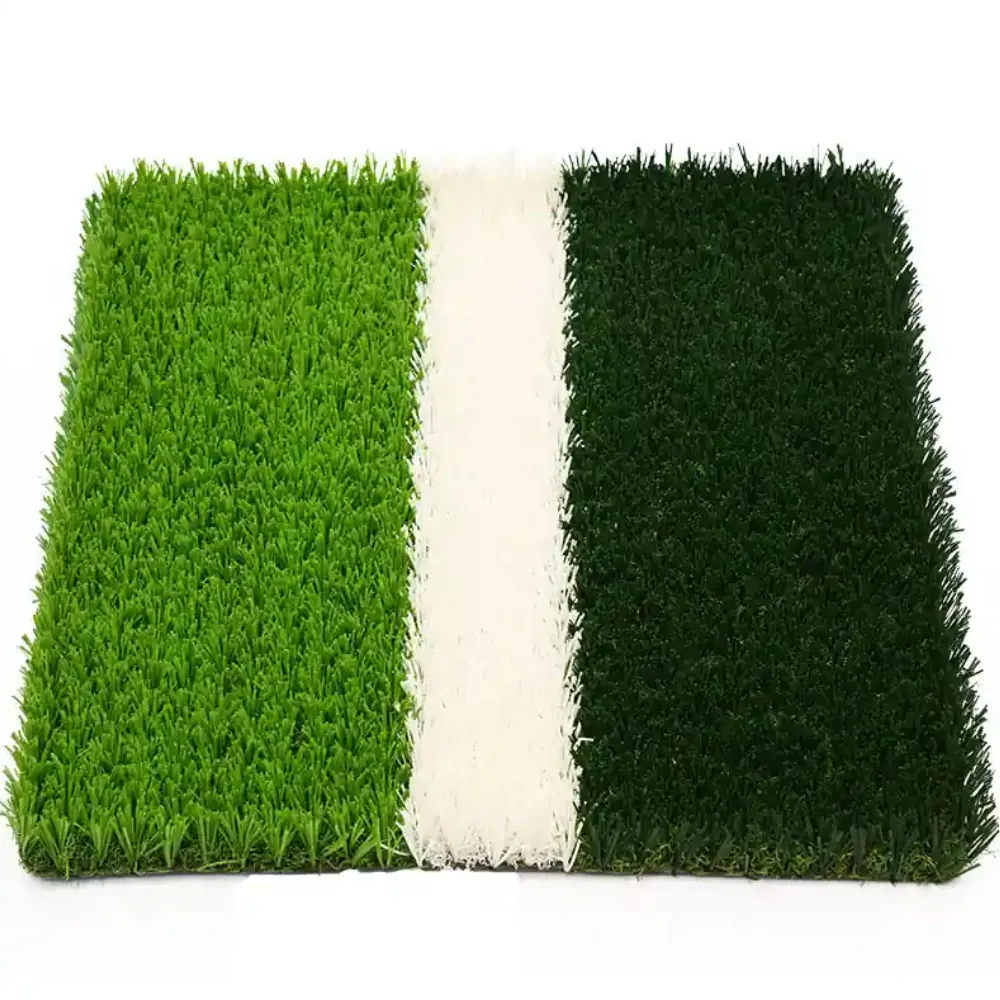
| Backing description | Black-green base with reinforced mesh | Detailed construction sheet |
| Color | Dark green and light green | Sample reference and batch arrangement |
| Roll size | 4 m width; customizable length | Approved layout and ordered lengths |
Use these details to identify the proposed non infill football turf, not to rank every property from one number. The material label does not, on its own, establish a fully defined yarn specification. Ask what its numbers represent. Likewise, product mass should not be renamed pile face weight without checking what is included.
Keep density in its proper role
Stitches per square meter describe an area count under a stated counting convention. That count alone does not establish shock absorption, rotational resistance, ball response, or wear life. The density and gauge guide explains the terms and calculation questions in more detail.
For non infill football turf, compare the same declared construction, intended use, and system scope. A dense sample may look different from another sample, but appearance does not replace relevant test evidence. Record the sample model and sheet revision so an approved reference can be traced back to the offer.
Illustrative scenario: A contractor receives an MCDS30 sample and a sheet that lists product mass. The contractor asks which components that figure includes and whether the sample matches the quoted revision. This hypothetical check concerns document clarity, not a reported project result.
Match non infill football turf to the intended activity
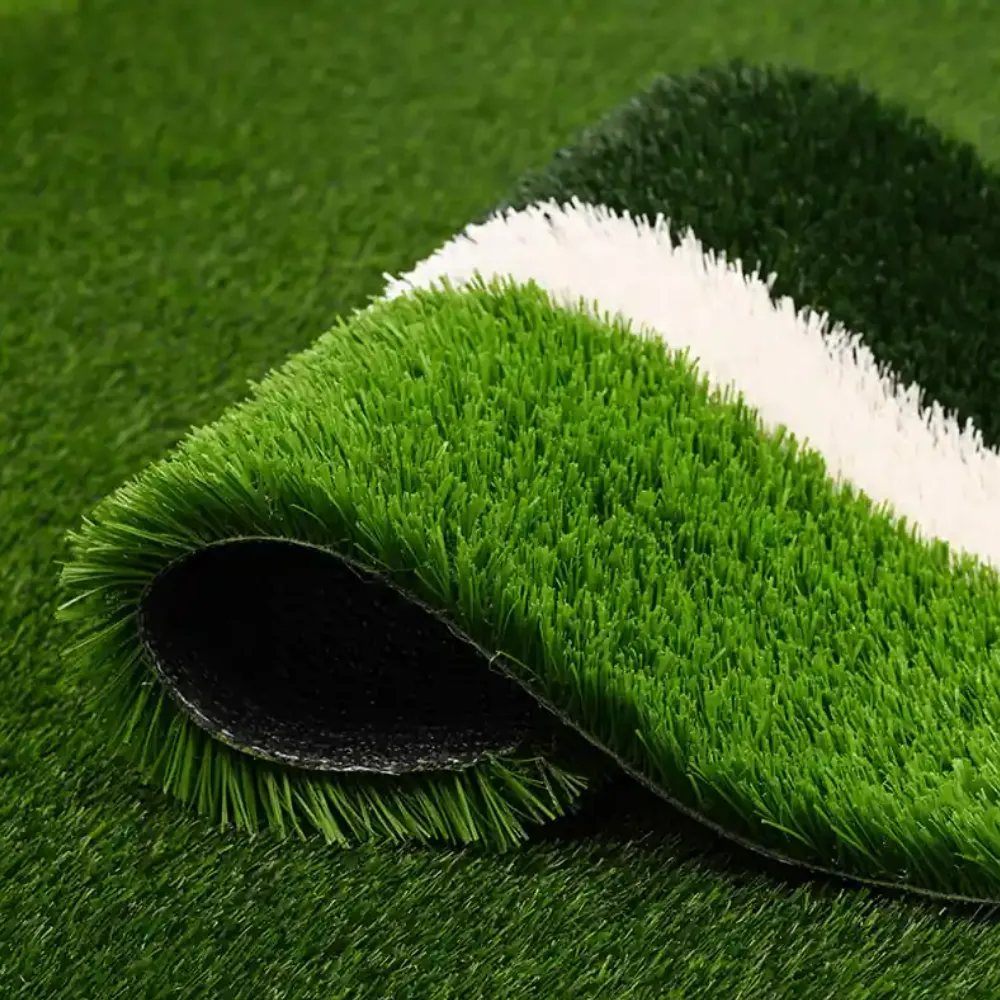
Start with the activity and level of use. Community training, recreational small-sided football, and a venue seeking approval for a particular competition are different briefs. Indoor location or a small pitch size does not make their surface requirements interchangeable.
Use the following matrix to organize a non infill football turf enquiry. It lists questions to investigate, not approvals for MCDS30 or any other model. The supplier, designer, operator, and relevant project authority may each hold part of the answer.
| Intended activity | Information needed before selection |
|---|---|
| Recreational football or training | Use pattern, proposed system, footwear guidance, and relevant performance evidence |
| Competition football | Current competition requirements and matching system or installation documents |
| Indoor small-sided play | Exact activity, operating conditions, fixing details, and applicable surface requirements |
| Futsal | The specific futsal brief and surface requirements, rather than a general football label |
| Contact rugby | Applicable Rugby Turf requirements and evidence for the complete surface |
| Other sports or play areas | Separate activity-specific review; a marketing application list is insufficient |
Check the right approval object
The FIFA Resource Hub distinguishes providers, products or systems, certified installations, and accredited test institutes. If a project requires a particular status, check the exact identity and current scope. A provider’s status is not automatically the status of a specific field.
This guide does not establish a FIFA status for MCDS30. For non infill football turf, request the applicable current documents and check what they cover. Do not infer eligibility from “4G,” “sand-free,” or a product-family description. Those labels do not identify a certificate or resolve a competition requirement.
Futsal also appears as a separate programme category in FIFA’s resource hub. Define whether the proposed venue is recreational football on turf or a futsal facility before choosing a surface. Avoid treating every five-a-side activity as the same project.
For rugby, World Rugby Regulation 22 sets requirements relating to Rugby Turf and associated testing. A list of suggested applications does not establish compliance. Obtain the relevant evidence if rugby is part of the brief; do not approve the surface from pile height or softness alone.
Illustrative scenario: A community operator describes a project as “indoor futsal,” but the brief only lists informal football sessions. The operator clarifies the activity and any competition plans before seeking non infill football turf quotations. This invented example illustrates scope definition, not approval of a surface for formal futsal.
Review the base, pad, drainage, and installation together
A carpet specification is one part of the field. For non infill football turf, request a drawing or written schedule that names the base, any pad, fixing method, seams, edges, and water-management arrangement. Ask who designs, installs, and checks each part.
Resolve the shock pad question
Do not assume that every non-infill system needs the same pad, or that a soft carpet makes a pad unnecessary. Ask whether the proposed system includes one and what evidence supports that configuration. If a report concerns a carpet-and-pad assembly, check that the offered pad and other relevant components match it.
If the supplier proposes non infill football turf directly over an existing hard base, request the details for that proposal. Identify the condition and levelness checks, fixing requirements, and relevant performance evidence. A generic paving sequence should not be treated as a site-specific design.
Trace the water route
Drainage holes in a carpet do not describe the complete path from rainfall to an outlet. Ask how the carpet, supporting layers, base, slopes, and outlets work together. Identify any existing-site limitations and the party responsible for resolving them.
Avoid accepting “automatic drainage” as a guarantee that a field will remain usable in every storm. Ask which property was measured, under what conditions, and for which construction. Keep carpet permeability evidence separate from the design and condition of the whole site.
Roll planning matters too. Confirm the supplied widths and lengths against the layout, including seams and markings. Retain labels, sample references, and batch records. Agree on pile direction and how any color differences will be reviewed rather than judging photographs taken in different light.
Before accepting non infill football turf, record the agreed inspection and acceptance steps. Name the person who checks the base, the installation, and the completed surface. Request MCDS30 system information with your base details and proposed use, and list any missing documents as open questions.
Plan maintenance and compare the complete cost
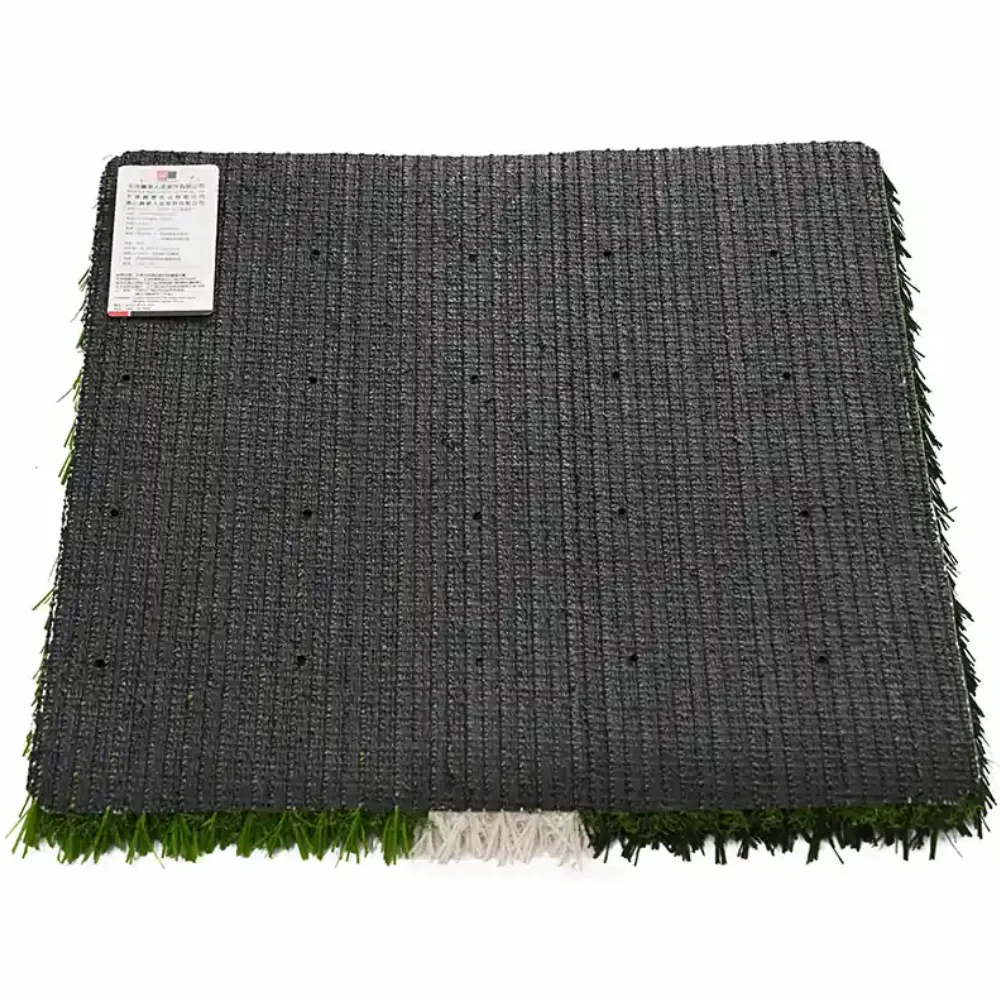
Non infill football turf still needs an operating plan. Ask for written care instructions for the exact supplied system, including permitted equipment, cleaning methods, inspection tasks, and actions when damage or unusual conditions appear. The absence of a specified loose infill task does not mean there are no other maintenance duties.
Use the football turf maintenance guide to prepare questions, then follow the approved system instructions. Do not assume that a light brush or washing alone restores every surface condition. Ask how wear, seams, edges, and drainage should be checked.
Compare tasks and responsibilities
| Cost or operating item | What to request |
|---|---|
| Carpet and system components | Itemized scope, including any pad or fixing materials |
| Base and drainage work | Site-specific scope and responsible contractor |
| Installation and checks | Included work, exclusions, and acceptance records |
| Routine care | Tasks, equipment, frequency basis, and responsible party |
| Repair and downtime | Reporting process, repair scope, and operating restrictions |
| Warranty and replacement planning | Written terms, exclusions, and records to retain |
A non infill football turf quote may omit materials included in another offer or include different supporting layers. Make those differences visible before comparing totals. Do not assume a lower carpet-only price is a lower installed or lifetime cost.
Request an explanation of any cost-saving claim. Which tasks or materials change, over what period, and against which alternative? Without a common scope and supporting assumptions, a saving percentage is not a useful project estimate. Keep expected costs separate from confirmed prices.
Illustrative scenario: A facility manager compares two offers, one with a pad and one without. Before comparing their totals, the manager asks each supplier to identify the proposed system, inspection scope, and maintenance duties. This hypothetical exercise does not claim that either offer is the better choice.
For product navigation, use the sports grass range or product directory. Return to the exact model and written scope for approval. General category descriptions are useful introductions, but they are not the terms for your order.
Questions to settle before approving MCDS30
Does non infill football turf mean no sand and no rubber?
Confirm that in writing for the proposed construction. MCDS30 is marketed as sand-free and infill-free, but your order file should state whether any loose material is required and identify all supporting layers. Use the installation document, not the product name alone, to settle the scope.
Is MCDS30 suitable for every football or multi-sport facility?
Suitability needs a project-specific review. Define the activity, expected use, site, and applicable requirements, then request matching documents. A published application list does not establish suitability for every football, rugby, hockey, or children’s play setting.
What evidence should accompany a performance claim?
Request the issuer, report number, method, date, tested specimen or system, conditions, and result. Check how the report relates to the offered non infill football turf. Ask about any construction differences. A claim about wear or ball response needs relevant evidence rather than a density figure alone.
How should odor, loose fibers, or creases be handled?
Record the model, batch, condition, and photographs, then ask for the relevant handling or installation instructions. Do not assume an unusual condition is harmless or automatically a defect. Odor and touch alone do not establish chemical compliance, and generic reassurance should not replace a documented response.
What should a quotation request include?
Send the intended activity, field dimensions, location, base condition, expected use, and target schedule. Request the model revision, system layers, sample reference, relevant reports, installation scope, maintenance instructions, and written warranty terms. Mark missing items for follow-up before approval.
For a non infill football turf comparison, keep an evidence log with the requested item, document reference, open question, and person responsible for the answer. Record a response date. A received file is not automatically an approved file; first check that it addresses the proposed construction and use.
Keep later revisions beside the earlier copies rather than replacing them without a note. If the base, pad, carpet, or activity changes, ask which checks must be repeated. When discussing non infill football turf with X-Nature, identify the same project reference in each enquiry so the answers can be kept together.
Choose non infill football turf through a clear match between the project, supplied construction, and evidence. Send X-Nature your MCDS30 enquiry with those details and ask for a response tied to the proposed system. Keep the approved records with the order so later checks use the same specification.