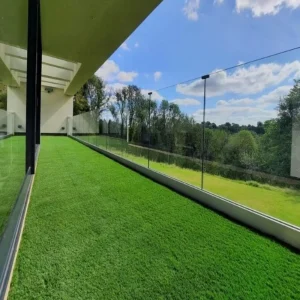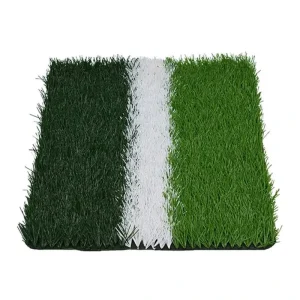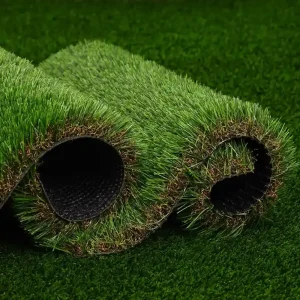
Artificial grass needs no mowing or watering to support growth; natural grass offers living cover and cooling as water evaporates from its leaves. Choose according to your sunlight, water costs, use, and time for care.
The artificial grass vs natural grass choice becomes clearer when you compare the work beneath and around the surface. A turf roll needs a sound base, secure edges, and a route for water. A living lawn needs healthy soil, a grass type that suits the site, and care that fits the climate. Neither surface can fix a poorly planned site by itself.
A lower price to build the lawn can also lead to a higher total cost. It depends on what you spend each year. Count cleaning, watering, repairs, and the cost to renew the surface alongside the first quote.
Use this guide for gardens and shared outdoor spaces. Compare the table, cost worksheet, and site checklist before requesting prices for each project zone.
Key Takeaways
- Artificial grass needs no mowing, but debris removal, pet cleaning, inspections, and repairs still belong in the care budget.
- Natural grass provides living cover and cooling; its water and maintenance needs depend on variety, climate, soil, and use.
- An artificial-turf installation’s drainage depends on the backing, base, underlying ground, slope, and outlet together.
- Any cost crossover depends on installation and annual-care inputs; include renewal and disposal before claiming a saving.
- Different zones can use different surfaces, with living planting retained where cooling and habitat matter.
Artificial grass vs natural grass at a glance
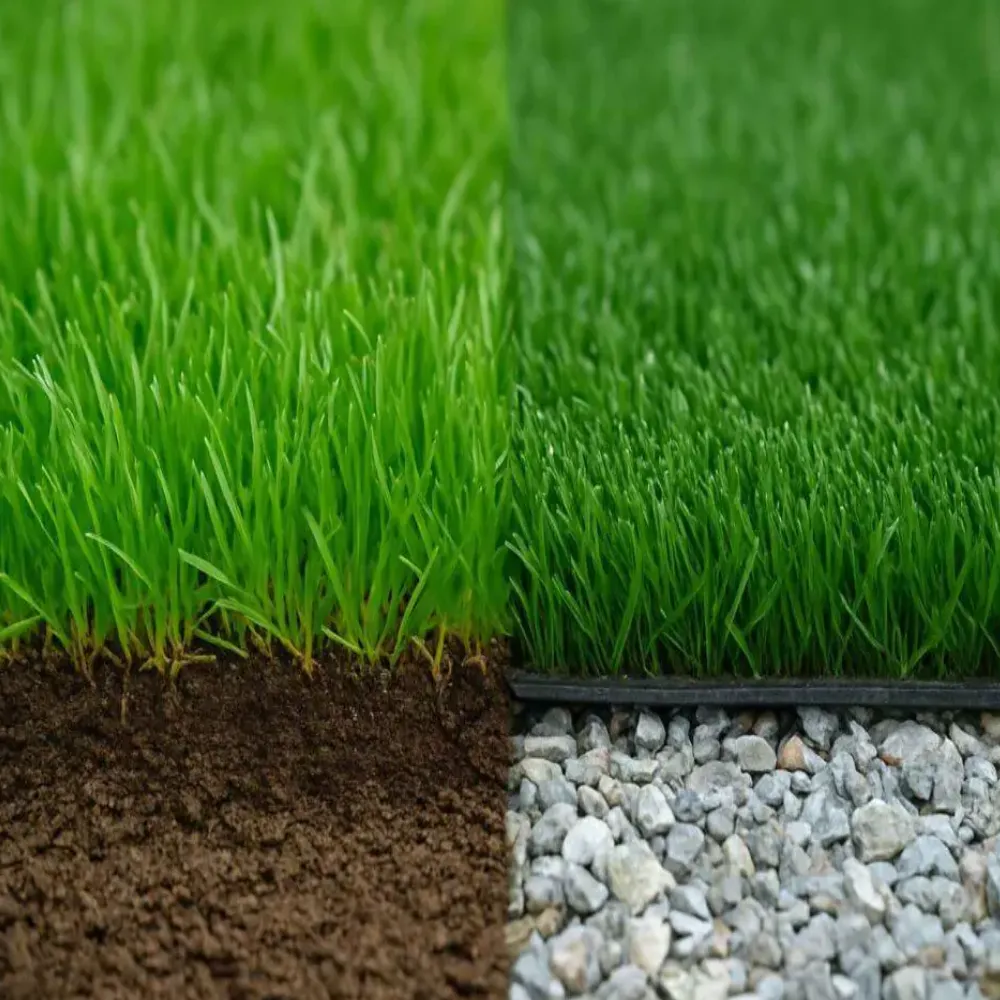
Artificial grass, artificial turf, and synthetic turf are overlapping terms for manufactured grass surfaces. They don’t define a fixed pile height or performance level. Natural grass is a living plant cover; sod is grass supplied with a layer of roots and soil for establishing a lawn.
The table sets out the main pros and cons of artificial grass alongside the practical demands of living turf.
| Factor | Artificial grass | Natural grass |
|---|---|---|
| Initial work | Turf, base preparation, edging, joining, and drainage planning | Soil preparation, seed or sod, establishment, and irrigation where needed |
| Routine care | Debris removal, brushing as specified, cleaning, and inspections | Mowing, locally appropriate watering, feeding, and lawn repair |
| Water | No irrigation for growth; cleaning or cooling may use water | Irrigation depends on rainfall, species, soil, and expectations |
| Sun and comfort | Can become excessively hot in direct sun | Living grass provides evaporative cooling |
| Appearance and wear | Manufactured color and texture; wear or damage can require repair | Seasonal growth and color; worn areas may need recovery or renovation |
| Drainage | Depends on the complete installed system | Depends on soil structure, compaction, slope, and ground conditions |
| Living habitat | Does not replace the functions of plants and roots | Can support soil life and wildlife, depending on management |
| Renewal | Budget for surface replacement and waste handling | Budget for ongoing repair, reseeding, or renovation where required |
If artificial turf suits part of your plan, compare landscape artificial grass by its written specifications and a physical sample. Keep your site requirements beside the samples so appearance doesn’t become the only deciding factor.
Compare artificial grass vs real grass costs
Match the area and installation scope
Start with the same usable area and ground conditions. Keeping a lawn you already have is a different job from building either option on bare soil. An existing irrigation system changes the costs too. It may need repairs rather than new pipes and sprinklers.
For artificial turf, ask what the quote includes beneath the grass. List digging, waste removal, base materials, drainage, edging, seams, and any required infill. Infill is material placed between the fibers where the system needs it. For natural grass, include soil work, seed or sod, care while it takes root, and any watering equipment.
A price for imported turf covers a different scope from a finished lawn. List the product, freight, import charges, delivery, and site labor. Then compare the cost to supply the turf with the cost to build the whole lawn.
Add annual care, repairs, and renewal
Choose how many years to compare, then fill in the same cost lines for both options. Use local quotes and your own water rates. If you do the work yourself, record your time apart from cash costs. Give that time a price only if you state the hourly rate.
| Cost line | What to record for each option |
|---|---|
| Installation | All agreed supply, ground preparation, installation, and establishment work |
| Annual water | Irrigation or cleaning water, using the same tariff assumptions |
| Annual care | Paid labor, consumables, equipment, and maintenance products |
| Repairs | Surface repairs, edge or seam work, irrigation repairs, or lawn renovation |
| Renewal | Any surface replacement or major renovation within the chosen period |
| Waste handling | Removal, transport, and accepted disposal or recycling costs |
Add the build cost, yearly bills, repairs, renewal, and waste handling over the chosen period. Don’t count a renewal or removal bill twice if one contractor’s price covers both.
Hypothetical budget example: Alex compares two quotes for the same area. Artificial turf costs 3,500 currency units more to install. If care and water cost 700 units less each year, Alex recovers that extra cost in five years before renewal or finance costs.
At savings of 350 units per year, the simple crossover moves to 10 years. These numbers are examples, not market prices or an X-Nature quote.
To find that crossover, divide the extra build cost by the yearly saving. If the yearly saving is zero or less, there is no simple crossover. This leaves out the timing of payments and any bill to replace the turf. Include those costs before deciding which option costs less over your chosen period.
Artificial grass vs natural grass: care and water
List the work someone will do
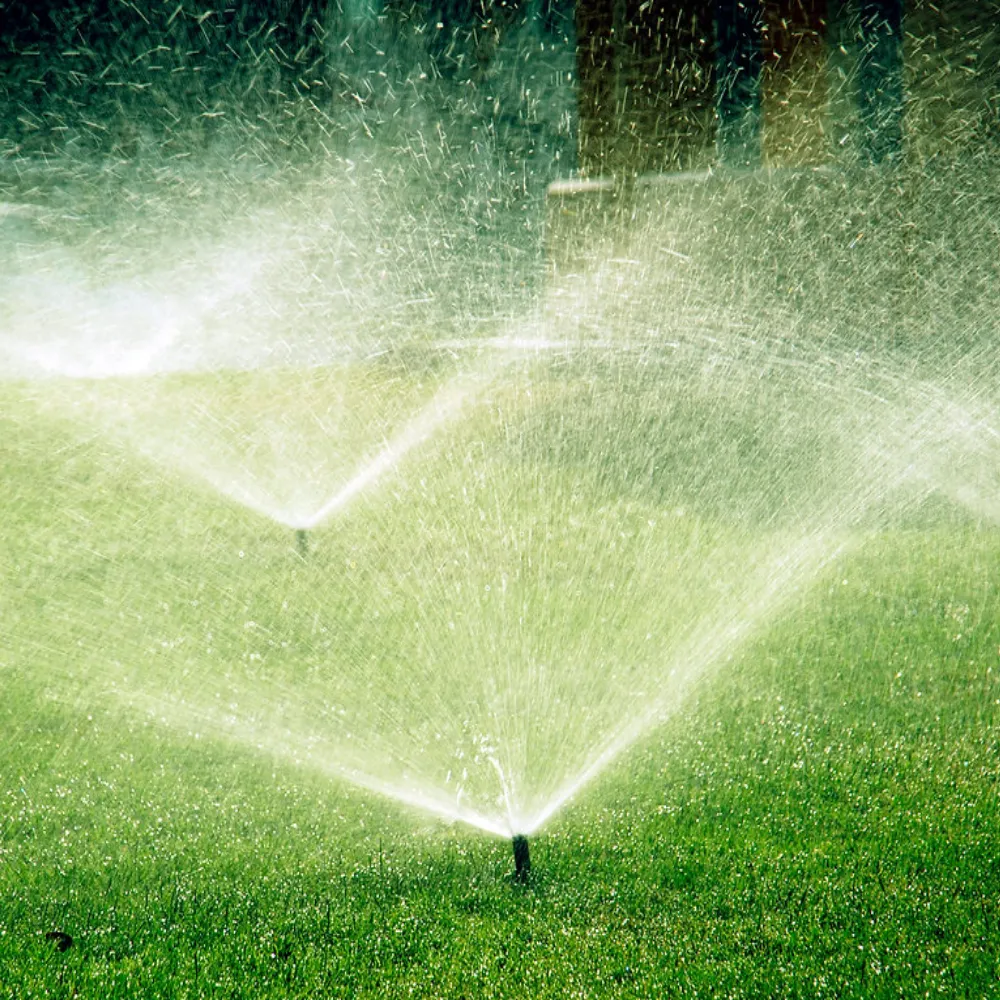
Natural-lawn care changes with the grass type, season, soil, and finish you want. A closely cut lawn needs different care from one left to grow longer. Ask a local adviser about mowing, watering, feeding, and lawn repair. Use advice for your climate rather than a schedule written for another region.
Artificial grass changes the task list. Someone still needs to remove leaves and litter, pick up animal waste, check joins and edges, and deal with damage. Follow the system’s care instructions for brushing and any infill. Check which cleaning products suit the fibers, backing, and other parts.
For a shared space, assign the tasks before you buy. The handover should explain who checks the area, when it needs cleaning or repair, and which tools to use. Keep the care guide with the quote and written warranty terms.
Pet areas need a clear route for water and access for cleaning. Use our dog-area drainage and care guide to plan waste pickup, rinsing, and access beneath turf you can lift.
Separate irrigation savings from total water use
According to EPA WaterSense, about 30% of US household water use goes outdoors. That covers outdoor uses across US homes. It doesn’t mean replacing a lawn saves 30% of your household water.
Artificial turf doesn’t need watering for growth, but rinsing, pet cleaning, and cooling can use water. Natural grass may need watering beyond what rain supplies. Compare the water used in each care plan, taking local conditions into account.
Here’s a unit example: a hypothetical 10 mm depth applied over 100 m² delivers 1,000 liters. One millimeter over one square meter equals one liter. This shows how the units work. It isn’t a suggested watering depth or schedule.
To find net water savings, allow for rainfall, season, water lost during irrigation, and the cleaning routine. A water bill or check of your irrigation system gives a sound starting point. Compare the actual plans before choosing a savings figure.
Compare heat, drainage, and environmental effects
Check sunlight and barefoot or pet use
Living grass cools as water moves through its leaves and evaporates. Artificial surfaces lack that process and can become too hot to use in sun. UF/IFAS discusses these differences in its review of synthetic turf and Florida-Friendly Landscaping. The review also covers cleaning water, runoff, and effects on living plants and soil.
Think about how you’ll use the space during its hottest hours. Map sun and shade where people sit, children play, or dogs cross the yard. For a heat claim, check which product was tested and under what conditions. Then compare those conditions with your site.
Ultraviolet (UV) resistance concerns how a material responds to UV exposure. It doesn’t prove that the surface stays cool. Our artificial grass heat guide explains how to check sunlight, reflected heat, and daily use.
Follow water through the complete installation
Water passing through a backing is only the first stage. It must then move through or beneath the base and reach suitable ground or an approved outlet. Infiltration means water entering the soil. Drainage through the carpet doesn’t prove that the soil can absorb it.
Ask the designer to explain the whole route, including the subgrade: the ground beneath the built base. Mark low points, nearby buildings, and access for care. A roll that lets water through won’t fix a poor slope or blocked outlet.
Living lawns also need suitable soil and grading. Compacted soil can limit water flow, so choosing natural grass doesn’t remove the need to check the ground. Compare the finished designs as well as the surface samples.
Separate habitat from material lifecycle
Natural grass supports roots and can provide food or shelter for wildlife. How you manage it affects the result. The RHS explains how lawn habitats vary with mowing and flowering plants. A tightly clipped, weed-free lawn offers different habitat from an area with flowers.
Choose planting and care for your region. Artificial grass avoids mowing and feeding a living lawn, but those benefits don’t settle its full effect on the environment. Consider how it’s made, shipped, installed, used, and handled at the end of its life. Keep living planted areas where they serve the design.
Before accepting a recycling claim, ask who will take the actual used turf and which parts they accept. Check what local collection and processing cost. Budget for removal even if no recycling route is available. A recyclable-material label or lower water use doesn’t prove which option has the lower overall impact.
Choose a surface for the way the space is used
Gardens, shared landscapes, and pet areas
You don’t have to give every zone the same surface. Set priorities for each part of the site, then compare the care and construction requirements.
| Site priority | What to assess |
|---|---|
| Barefoot use in direct sun | Give natural grass’s cooling role particular weight; assess shade and actual surface conditions |
| Less mowing in a defined landscape zone | Consider artificial turf with a funded cleaning, inspection, and repair plan |
| Frequent pet toilet use | Check waste handling, rinse-water route, odor management, and cleaning access |
| Living habitat and planting | Retain suitable living ground cover, flowering areas, or locally appropriate planting |
| Heavy traffic | Compare the proposed system, wear expectations, maintenance, and repair arrangements |
Hypothetical site example: Sam is planning a 20 m² shared courtyard used by residents and a dog. Part of it receives direct afternoon sun; a separate corner is used for toileting. Sam marks these uses on the plan and requests separate proposals for the sitting area, pet zone, and planted border. The result is a clearer specification, with heat checks and cleaning access considered before any surface is ordered.
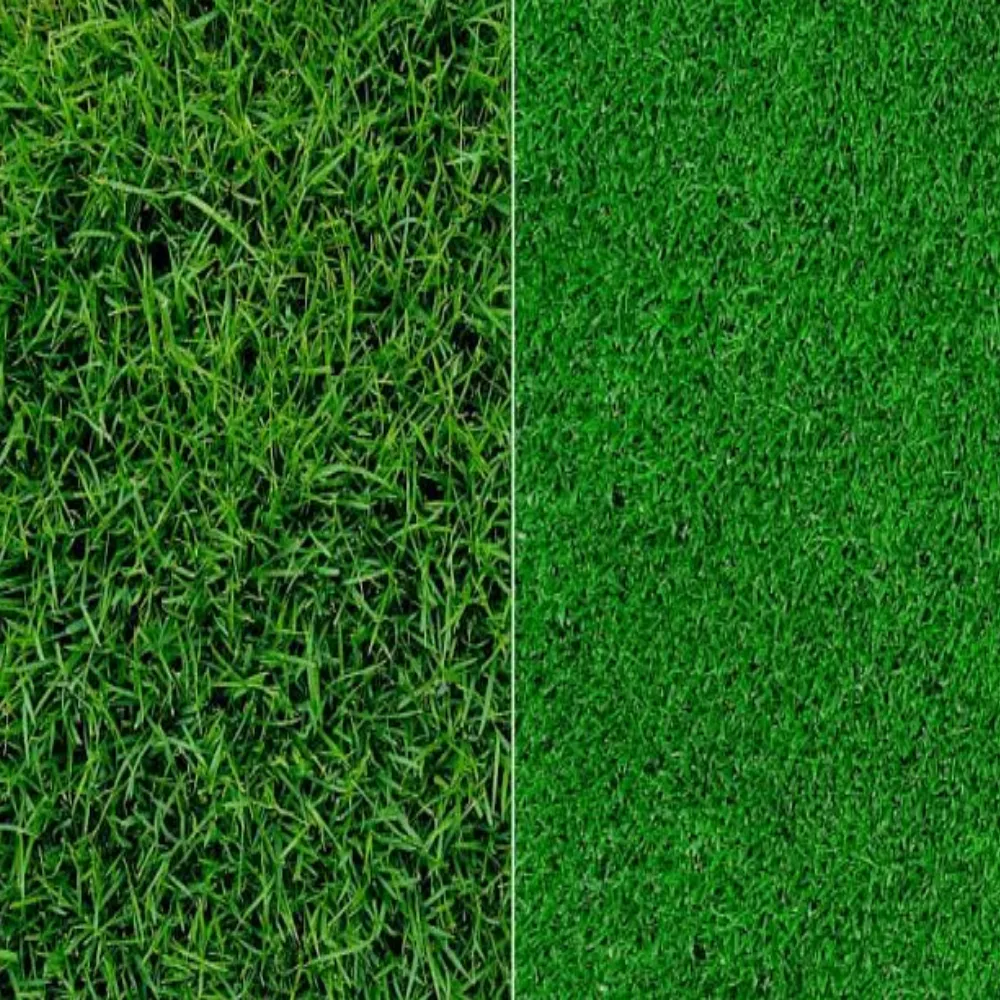
When weighing synthetic turf vs natural grass, compare samples with your written needs. X-Nature lists HBA30 with a 30 mm pile and 17,800 stitches/m². HBA40 has a listed 40 mm pile and 21,000 stitches/m². Both list polyethylene and polypropylene (PE+PP) fibers and XPU back coating.
These are specs published by X-Nature, not results of independent tests. You can compare HBA30 and HBA40 specifications when choosing what to sample. Height and stitch density alone don’t prove comfort, how well the turf wears, or whether it suits your site.
Keep sports and playground requirements separate
A garden-lawn comparison can’t show whether a surface meets a sport’s needs or protects against falls from play equipment. Check the whole proposed system and the test reports that apply to its use.
Ask which turf, backing, infill, base, and any shock pad were tested together. A soft sample or a general certificate can’t show how a different built system performs. Get advice for the specific use before choosing landscape turf for sports or fall protection.
Questions about natural grass vs artificial turf
Is artificial grass better than real grass?
Artificial grass can suit a project where less mowing is a priority and cleaning, heat, and drainage are planned. Natural grass offers living cover and cooling. Start with the site’s uses and conditions. A mixed layout may serve them better than one surface throughout.
Is artificial grass cheaper than natural grass over time?
It can be, but the answer depends on local build prices and yearly costs. Include water, labor, cleaning, repairs, renewal, and waste handling over the same period. A cost model that gives artificial turf no care or replacement bills leaves out costs the buyer may face.
Does artificial grass use no water?
It needs no watering for growth, but it may use water for cleaning and cooling. Pet use, dust, weather, and the care instructions affect that amount. Compare this with the water a natural lawn would need beyond what rain supplies.
Which surface stays cooler in direct sun?
Living grass cools through evaporation, while artificial turf can become too hot to use in sun. Conditions vary with weather, shade, and the surface system. Check the hours when people will use the area. UV resistance doesn’t prove that a turf product stays cool.
Is artificial grass better for dogs?
That depends on the installed system and care plan. Artificial grass still needs waste pickup, suitable cleaning, and a route for rinse water. Natural lawns also need care and repair under repeated use. Compare heat, access, drainage, and the work you can carry out.
What can I use instead of artificial grass?
Options include a suitable natural-grass type, other living ground cover, planted borders, or a mixed design with paths and defined use areas. Match the choice to sunlight, foot traffic, access, and care needs. A local planting adviser can help select species for your conditions.
Compare your site and care plan before requesting a quote
A useful comparison starts with what the space must do. Record the area, location, sunlight, uses, pets, current ground, and water route. Decide who will care for it and how many years of costs to compare.
Then give suppliers the same brief. Ask what work is included, how to care for the turf, and which product records support the quote. Get written warranty terms and a plan for repairs or renewal. Separate turf supply from local fitting so you know who will do each task.
Keep natural grass where living cover and cooling serve your needs. Consider artificial turf where its different care demands fit the project. You can make that choice for each zone rather than the whole site at once.
To discuss the artificial grass vs natural grass choice for your project, request an X-Nature project quote. Share the area, destination, intended use, and site photos. Ask about suitable specs, samples, and the scope of support for the synthetic areas in your plan.