An artificial turf shock pad is a cushioning layer beneath synthetic grass. Choose it using evidence for the complete surface, because a thickness measurement alone cannot tell you how a sports field or playground will perform.
Would you approve a surface just because the sample feels soft? That simple question exposes a common buying problem. Two quotations can list similar foam, different thicknesses, and impressive safety language while describing different installed systems.
If you’re buying turf for a school, club, or landscape project, the hidden layers deserve the same attention as the grass. A useful plan connects the activity, base, drainage route, pad, turf, and any infill. It also tells you which documents demonstrate the required performance.
This guide explains what to request before choosing an artificial turf shock pad, how materials differ, and which installation details to check. You’ll also find a quotation checklist and practical examples of decisions to resolve before ordering. The aim is a spec you can compare and verify, with a clear division between ordinary comfort and tested impact performance.
Key takeaways
- Select the turf, pad, base, and infill as a compatible system for the intended activity.
- Playground impact evidence and accessible-route performance require separate checks, including relevant ASTM F1292 and F1951 requirements.
- Thickness alone cannot establish fall protection, sports performance, or drainage capacity.
- Water needs a continuous route through or along the pad and onward to a suitable outlet.
- Compare installed scope, testing, maintenance, and reuse conditions alongside the pad’s purchase price.
What an artificial turf shock pad does
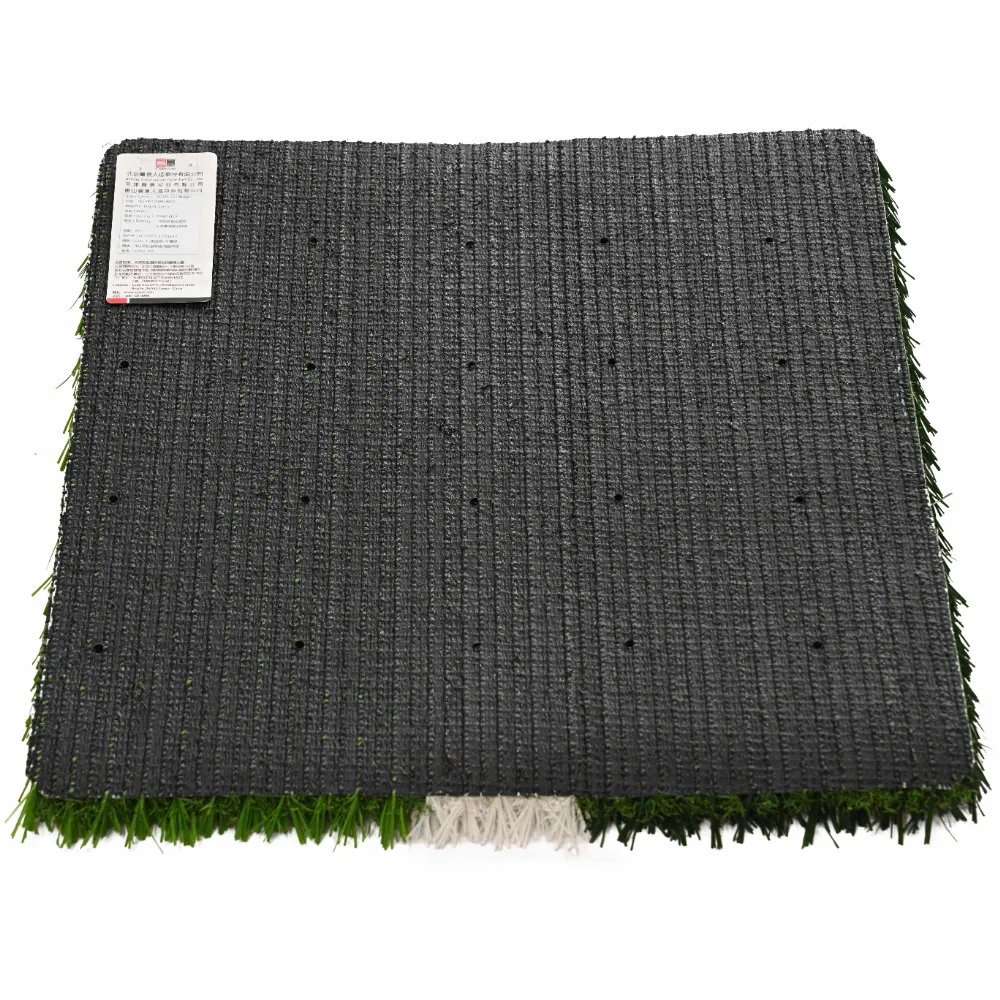
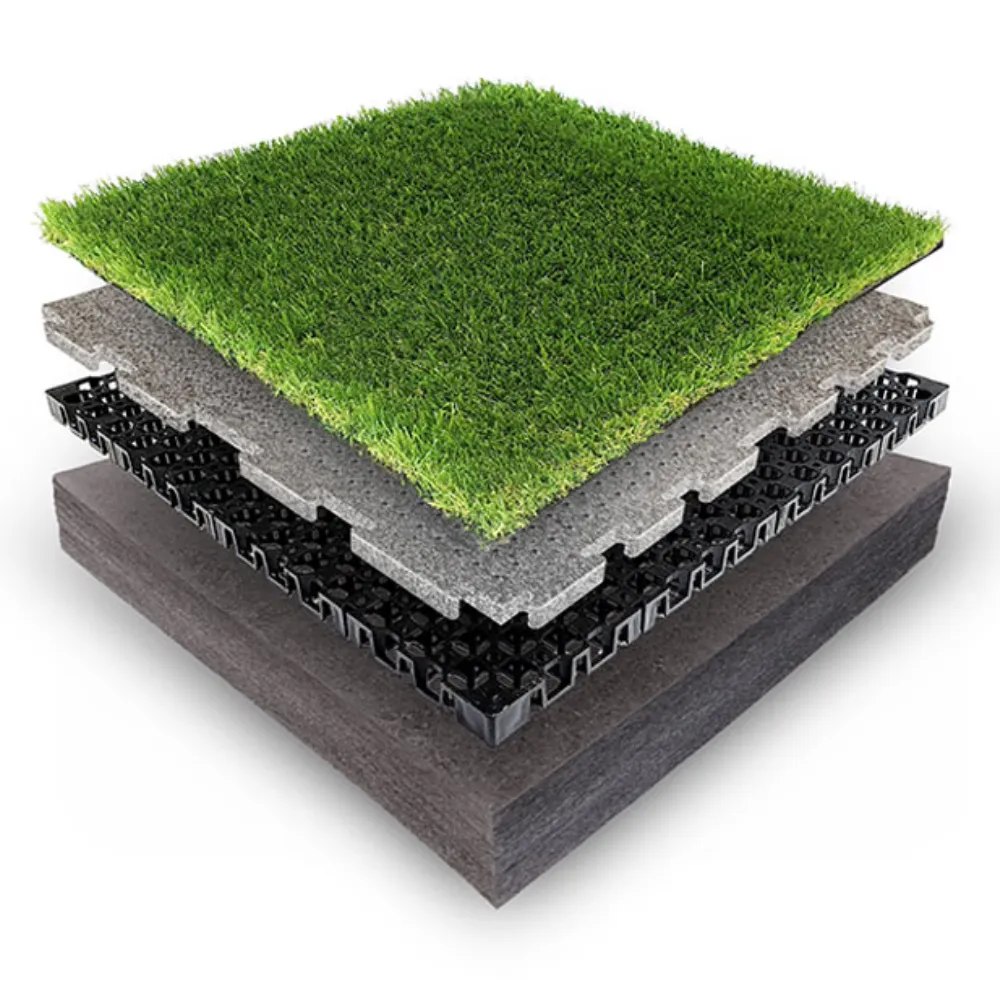
A shock pad is a separate layer between the prepared base and turf carpet. It contributes to the surface’s response under load or impact. Its response depends on its material, structure, thickness, base, and the turf system above it. Some pads also have built-in paths for water.
The carpet backing holds the grass fibres together. The infill sits within the pile where the turf design calls for it. An artificial turf shock pad sits below the carpet; these components have different jobs and shouldn’t be treated as interchangeable.
Likewise, artificial turf underlay is a broad description. A cushioning product, drainage mat, and engineered sports pad can all appear under that label. Ask what function the quoted product performs and what evidence supports that function.
A pad cannot correct an unstable base simply by covering it. Settlement, depressions, and blocked outlets need attention within the construction design. Nor does adding an artificial grass shock pad automatically make a garden a compliant playground.
Start with the whole assembly. For a wider view of turf, base, infill, and purchasing documents, use our sports field buyer guide before comparing individual underlays.
Choose an artificial turf shock pad for the activity
Sports fields: match the tested combination
For a sports project, begin with the sport governing body’s rules and the intended level of play. Then request reports naming the turf carpet, artificial turf shock pad, infill spec, and test conditions. A report for a different artificial turf shock pad leaves a gap in the evidence.
FIFA’s overview of football turf testing explains measures such as peak shock absorption, deformation, and energy return. Deformation describes how far the surface gives under the test load. Energy return describes the energy returned during that response.
The overview also discusses shockpad requirements under EN 15330-4. Its discussion of earlier manual changes isn’t a substitute for the edition and limits applicable to your project. Confirm those with the testing lab or project specifier.
Keep lab reports separate from tests on the finished field. Buying an artificial turf shock pad named in a report does not, by itself, prove certification for the finished pitch. Our guide to verify football turf certification explains the documents and scope to check.
Playgrounds: check fall protection and access
For equipment play areas, request impact test reports for the proposed surface build-up and the required equipment fall height. The tested turf, pad thickness, infill, and underlying construction need to match the proposal. A generic statement that a pad is suitable for children doesn’t provide this detail.
The United States Access Board’s play surface guidance distinguishes accessibility testing under ASTM F1951 from impact absorption under ASTM F1292. It also calls for installation, base, drainage, and maintenance information. The guide references adopted editions; confirm which editions and local requirements apply to your site.
An artificial turf shock pad chosen for a football pitch doesn’t by itself establish playground suitability. Ask for evidence relevant to each use, and document the required checks and field tests.
Before buying an artificial turf shock pad, agree a written schedule for care and checks during use. Name who will check impact absorption and the condition of accessible routes after fitting and at agreed intervals. Set those intervals using the chosen system’s instructions and the site’s rules.
Gardens and general recreation
For a garden without play equipment, comfort may be the main reason to consider artificial turf underlay. Check drainage, stability, finished levels, and the intended traffic. If the use changes to include climbing equipment or organised games, reassess the surface against those requirements.
Compare materials, thickness, and drainage
Understand the construction before comparing millimetres
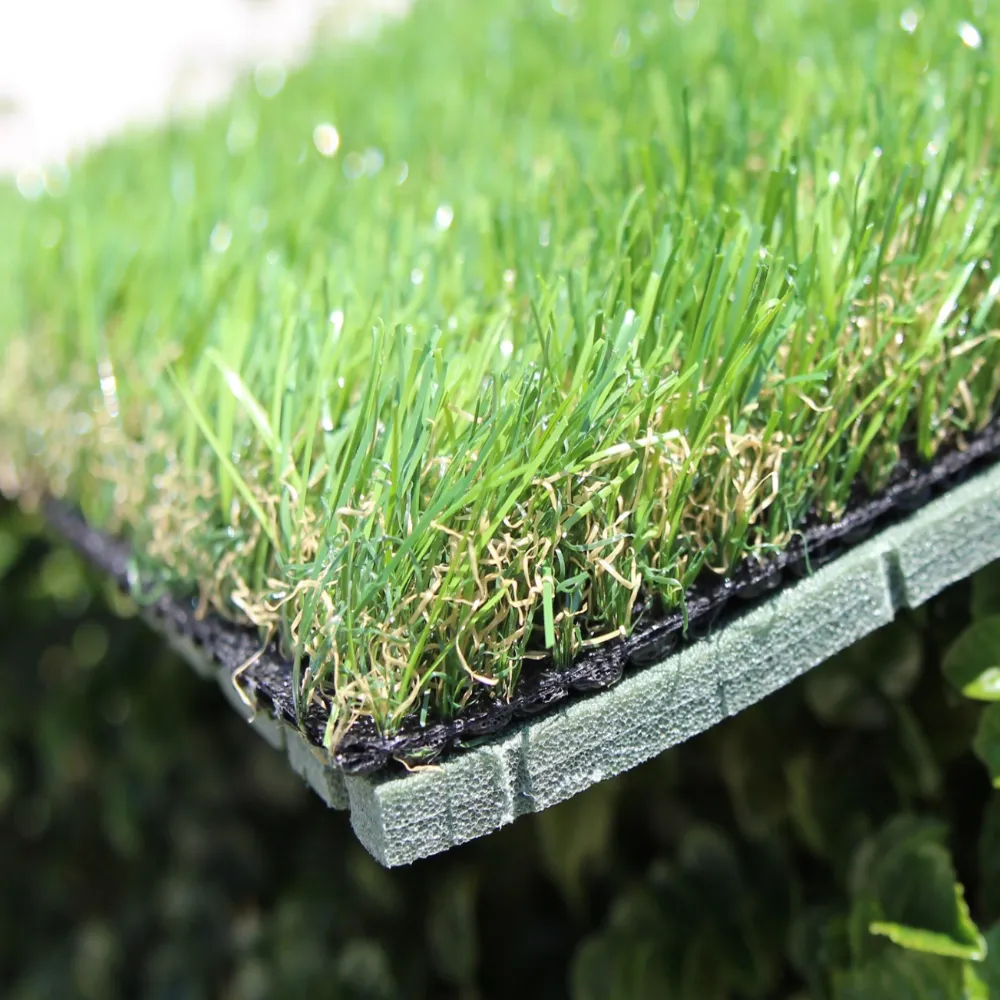
Pads come in rolls, panels, and site-built forms. Material names provide a starting point, but the exact product design determines how a synthetic turf shock pad behaves.
| Pad construction | What to examine | Buying question |
|---|---|---|
| Cross-linked polyethylene foam, often called XPE | Cell structure, joins, and designed drainage openings or channels | Which tested build-up uses this exact product? |
| Expanded polypropylene, or EPP, panels | Panel fit, thickness tolerance, and water routes | How are joints and edges handled on this base? |
| Bonded rubber systems | Binder, construction method, uniformity, and installation conditions | What checks establish the installed layer’s consistency? |
| Nonwoven or composite pads | Layer composition, compression response, and drainage design | Which properties are measured for this complete product? |
Don’t assume that the material’s name proves a drainage rate, environmental benefit, or service life. Request product-specific information for the artificial turf shock pad under consideration, including any conditions attached to the figures.
For a concrete comparison, FieldTurf lists its ShockBase systems as expanded polypropylene pads: Select at 17mm and Pro at 25mm. These are that supplier’s published product dimensions. They aren’t universal thickness recommendations or evidence that any pad of the same thickness performs equally.
Hypothetical example: Alex compares two quotes. Alex, a fictional school project manager, receives one proposal with a 17mm pad and another with a 25mm pad. Both say “sports quality,” but only one names the turf and infill in its test report.
Alex asks both bidders for matching system reports before approving either option. The decision stays open until the evidence is comparable; the thicker sample doesn’t win by default.
Follow the water to its destination
An artificial turf shock pad may allow vertical flow through its structure or openings, lateral flow through channels, or both. That route must connect to the construction below or beside it. A fast-draining component still needs a base and outlet that can accept the water.
Ask where rainwater goes after passing through the carpet. On a permeable aggregate base, examine the route into the base and drainage system. On concrete, establish the falls, drainage channels, and discharge arrangement before choosing the artificial turf underlay.
A useful drawing shows the water path across joints and at perimeter details. Include the pad in that drawing rather than assessing the carpet alone. Our guide to plan turf drainage covers base and outlet questions in more detail.
Compare the surface components together: compare sports turf options alongside the proposed underlay, then request evidence for the specific combination under consideration.
Installation checks before the turf goes down
Check and accept the base first
Inspect the base against the project design before unrolling the artificial turf shock pad. Record its condition, levels, and drainage details. Note any faults that need repair. Covering the base makes later diagnosis harder, so resolve acceptance responsibilities in advance.
The artificial turf shock pad maker’s instructions should explain storage, layout direction, joints, and allowances for movement. Don’t transfer an installation detail from a different artificial grass shock pad simply because both products arrive in rolls.
Use the following sequence as a project checklist, alongside the specific maker’s instructions:
- Confirm the approved base and water-discharge route.
- Match delivered product labels and thickness to the accepted spec.
- Check pad layout, joints, edges, and transitions before installing the carpet.
- Use specified fixing, tape, or adhesive details without obstructing designed drainage.
- Protect the pad from damage and displaced joints during turf handling.
- Photograph the hidden layers and complete the required acceptance tests.
An artificial turf shock pad needs particular attention around drains, equipment footings, gates, and changes in surface level. Agree how these details preserve the required construction while avoiding exposed edges or abrupt transitions.
Resolve missing details before ordering
Hypothetical example: Sam checks the drainage drawing. Sam, a fictional contractor planning a 1,000m² recreation area, receives a drawing showing turf, pad, and a concrete base. The pad has lateral drainage channels, but the drawing ends at a raised border with no discharge detail.
Sam requests a revised outlet design before ordering the underlay. The review identifies an unresolved connection; it doesn’t establish a drainage capacity or a tested safety outcome.
This kind of check is useful whether you’re installing a turf shock pad over aggregate or over a hard surface. The drawing should explain how the layers work together at the site’s actual edges.
What to include in a shock pad quotation
Compare the same installed scope
Ask each supplier to identify the exact artificial turf shock pad, its quantity, delivery terms, and intended assembly. A supply-only artificial turf shock pad rate and an installed rate cover different work. Put them into separate columns before comparing totals.
For each quotation, check these items:
| Cost or responsibility | Detail to request |
|---|---|
| Pad supply | Product, thickness, roll or panel dimensions, and quantity |
| Cutting and waste | Layout allowance and treatment of unused material |
| Delivery | Destination, freight, unloading, and applicable import responsibilities |
| Base and drainage | Included works, repairs, outlets, and exclusions |
| Installation | Labour, joins, fixing materials, and transition details |
| Verification | Lab reports, installed tests, and who pays for them |
| Care and replacement | Maintenance instructions, inspection access, and removal scope |
For example, a hypothetical 1,000m² layout with an assumed 5% cutting allowance requires 1,050m² of material. That is arithmetic, not a recommended waste rate. Confirm the actual allowance from the roll or panel layout before pricing an artificial turf shock pad.
There isn’t one useful installed price for every site. Freight, access, base repairs, drainage work, and test requirements can change the scope a great deal. Ask the bidder to state the currency, unit, tax treatment, and quote expiry date alongside the total.
Treat reuse as a conditional decision
If a bidder proposes keeping the pad when replacing the carpet, ask how they will establish suitability. Check for damage and open joints. Review drainage, the match with the new turf, and tests called for in the design.
Do not budget on the assumption that every artificial grass shock pad lasts through multiple carpets. Request the actual warranty and exclusions. Ask who will check the pad and what written rules they will use to approve reuse. A product description about durability doesn’t settle the condition of an existing installed layer.
Questions buyers ask about turf underlay
Do I need an artificial turf shock pad?
You need the underlay specified by the chosen surface design and its performance needs. Some projects include a separate pad; comfort-only landscaping has different demands from equipment playgrounds or competitive sport. Check the complete proposal rather than assuming every installation needs the same extra layer.
What is the best underlay for artificial grass?
The best artificial turf underlay is the one that meets the activity, base, drainage, and documented performance needs together. Compare the exact assembly and installation instructions. A soft sample can help you judge feel, but cannot prove compliance with an impact test.
How thick should a turf shock pad be?
Choose the thickness identified in the evidence for your proposed system. Two products at the same thickness can differ in structure and response. For playgrounds, match the tested build-up and relevant fall height; for sport, use the applicable sport-specific system requirements.
How much does a shock pad cost?
Get a project quote that separates pad supply from installation, drainage, delivery, and testing. State the area, base type, destination, and intended activity. A price per square metre becomes useful only when you know what is included and which system it describes.
Can you install a shock pad over concrete?
Some artificial turf shock pad systems permit a hard base. The chosen design and maker’s instructions must support that choice. Check the slab condition, falls, drainage outlet, fixing method, and finished levels. Adding a pad alone doesn’t establish playground suitability or correct trapped water.
Can I reuse the pad when replacing turf?
You may be able to keep an artificial turf shock pad if checks and tests support its use with the new carpet. Obtain written acceptance for the actual installed pad and replacement system. Don’t judge an artificial turf shock pad by its age, thickness, or looks alone.
Make the pad decision with the whole surface
Choosing an artificial turf shock pad starts with the activity and ends with a documented construction. The grass, pad, infill, base, and drainage route all need to fit the same plan. Compare performance evidence before deciding that a thicker or cheaper product offers better value.
Keep three records together: the accepted spec, reports describing the relevant build-up, and records of work and checks. Check that the product names and construction details agree across them. Agree who will resolve gaps, run field tests, and care for the surface before it opens for use.
If you’re still comparing options, write down the unresolved questions and send the same list to each bidder. This makes the next quote easier to assess. It also gives the project team a clear basis for approval.
For a X-Nature turf inquiry, discuss your turf spec with the activity, area, destination, base drawing, and testing requirements. Confirm available components and support scope for your project, including the proposed artificial turf shock pad, before agreeing the final supply spec.