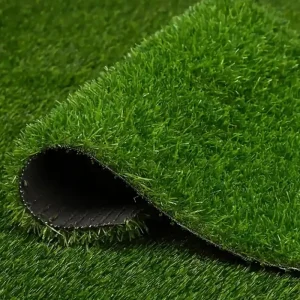
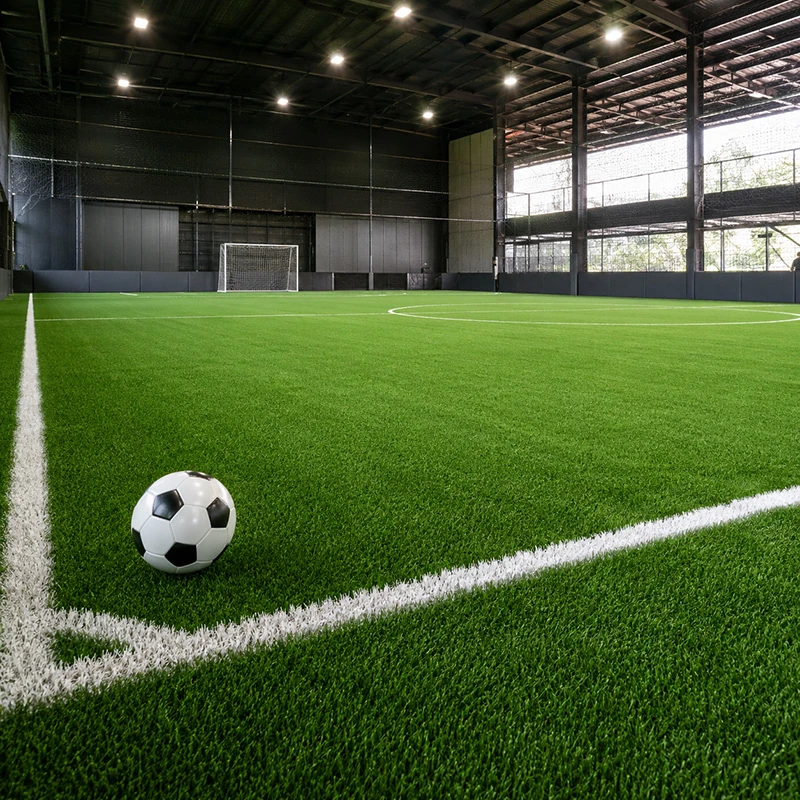
Selecting the optimal surface for a futsal court is a decision that goes far beyond aesthetics. Unlike casual backyard landscaping, a professional or semi-professional futsal football stadium needs a scientific balance of biomechanics, material engineering and strict safety compliance. For purchasing managers and sports facility supervisors, the floor is more than just a product; It is a high-performance asset that directly affects the agility, ball control accuracy and long-term maintenance budgets of the players. This guide deconstructs the basic technical parameters required for purchasing the best futsal artificial grass, ensuring that you can browse the specifications such as pile density, fiber weight and shock absorption standards with confidence.
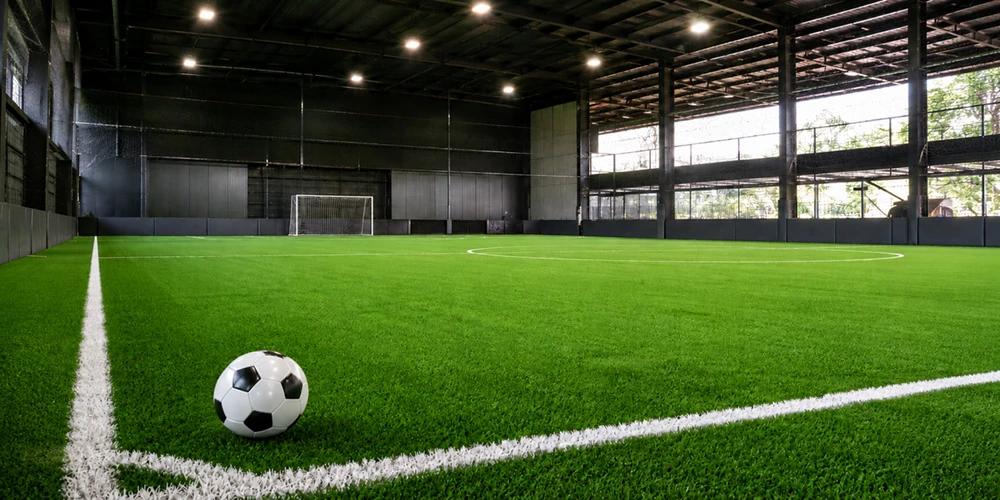
Futsal vs. Full-Sized Soccer: Why Futsal Demands Higher Durability
Assuming all artificial turf systems deliver similar surface performance, it usually leads to premature system failure. However, the physical dynamics of futsal place exponentially higher stress on a sports turf mat compared to traditional full-sized soccer fields.
The major challenge is the geometry of the game. A standard futsal soccer court is about 25-42 meters long, which is only a small part of a standard 11-a-side soccer court. This compact space results in a high player density ratio, meaning specific zones on the court endure continuous, high-frequency foot traffic throughout a match. There is no free space to spread the load; The entire playing surface becomes a continuous high-wear zone.
In addition, the biomechanics of futsal football introduces great shearing forces. The player performs a quick lateral cut, sudden stop and constant rotation. These aggressive movements act like sandpaper, gradually abrading the upright fibers, producing a twisting force, which is rare in linear running. If the turf lacks structural integrity, the fibers will split at the base, resulting in a phenomenon known as “matting.” A flattened surface compromises ball roll speed and dramatically increases the risk of torque-related ankle and knee injuries. Therefore, specifying a high-durability, low-friction futsal artificial grass designed for hard-court dynamics is not a luxury; It is a fundamental safety requirement.
Technical Specifications for Futsal Turf: Density, Pile Height, and Dtex
In order to make a wise purchasing decision, we must go beyond general marketing terms and analyze the quantitative data hidden behind the advantages. For indoor sports flooring applications, three variables dictate the lifespan and performance of a futsal pitch: pile height, face weight (Dtex), and gauge.
1. Pile Height Optimization (25mm to 50mm)
Pile height is the most intuitive specification to evaluate. For futsal soccer, the ideal range is usually between 25mm and 50mm, but the specific choice depends on the specific application.
- Non-Infill Systems (25mm–35mm): These are highly recommended for professional indoor courts. Short, dense tufts without loose rubber fillers provide excellent dimensional stability, ensuring perfect smooth ball rolling and real rebound. These products, often resembling a textured sports turf mat, facilitate low-maintenance cleaning, as no granular infill can migrate or create dust.
- Infill Systems (40mm–50mm): This height is more suitable for an outdoor environment, where weather resistance and a softer natural grass simulation are needed. The longer fibers need silica sand and rubber particles to keep the blades upright and provide critical ultraviolet protection to the backing.
2. The Critical Role of Density and Dtex
Density (measured by the number of needles per square meter) and Dtex (grams per 10,000 meters of fiber) are the unsung heroes of durability.
- Dtex: This measures the linear mass density of the fiber. A higher Dtex number (e.g., 11,000 or higher) indicates a thicker, heavier, and more resilient blade capable of resisting the aggressive shearing forces discussed earlier.
- Gauge: This refers to the distance between stitch rows in the tufting process. A narrower gauge (e.g., 3/8 inch) allows for more stitch rows per linear meter, directly contributing to higher total stitch density.
A futsal football field that only relies on a soft feel and does not have enough fiber weight will soon level off. Low yarn Dtex combined with insufficient stitch density leads to rapid fibrillation, and the fibers split at the tip, resulting in a vague and slow surface.
3. The Indoor Safety Imperative
When the indoor sports floor is specified, toxicity and fire resistance are non-negotiable. Because the indoor environment lacks the rapid air diffusion of the outdoor site, it is very important to purchase turf composed of polymers with low volatile organic compounds (VOCs) and heavy metal stabilizers. Comply with fire safety standards (such as ASTM E648 Class I or European Bfl-s1) to ensure that this product contributes to a safe and breathable indoor air quality.
The table below offers a comparative analysis of two typical specifications to guide your evaluation:
| Specification | Non-Infill Futsal System (Indoor) | Infill Football System (Outdoor) |
| Pile Height | 25mm – 35mm | 40mm – 50mm |
| Typical Dtex | 8,800 – 11,000 (High resilience) | 11,000 – 13,000 (Heavyweight) |
| Density (Stitches/m²) | > 40,000 (High density essential) | 16,000 – 21,000 |
| Gauge | 3/8 inch or narrower | 5/8 inch |
| Ball Roll Resistance | Very Low (Fast game) | Medium (Controlled game) |
| Maintenance | Low (Vacuum/Brush) | Medium (Re-distribute infill) |
For those who want to physically evaluate the structural integrity of the backing and optical fiber configuration, viewing the dedicated football field turf solutions page can provide more visual background on how these technical specifications are translated into a finished product.
Installation and Maintenance: Enhancing Playability with Shock Pads and Infill
Specifying a quality sports turf mat is only half of the equation; The sub-base and installation methodology are what ultimately deliver professional performance and athlete safety, especially on rigid indoor concrete substrates.
The Imperative Role of the Shock Pad
When the futsal football field is directly installed on concrete or asphalt, there will be a serious risk of injury. The design of human joints can not absorb the repeated and high-impact G-forces generated on a non-yielding surface. This is the reason why the elastic shock-absorbing pad becomes crucial. Placing a high-quality damping pad between the base and the turf can effectively decouple the system and absorb kinetic energy, so as to reduce the pressure on the metatarsal, Achilles tendons and knee cartilage of players. This risk is fully recorded in the biomechanical study of surface hardness and joint load (National Center for Biotechnology Information). For indoor sports flooring projects, we strongly recommend integrating a shock pad that maintains a minimum Head Injury Criterion (HIC) compliance rating, significantly lowering the risk of impact-related trauma.
Precision Infill Selection
If the chosen specification is a 40mm–50mm outdoor system, infill is a key performance modifier. The standard industry approach is a dual-layer infill:
- Silica Sand: Coated, round-grain silica sand is applied first as a ballast. It stabilizes the main support, increases the quality of the system to prevent wrinkles, and the key is to keep the fiber vertical.
- Performance Granules: A top dressing of SBR rubber or, preferably, eco-friendly TPE/EPDM granules provides the necessary resilience. It reduces skin wear in the process of sliding tackles and optimizes the energy recovery of the surface.
Routine Maintenance Protocol
Preventive daily maintenance is very important for maintaining athletic ability. We recommend regular brushing with a drag brush that has synthetic bristles to counter the natural tendency of fibers to lie flat in high-traffic areas. This restored the elasticity of the polyethylene. In dry conditions, the filler can be moved. Regular inspection and redistribution of loose particles can ensure the consistent damping effect of the whole stadium. In addition, the use of a leaf blower or vacuum system can prevent organic debris from being biodegraded and blocking the drainage pores of the backing.
Sourcing Futsal Turf: What to Look for in a Manufacturer
The technical performance of a futsal court is ultimately guaranteed by the supply chain behind it. When choosing a artificial turf grass manufacturer, due diligence must be extended to certifications, customization ability and logistics reliability.
Certifications and Quality Control
Reliable luxury turf suppliers are known for their strict compliance with international standards. For the sake of peace of mind, the purchasing managers should request current ISO 9001 (quality management) and ISO 14001 (environmental management) certifications. It is very important that the materials comply with REACH regulations (registration, evaluation, authorization and restriction of chemicals) to ensure that there are no harmful substances in the yarn or backing. These certifications are objective proof that a manufacturer doesn’t cut corners on the purity of raw material.
True Customization Capacity
Off-the-shelf solutions rarely meet the specific micro-climate and usage demands of a bespoke futsal facility. A capable partner should have the engineering ability to modify the product structure. This includes adjusting the tufting needle pitch, stitching density and pile height without affecting tufting locking, that is, the force required to pull out an individual tuft from the backing. Whether you need a thin terry pile for indoor multi-sports or a textured monofilament for outdoor futsal competition, the manufacturer must prove the real laboratory testing and research ability, not just assembly ability.
Global Sourcing and Logistics
Partnering directly with a factory provides distinct advantages in freight optimization. By reverse-engineering the roll dimensions to maximize container space, utilizing high-compression packing technology without destroying memory-fiber recovery, a professional artificial turf grass Manufacturer can significantly reduce shipping costs per square meter. Furthermore, a direct relationship ensures that post-installation technical support, including welting and seaming advice, is readily available.
We encourage facility managers and distributors to contact an experienced partner, such as X-Nature Grass, to obtain custom samples and independent laboratory testing reports. Physically evaluating a sample’s back coating consistency and fiber memory is a vital step before committing to an international shipment.
Frequently Asked Questions (FAQ)
Q1: What is the optimal pile height for an indoor futsal court?
A: For the majority of indoor futsal applications requiring a true sports ball bounce, we recommend non-infill systems with a pile height between 25mm and 35mm. This range minimizes rolling resistance without creating dangerous traction on hard subfloors.
Q2: How does “Dtex” affect the life of a futsal surface?
A: Dtex measures the weight and thickness of the individual grass fiber. A higher Dtex score indicates a heavier, more robust yarn that can withstand the repetitive pivoting and shearing forces common in futsal. Low Dtex yarns are prone to premature splitting and flattening.
Q3: Is a shock pad absolutely necessary under a futsal turf mat?
A: Yes, particularly over concrete. Concrete has zero yield. A shock pad provides essential force reduction, protecting players from joint trauma. It also corrects minor subfloor irregularities, ensuring the finished indoor sports flooring is perfectly uniform.
Q4: Can outdoor football grass be used for indoor futsal?
A: We do not recommend this. Outdoor grass often requires loose rubber infill, which creates dust, migration, and maintenance nightmares inside a building. Indoor futsal artificial grass should ideally be a tight, dense, non-infill system designed for cleanliness and a smooth ball roll.
Q5: How does gauge influence the density of the turf?
A: Gauge is the lateral distance between stitch rows. A tighter gauge (e.g., 3/8”) means more rows per meter of width, resulting in significantly higher stitch density. Higher density provides superior dimensional stability and foot traffic resistance for futsal courts.
Conclusion
Selecting the best surface for a futsal facility is a complex engineering decision rooted in the balance of fiber density, optimal pile height, and proper sub-base integration. As we have discussed, the concentrated physical demands of futsal require a special futsal artificial grass, which exceeds the ability of standard landscape or ordinary football field turf. Investing in a high-density, high-Dtex system, whether it is a smooth non-filled solution for indoor courts or a solid filled support pad for outdoor venues, can ensure that the surface remains durable under strong shear forces. By giving priority to verifiable safety certifications and cooperating with a transparent luxury turf supplier, facility managers can ensure that the life cycle maintenance cost of the final product is minimized, while giving priority to the biomechanical safety of each player on the court.