
Choose multi sport artificial grass around your main sport, playing level, and the tradeoffs you can accept for other sports. A longer list of sports on a quote can make the brief less useful.
A school may need football lessons, tennis practice, and general games in one space. Yet those sports do not ask the same things of a surface. Ball roll, bounce, grip, and the layout each need a clear brief. The aim is a shared field that suits the school timetable.
That means choosing sports turf as a complete system, with the carpet, infill, any shockpad, base, and drainage planned as one build. It also means checking what happens between bookings: who moves the goals, changes the nets, and inspects the surface?
This guide explains how to compare multi sport artificial grass without choosing by pile height alone. You’ll find a sport-priority table, a layout checklist, and a quote breakdown. The advice draws on sports-body guidance and keeps general buying advice distinct from facts about one model.
Key takeaways
- Set the main sport and playing level before choosing the surface or line plan.
- FIH separates football/hockey dual-sport guidance from Gen 2 guidance for hockey, netball, and tennis.
- A turf sample cannot establish the performance of the complete installed field.
- Compare groundworks, drainage, equipment, testing, and upkeep alongside the carpet price.
- A MUGA needs a written care plan and a clear process for accepting the finished works.
Match multi sport artificial grass to your sports
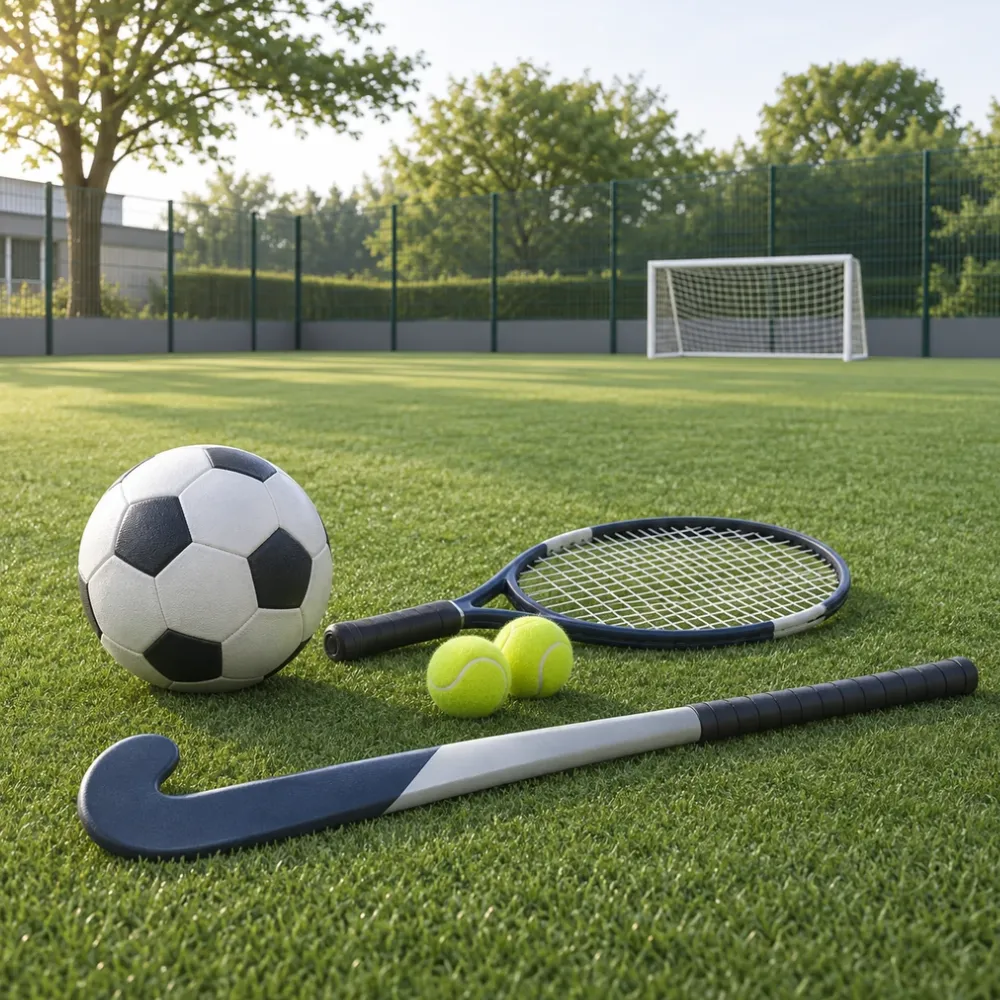
A multi-use games area, or MUGA, brings activities into one space. The name does not establish that multi sport artificial grass suits each sport. It may use artificial grass or another type of sports surface.
Start by listing your main and secondary activities. Then compare sports turf options against that list, rather than choosing by looks alone. Write “soccer” or “American football” explicitly, because “football” can mean different sports across markets.
The FIH multi-sport fields guidance describes shared-surface performance as a compromise. It says to assess the fit for higher levels of play before building. Use this to start your search for multi sport artificial grass.
| Priority on your timetable | What to compare | Question for the designer or supplier |
|---|---|---|
| Soccer-led lessons or training | Ball roll, ball rebound, footwear, and player-surface response | Which complete system supports the intended level of soccer and each secondary use? |
| Hockey with tennis or netball | A short, dense surface, ball response, and the relevant community-use requirements | Is the proposed system supported for this combination and level? |
| Tennis-led recreation | Tennis-ball bounce, pace, grip, court markings, and net fittings | What tennis evidence applies to this exact build? |
| Basketball or other rebound-led games | Ball bounce, traction, and the relevant court-surface options | Would a different surface better serve the main activity? |
| General school games | Age groups, access, footwear rules, supervision, and wear areas | What uses and restrictions will the operator need to manage? |
For a soccer-led shortlist, use the football grass range as a product starting point. Ask about the other sports too. A list of uses cannot settle all the needs of a MUGA.
Turn the timetable into a decision
Hypothetical example: Alex’s school timetable. Alex is planning a shared field for September. Their draft schedule has 18 hours of soccer and six hours of tennis each week.
The tennis teacher wants a sound bounce; the football coach wants good ball roll. Alex asks both to rank their needs before seeking multi sport artificial grass quotes.
They agree that soccer comes first and tennis is for casual play, subject to a surface review. The result is a clearer brief, rather than a claim, without proof, that one carpet suits both equally.
Use the same process for your MUGA: record hours, playing level, and any need that cannot be met through a tradeoff. This helps sports turf sellers explain their choice.
Specify the multi sport artificial grass system
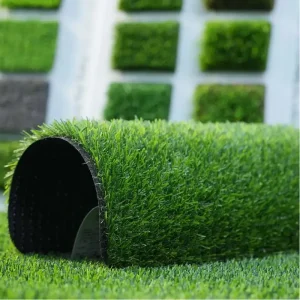
Pile height measures the length of the fibers above the backing. It matters, but it cannot describe the whole surface. Two carpets with the same height can use other yarns, infill, pads, and bases.
When comparing multi sport artificial grass, ask which parts make up the proposed system. The test reports and fitting guide should describe the same build. Don’t assume a softer sample will produce the right bounce or ball roll.
Ask what each layer must do
| System element | What your specification should settle |
|---|---|
| Carpet and backing | Exact model, fiber construction, seams, dimensions, and the intended sports |
| Infill, if specified | Material, quantity, installation method, and the care needed to maintain the specified level |
| Shockpad, if required | Exact pad and thickness, its role in the tested build, and the base it needs |
| Base and drainage | Levels, stability, water movement, drainage outlet, and responsibility for site design |
| Lines, edges, and fittings | Layout, joining details, transitions, net sockets, and equipment installation |
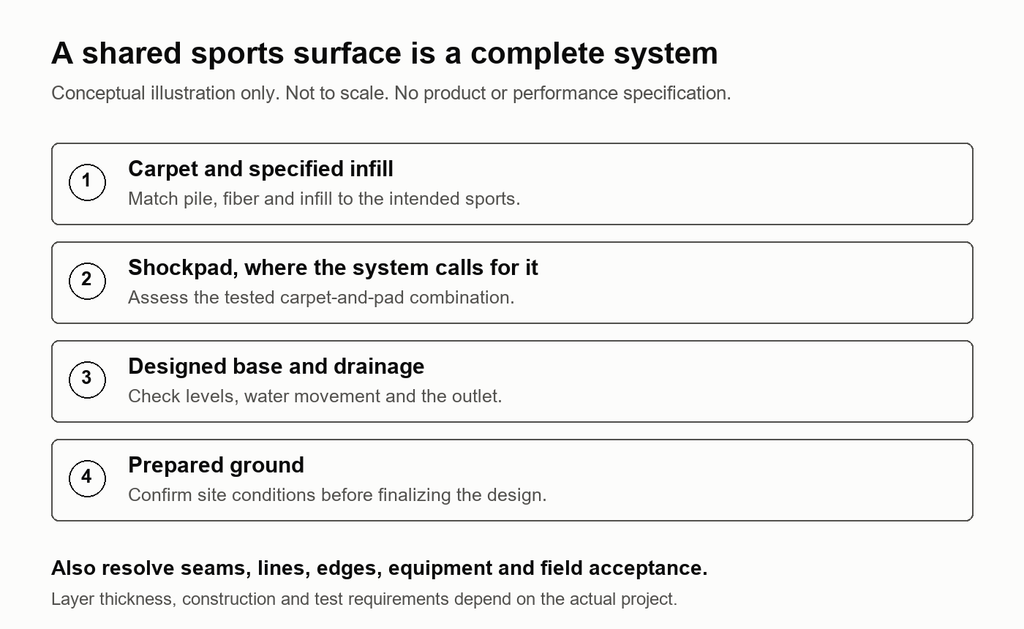
Conceptual system illustration, not to scale. It does not specify an X-Nature product or construction design.
The shockpad is a layer beneath the carpet used where the design calls for it. Choosing a thicker pad by feel cannot replace a check of the complete sports turf system. Ask how the proposed build meets the sport’s needs, including ball roll and bounce where required.
Separate product information from field evidence
In April 2025, FIH and FIFA Innovation announced dual-sport guidance for grassroots football and hockey. The announcement covers how fields must play and last, how to build them, layouts, and field certification. It does not make every shared-use carpet suitable for all levels of play.
For multi sport artificial grass, request the proof that applies to your sports and level. Identify whether it covers a lab sample, a full system, or a finished field. Those scopes answer different questions.
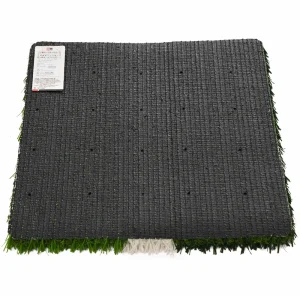
X-Nature lists its MCDS30 football turf with a 30 mm pile height and describes it as infill-free. These are details published by X-Nature about this model. They do not, by themselves, prove a fit for tennis, hockey approval, or the ball roll of a finished MUGA.
Keep the exact multi sport artificial grass model on the quote and record any proposed model swaps. If the carpet, pad, or infill changes, ask whether the test evidence still applies. That check matters more than a generic “multi-sport” label.
Plan the shared layout before ordering
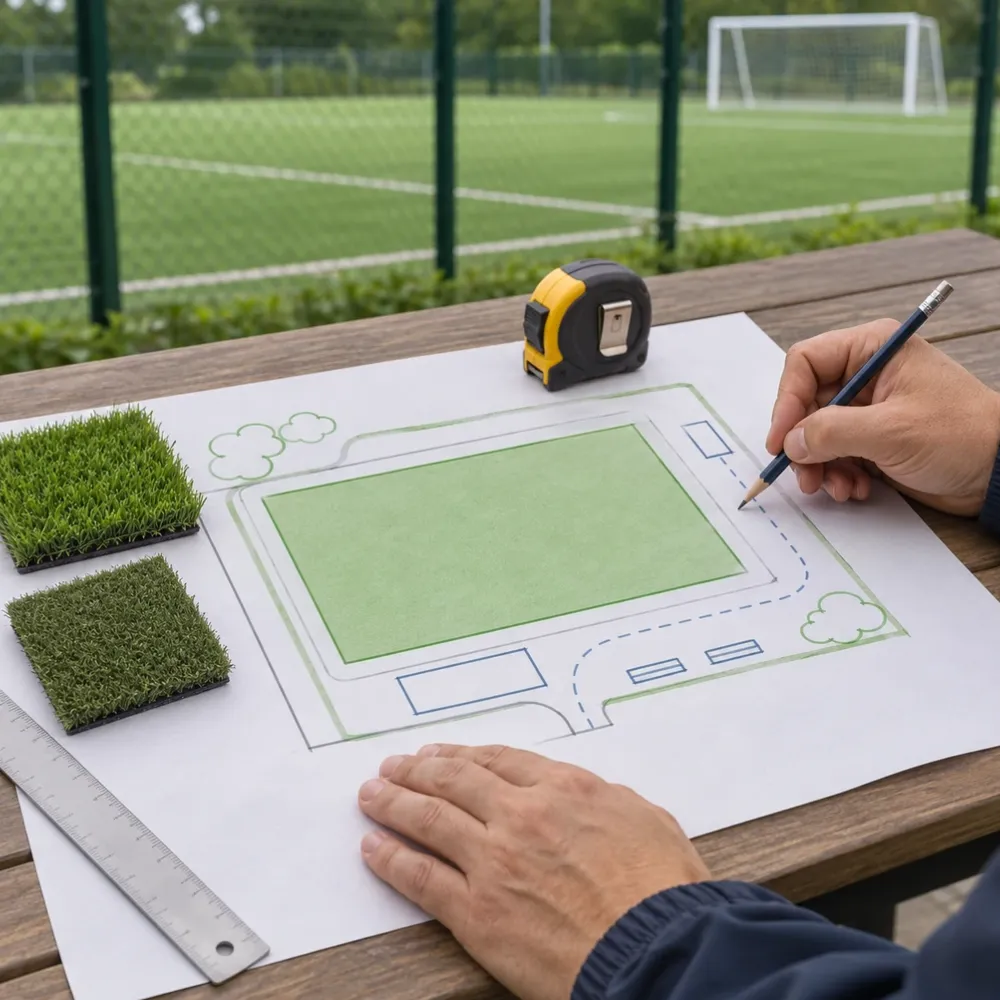
A good surface still needs a good plan. Before ordering multi sport artificial grass, draw the playing areas, the surrounding clearance, and the routes used to enter or move sports gear. The fenced area is not always the usable playing space.
Sport England’s outdoor-surfaces resources cover different surface families and their suitability for each level of play. Its Artificial Surfaces for Outdoor Sport guide replaces the original MUGA Volume 1 guidance. Check each sport’s needs with the project designer rather than copying an old layout.
Agree the line plan and changeover
Use an annotated drawing to resolve these points before manufacture or installation:
- Show the main activity. Make its markings easy to identify, and explain the purpose of each secondary line color.
- Check clear space. Resolve run-offs, fence setbacks, entrances, access routes, and obstacles against the actual sports and local requirements.
- Locate the equipment. Mark net posts, goals, storage, and sockets, with appropriate anchoring and installation details.
- Plan the changeover. Assign staff time and equipment movements between bookings, including where unused items will be stored.
- Check the whole field. Keep seams, line inserts, drainage details, and transitions within the agreed sports turf construction plan.
Overlapping lines on multi sport artificial grass can make a MUGA harder to use. Ask coaches, facility staff, and sports turf installers to review the drawing together. Temporary markings may help occasional activities, but confirm the proposed marking method with the surface supplier.
Also decide how ball roll will be assessed across seams and inserted lines. A hand sample won’t show how joins will work on the field. Put that question into the handover plan for multi sport artificial grass.
Preparing a shared-use brief? Bring your sport list, playing levels, dimensions, and marked-up layout to the specification discussion. Include the changeover routine so the proposed MUGA can serve the timetable you intend to run.
Compare whole-project costs and supplier scope
The price of a roll is one part of a field budget. A useful multi sport artificial grass quote should make the supplied area, construction scope, exclusions, and responsibilities clear. Compare suppliers on the same brief before judging the totals.
If the site needs major drainage or base work, a carpet-only price won’t describe the project. Keep the sports turf purchase apart from the works needed to prepare the site. Check that someone owns each task.
Build an itemized comparison
| Budget line | What to ask each bidder to include or exclude |
|---|---|
| Survey and design | Site assessment, levels, ground investigation where needed, and the approved sports layout |
| Groundworks and drainage | Excavation, disposal, base construction, outlets, and work outside the playing area |
| Turf supply | Model, roll layout, supplied area, cutting allowance, seams, and line materials |
| Pad and infill | Required system components, quantities, delivery, and installation |
| Equipment and access | Goals, nets, sockets, storage, fencing, gates, and access arrangements |
| Installation and testing | Labor, joining, finishing, inspections, field tests, and responsibility for correcting defects |
| Transport and taxes | Delivery point, unloading, duties or taxes, and the agreed import responsibilities |
| Ongoing ownership | Staff care, equipment, specialist visits, repairs, eventual removal, and replacement |
A price per square meter won’t settle all these items. For wider procurement questions, use our sports-field buyer guide alongside the shared-use specification. Keep the MUGA schedule and system needs with each request for pricing.
Hypothetical example: Jordan’s two quotes. Jordan requests multi sport artificial grass for a 1,200 m² community area. One quote prices turf supply; the other includes a pad, fitting, and line markings. Neither clearly assigns drainage work or opening tests.
Jordan sends both bidders the same scope table and asks them to list the missing work. The new quotes can then be compared fairly. This example shows a buying process. It is not an X-Nature project, saving, or customer result.
Ask bidders to explain how maintenance affects the proposed sports turf system over time. If they promise lasting ball roll or low running costs, request the conditions behind those statements. Record who pays for checks, repairs, and tests after the MUGA opens. An upkeep plan should come with multi sport artificial grass quotes.
For multi sport artificial grass, a clear handover is part of the deal. Name who will show staff how to care for the field and fix defects. Put any warranty terms into the quote and contract.
Maintain play quality and check the handover
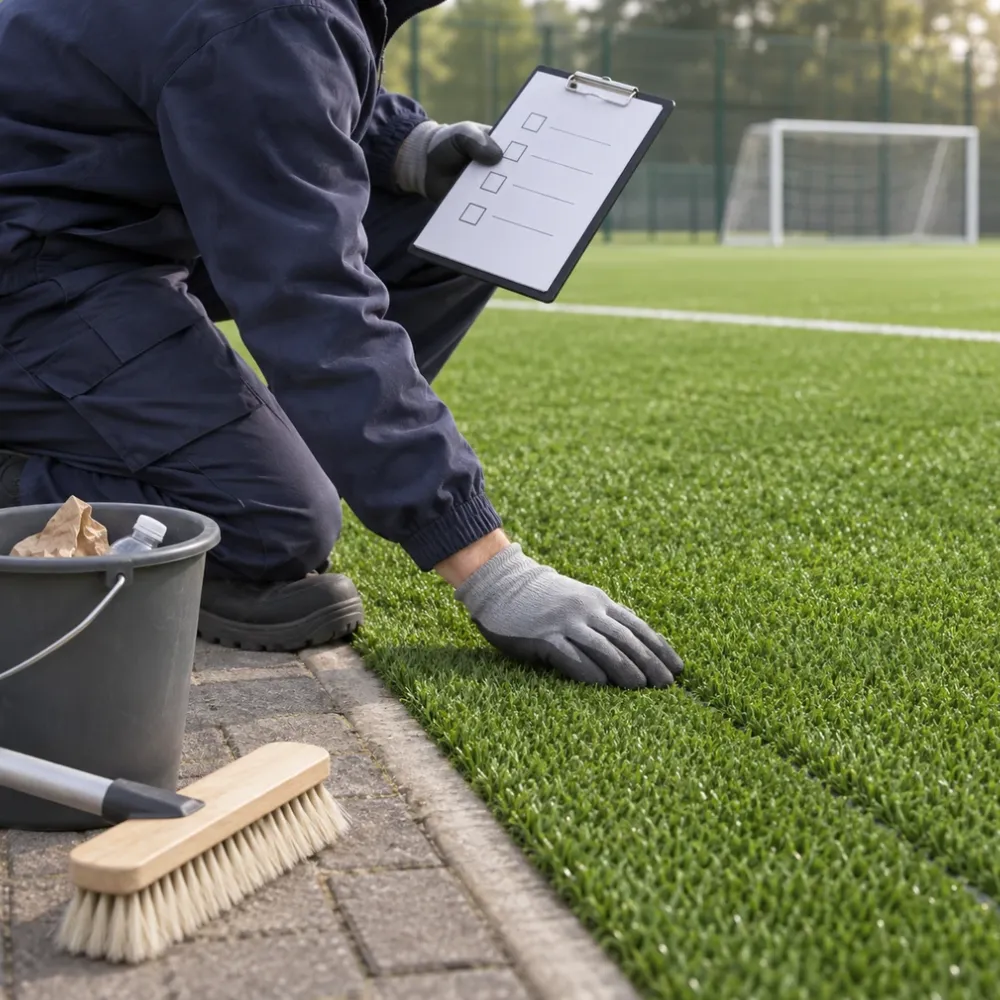
Shared use does not remove maintenance. Before accepting multi sport artificial grass, get the care guide for the exact carpet and system. Match tasks to staff, tools, and time. Don’t assume every field needs the same care schedule.
Sports turf care may include clearing waste, approved brushing, infill checks where needed, and checks of seams or edges. Ask which tools and cleaning products are allowed. A MUGA operator should know when to close the field and who can help with faults.
Set up a practical care record
- Around use: Inspect for debris, loose equipment, damaged joins, exposed edges, and changes in surface condition before allowing play.
- After adverse weather: Check drainage, standing water, loose material, and the conditions identified in your site’s closure and reopening procedures.
- For ball response: Record complaints about bounce or ball roll, their location, recent weather, and the work already done.
- For planned care: Follow the specified brushing, cleaning, and infill procedures; keep records of tasks and any repairs.
- For future costs: Review the maintenance budget, replacement planning, and the actual local options for removing or processing used materials.
When ball roll changes, report it rather than adding sand or changing the pad without advice. Ask for help to find the cause. Changes to multi sport artificial grass should follow the system’s care guide.
Check the field before opening
Agree the acceptance process before construction starts. At handover, check the following against the multi sport artificial grass specification:
- The installed sports turf model and components match the agreed records.
- Lines, clearances, equipment, and access match the approved MUGA plan.
- Seams, edges, transitions, drainage, and any defects have been inspected.
- Required tests, including ball roll where specified, have a named responsible party and recorded results.
- The operator has the care instructions, contact details, training, and outstanding-work list.
For installation context, the following third-party video is titled “MultiSport Synthetic Surface Install in Stratford, London” by Soft Surfaces Ltd. It is not an X-Nature project or proof of how your proposed system will play.<iframe width=”560″ height=”315″ src=”https://www.youtube.com/embed/zWsvGTdC4dg” title=”MultiSport synthetic surface installation in Stratford by Soft Surfaces Ltd” loading=”lazy” allowfullscreen></iframe>
Questions about shared sports surfaces
Can football and tennis use the same artificial surface?
They can share a system at agreed playing levels, but you need to check the fit. Soccer ball roll, tennis bounce, grip, and footwear needs can conflict. Define the priority sport, then ask for evidence covering both uses. Multi sport artificial grass should not be selected solely because both sports appear in a catalog.
What is the best pile height for a shared sports field?
There is no universal best height for a MUGA. Choosing multi sport artificial grass depends on sports, level, yarn, infill, pad, and the full build. Compare ball roll and bounce requirements alongside the proposed sports turf specification. A height number alone cannot show how the finished field will play.
Does a multi-use field need a shockpad?
Use a shockpad where the chosen system and the sport’s rules call for one. Check evidence for the proposed carpet-and-pad combination rather than treating padding as an extra layer for comfort alone. Multi sport artificial grass needs a system decision, and must account for each sport and its ball response.
Is infill-free turf maintenance-free?
No. Infill-free multi sport artificial grass still needs checks for debris, wear, damaged seams, and drainage faults. Follow the seller’s care guide and footwear rules. If ball roll or grip changes on an infill-free MUGA, ask for a check rather than adding more fill on your own.
What most affects the installed cost?
The state of the site and scope of work can change the budget. Compare base preparation, drainage, sports turf components, installation, equipment, and testing on the same basis. Include care and replacement planning. A multi sport artificial grass supply price cannot replace a quote for all the work.
Choose around the sport that matters most
Start with the timetable and decide which sport sets the main needs. Then check how the other sports fit, their playing levels, and any tradeoffs the staff accept. Agree on those points before you choose a product.
Next, compare the full sports turf build: carpet, infill where specified, pad, base, drainage, lines, and equipment. Ask what evidence applies to that combination. Keep the layout and handover plan with the quote so everyone works toward the same result.
Finally, give the MUGA a care plan that staff can carry out. Record who checks the field, responds to faults, and reviews changes in ball roll or bounce. Leave time and budget for upkeep between bookings. Keep a dated copy of the agreed build and line plan. That record helps staff check later changes against the field they accepted.
Ready to discuss your shared-use project? Send X-Nature your sports, playing levels, area, location, and site information. Use those details to begin a multi sport artificial grass specification and request a quote with clearly defined scope.