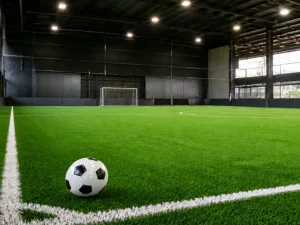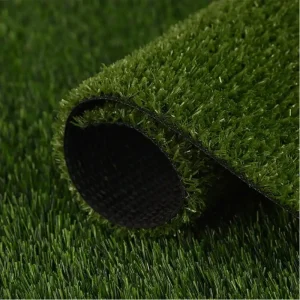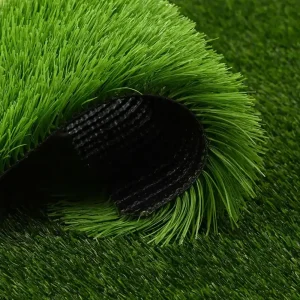
Football turf infill is material placed within the artificial grass pile to perform specified roles in the playing system. In a typical infilled construction, those roles include stabilizing the carpet and contributing to its playing characteristics. The right choice depends on the complete proposed system, not a material name alone.
Two quotations can both mention rubber, sand, or cork while describing different constructions. Compare the carpet, any pad, the infill layers, and their supporting documents before treating the offers as equivalent. A low material price cannot answer questions about compatibility, installed quantity, or later maintenance.
This guide gives buyers a practical way to review football turf infill materials, quantity fields, reports, and supplier responses. Start with your project requirements, use the comparison tables to identify gaps, and keep unresolved questions visible until the responsible people have answered them.
Key takeaways
- Separate stabilizing and performance roles before comparing materials.
- Match the infill, carpet, pad, and proposed installation to the supporting evidence.
- Obtain quantity and depth requirements from the specified system documents.
- Compare maintenance, replenishment, and supply scope alongside initial cost.
- Check destination-market requirements without treating regional rules as a global ban.
What football turf infill does in the system
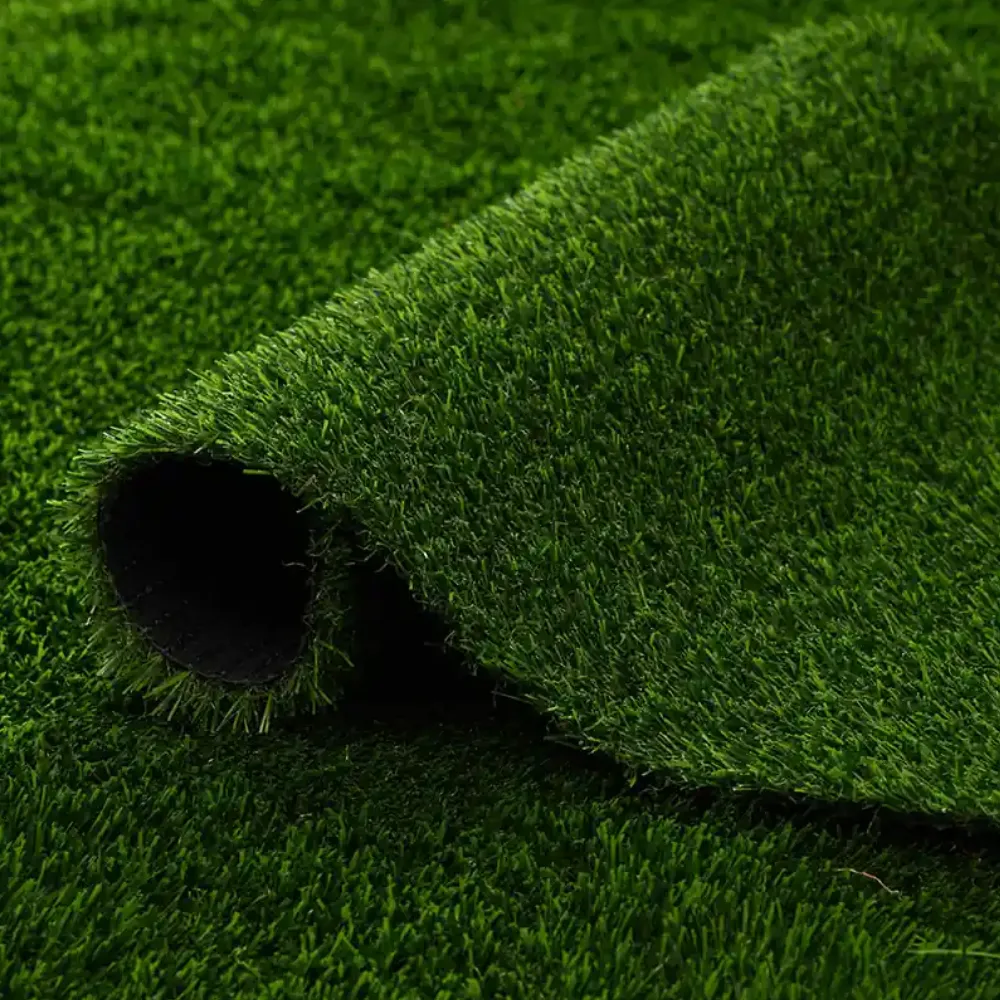
Infill is part of the surface construction. It should appear in a layer schedule rather than as an unexplained line in a quotation. That schedule should identify each material, its role, and how it relates to the carpet and other components.
Ghent University’s explanation of artificial turf layers describes a common arrangement using sand for stability with performance infill above it. It also explains that the quantity depends on the system and that some carpets are designed without infill. These are useful distinctions, not instructions to give every field the same layers.
Stabilizing and performance roles
For football turf infill, ask which material provides the specified ballast or stability and which serves the performance role. Do not assume every granule performs both functions, or that all proposals use a separate layer for each role. Record the supplier’s actual construction.
Keep the base and any shock pad in the review. An infill description does not explain the entire surface, and a pad description does not define the infill. Request evidence for the proposed combination rather than collecting unrelated component brochures.
The football turf buying guide covers the wider procurement process. For this football turf infill comparison, begin with the layer schedule and intended use. Send X-Nature your project brief and existing specification to ask which model-specific documents are available for the proposed carpet.
Illustrative scenario: A buyer receives two offers labeled “sand and rubber.” One includes a pad and the other leaves the supporting layers undefined. The buyer requests complete schedules before comparing prices. This hypothetical example illustrates a scope check, not a customer result.
Comparing football turf infill materials
Use material categories to organize questions, not to award a universal winner. Sand, polymer granules, cork, and other vegetal materials can appear in different system proposals. Their names do not establish a particular result for your field.
Sand and mineral-based options
Ask whether sand is specified as a stabilizing layer, part of a blend, or the main infill in a particular design. Obtain the material description, grading requirements, and installed quantity from the system documents. A general sand label does not identify the product to order.
For a football turf infill proposal described as mineral-filled, request the full construction and relevant evidence. Do not assume that removing a performance layer from another design creates an equivalent mineral-filled system. The proposed arrangement needs its own review.
SBR, EPDM, and TPE
SBR means styrene-butadiene rubber; EPDM means ethylene propylene diene monomer rubber; TPE means thermoplastic elastomer. These labels appear in football turf infill comparisons, but they do not define a complete product. Ask for its composition and product code. Request declarations for any recycled content, coating, additives, or origin requirements in your project.
When comparing football turf infill in these categories, separate the supplier’s general description from measured results. Ask which report supports a heat, wear, playing-performance, or environmental claim and whether its conditions match the proposed construction. Color, softness, and price are not substitutes for that evidence.
Cork and other vegetal options
Cork and other plant-derived materials also appear in football surface proposals. “Natural” or “organic” is a description of origin, not a complete performance or chemical specification. Ask which product, particle characteristics, maintenance requirements, and system evidence accompany the offer.
For football turf infill made from a vegetal source, include local operating conditions and replenishment arrangements in the enquiry. Do not assume that all cork products, blends, or other plant materials behave alike. Request the supplier’s instructions and evidence for the specific product.
| Material group | What to identify | Question before approval |
|---|---|---|
| Sand or mineral material | Product, role, grading, and layer schedule | Does the proposed system specify this material and quantity? |
| SBR, EPDM, or TPE product | Composition, product code, and relevant declarations | Which system results and material documents match the offer? |
| Cork or other vegetal product | Source description, product identity, and particle characteristics | What care and replenishment arrangements apply? |
| Coated product or blend | Components, coating or blend description, and revision | Does the evidence cover the supplied formulation? |
This table is a request framework. It does not rank materials as safest, coolest, cheapest, or longest-lasting. Those comparisons require a defined scope and suitable evidence.
Verify infill quantity and compatibility
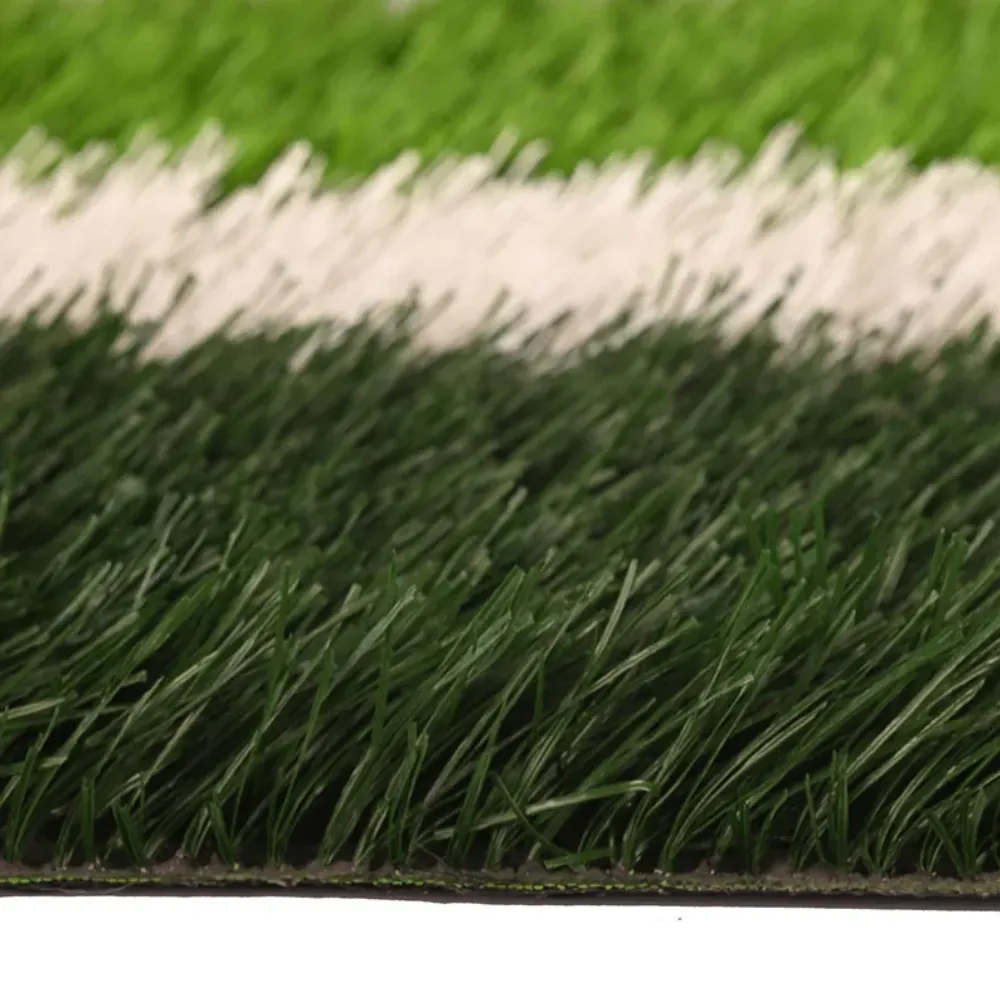
Request both the specified quantity and the installed-depth requirements where applicable. Keep the units visible. Kilograms per square meter describe mass over area; millimeters describe depth. They are not interchangeable labels.
The relationship depends on the material and its installed condition. Bulk density describes mass per bulk volume under a stated measurement method. Do not convert a football turf infill depth into an order mass using a guessed density. Ask how the supplier defines, measures, and checks each field.
Read the manufacturer’s layer schedule
A football turf infill schedule should identify the material or product for each role, its quantity basis, any depth requirement, and the applicable tolerances or checking method. Ask which document revision governs the order and who checks the installed result.
Keep carpet pile height separate from infill depth. A grass-height figure alone is not a recipe for how much material to buy. Likewise, a hand sample is not sufficient to establish the quantity for a full field.
For a simple procurement calculation, use the confirmed area and specified rate:
Order mass in tonnes = area in m² × specified rate in kg/m² ÷ 1,000.
This is unit arithmetic, not a recommended installation rate. Calculate each specified material separately and ask how packing, agreed allowances, and any reserved material affect the order. Do not add an arbitrary allowance and present it as a system requirement.
Review substitutions before changing materials
Before changing football turf infill, identify which system documents, tests, installation instructions, and warranty terms need review. Ask for a written explanation if a replacement product differs in composition, grading, or other specified properties.
Illustrative scenario: An operator considers replacing an existing material with cork. The operator sends the original carpet, pad, and infill records to the responsible supplier and asks what review is required. This invented example does not establish that the substitution is compatible or approved.
Treat missing information as an open item. Request the relevant system documents from X-Nature with the carpet identity, proposed layers, and specific question. Do not assume that X-Nature supplies every material category mentioned in this guide.
Testing and market requirements for football turf infill
Read the report identity before relying on a result. Record the issuer, number, date, method or edition, specimen or system, conditions, and measured properties. Then compare that description with the offer.
A component result and a completed-field result answer different questions. For football turf infill selection, ask which evidence addresses the full proposed construction and which addresses only a material. Do not describe a company document or a laboratory sample as certification of an installed field.
What a recent study can and cannot show
A 2026 field study published in Sports Engineering involved 30 amateur male football players across seven surface types. Five used vegetal infills; the comparison also included a rubber-infilled surface and natural grass. The authors reported no single vegetal infill outperforming the others across every variable.
That supports careful, context-specific evaluation rather than a universal material ranking. The study compared existing field systems, not identical assemblies with only one component changed. It should not be used as an injury, toxicity, lifetime, or X-Nature product claim.
EU-specific supply planning
The European Commission’s explanatory guide to the synthetic polymer microparticles restriction explains the granular-infill provision in Q&A 16.2. From 17 October 2031, the restriction concerns placing qualifying granular infill containing synthetic polymer microparticles on the market for synthetic sports surfaces. It does not itself prohibit using that infill.
This is not a global ban on every football turf infill material or an instruction to close every existing field. For an EU project, confirm the supplied product’s status, destination, and applicable requirements before relying on a future replenishment plan. Keep the supplier’s documentation with the project file.
Illustrative scenario: A procurement team plans a field whose operating period crosses October 2031. It asks how the proposed material and later supply arrangements address the applicable market requirements. This hypothetical planning exercise is not a legal approval or an assurance of future availability.
Maintenance, migration, and replacement planning
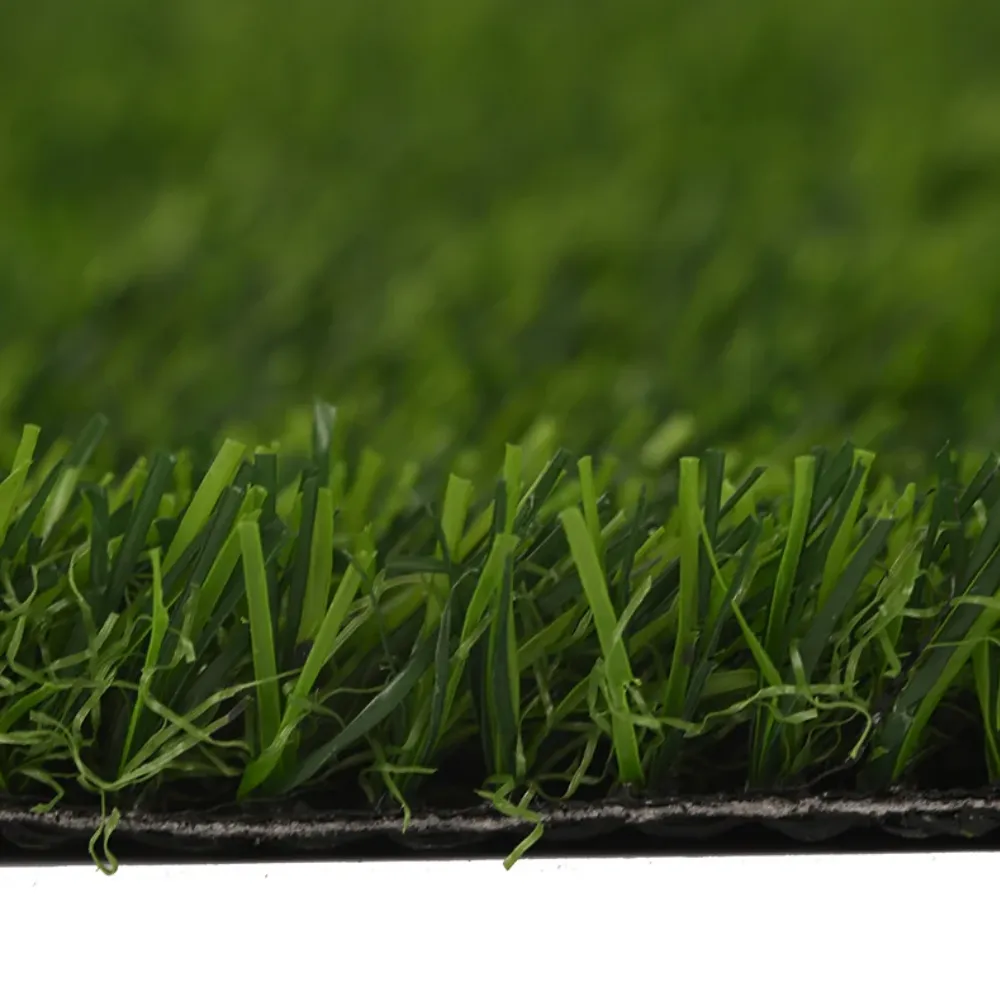
Include maintenance in the football turf infill decision before purchasing. Request the approved inspection method, equipment, material-distribution checks, and replenishment instructions for the installed construction. Ask who performs routine work and who handles specialist issues.
Keep records of the material, batch where available, work area, quantity added, and reason for the action. A low-looking patch should be investigated against the system instructions rather than automatically filled with a substitute material. Record defects separately from routine care.
The football turf maintenance guide provides an operator framework. Use the actual system manual for intervals, settings, and acceptable conditions. This football turf infill guide does not set a universal top-up period or depth.
Plan for material leaving the playing area
Ask the designer and operator how material movement will be managed around entrances, perimeter areas, drainage, cleaning, and other relevant routes. Identify who inspects those areas and how collected material is handled under the applicable instructions and local requirements.
Do not assume that a material-origin label removes the need for such planning. Equally, a general discussion of migration does not measure the losses from your field. Use site records rather than assigning an unsupported annual loss figure.
Non-infill is a separate system choice
Some carpet systems are designed without loose infill. See the non-infill suitability guide for the questions that accompany that choice. Removing football turf infill from an existing construction does not, by itself, establish an equivalent non-infill system.
If a future conversion or replacement is being considered, request a defined proposal and supporting evidence. Keep material removal, disposal or recovery, new construction, inspection, and operating responsibilities visible in the scope.
Build a supplier comparison and RFQ checklist
Use one request for quotation (RFQ) format across suppliers. A football turf infill comparison should show what is included, what remains unresolved, and which documents support the offer. Keep initial material price separate from the installed and operating scope.
| RFQ field | Information to request |
|---|---|
| Project | Intended use, location, requirements, and proposed schedule |
| System identity | Carpet model and revision, pad or other relevant layers |
| Stabilizing role | Specified product, grading, quantity, and checking basis |
| Performance role | Specified product, composition, quantity, and depth basis |
| Evidence | Relevant material and system reports, scope, and differences |
| Installation | Included work, inspection, and acceptance responsibilities |
| Maintenance | Approved tasks, replenishment material, and records |
| Supply terms | Packing, delivery scope, exclusions, and quotation validity |
This is a blank enquiry template, not a supplied X-Nature specification. Ask the supplier to complete the applicable fields and identify those that do not apply. Keep a named person responsible for resolving each missing item.
For football turf infill budgeting, compare carpet, pad, infill, installation, maintenance, and replacement assumptions on the same basis. A material sold by mass may produce a different order mass from another material at the specified installation rate. Compare the complete quoted scope rather than a price per bag alone.
Use the football grass range to identify relevant carpet enquiries. Product categories do not establish an infill-stock list or confirm a particular tested combination. Return to the proposed model and documents before approving the system.
Football turf infill questions buyers ask
Can sand replace performance infill?
Only assess that within a defined system proposal. Sand used for stability and material specified for playing performance are not automatically interchangeable. Request the complete construction and matching evidence rather than removing one layer from an existing specification.
Which infill is safest or best?
There is no universal ranking in this guide. Compare the exact product, complete system, intended use, relevant reports, and market requirements. A material name or natural-origin claim does not settle every performance, chemical, or environmental question.
How much infill is needed per square meter?
Obtain the rate and any installed-depth requirement from the approved system documents. Ask how tolerances and checks are defined. Do not calculate a recommended rate from pile height alone or use a guessed density to convert depth into mass.
Can the material be changed during maintenance?
Request a review before substituting it. Identify the existing football turf infill, proposed replacement, construction, and applicable instructions. Ask which report, compatibility, warranty, or acceptance questions the change raises, and retain the written response.
Does the EU date mean existing fields must close?
The cited provision concerns placing the qualifying granular infill on the market, not a blanket prohibition on using existing fields. Check the applicable product and destination requirements, including future supply, rather than treating the date as a worldwide rule for all infill.
Does non-infill turf eliminate maintenance?
No. It changes the system and the tasks that may apply. Obtain the specific care instructions, inspection arrangements, and repair route. Do not transfer infill tasks to a system without it or assume that no loose material means no operating responsibilities.
Choose football turf infill through a documented comparison of roles, materials, quantity, evidence, and care. Send X-Nature your project requirements and system questions to request the information available for the proposed carpet. Keep unanswered items visible until the relevant project reviewers have resolved them.