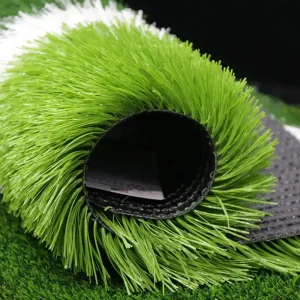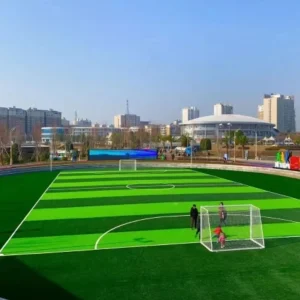
Football turf drainage needs a complete water route, from the playing surface through the specified construction to a suitable destination. A permeable backing is one part of that route; its test result alone does not show how the whole field will drain.
A sample can let water through while a project still has no confirmed outlet. If you are comparing turf or planning a pitch, that is a gap worth finding before work begins. Start with the site evidence and the proposed system, then ask how they connect.
This guide helps buyers and project teams review reports, ask focused design questions, and record drainage concerns. It provides planning checklists, not a site-specific pipe layout or construction specification.
Key takeaways
- Follow the water route beyond the carpet and backing.
- Give the designer site, ground, rainfall, and outlet information.
- Identify what a test measured before comparing its number.
- Record proposed changes to layers and their interfaces.
- Map water problems and assign unresolved questions at handover.
Use the football artificial grass buying guide for wider selection questions. Here, the focus is the evidence needed to discuss football turf drainage with the people responsible for the project.
Have a proposed model and site plan? Send X-Nature your location, model references and product-document questions to ask which information is available. Keep the site’s drainage design with the appointed design team.
Understand the full football turf drainage path

Start with the actual surface construction
Start your football turf drainage review with a list of the proposed layers. These may include carpet, specified infill, a pad, and supporting construction, depending on the design. Ask for a drawing of the actual layers. Don’t assume every pitch is the same.
For football turf drainage discussions, give each layer a clear name and reference. Ask where water enters, which way it is intended to move, and how it reaches the next part. Keep unanswered interface questions beside the drawing.
Use this conceptual sequence to frame the review: surface entry, movement through the specified construction, collection or storage where designed, and the final destination. It is a question sequence, not a construction drawing. The actual design may use different routes and components.
Follow the route to its destination
SAPCA’s 2020 second-edition base guidance discusses infiltration, collection, storage and controlled discharge, including vertical and horizontal drainage arrangements. It calls for site investigation and qualified drainage design. Its UK context and stated edition matter; it is not a universal specification for an unseen site.
Ask the designer to identify which route is intended for your field. Where the proposal includes a drainage mat or a channelled pad, ask how its edges connect to the collection system. Where infiltration is proposed, ask which ground evidence supports that choice.
Illustrative scenario: A buyer has a backing test report but no confirmed discharge point on the project drawing. The team requests the missing design decision before treating the water route as complete. This fictional example demonstrates a question, not a real customer failure or an approved solution.
The useful football turf drainage question is not simply whether a carpet is permeable. It is whether the project team can explain the complete intended route and show the relevant evidence for each part.
Gather site evidence before selecting layers
Identify what is known about the site
Build a football turf drainage file with levels, surveys, ground data, services, and relevant site records. Mark missing information as unknown. Ask the designer which further investigations are needed instead of filling gaps with assumptions from another pitch.
For football turf drainage planning, distinguish a measured survey from a sketch used for an early quotation. Record the date and scope of each document. A useful drawing should let the reviewer identify the area being discussed and the evidence behind its levels.
Ask how surrounding land and existing drainage features affect the project. Record known water routes and past observations without presenting them as a completed ground investigation. Keep the project boundary visible so attention does not stop at the turf edge.
SAPCA’s drainage FAQ identifies surface water removal, water retained in the construction, surrounding water, and local authority requirements as design considerations. Use those headings to organise questions. Its example drain spacings are not default dimensions for your project.
Ask about rainfall, discharge and storage
For football turf drainage, request the rainfall design basis and proposed outlet arrangement. Ask who confirms any outlet constraints and required permissions for the actual location. Do not infer that a nearby drain is available for connection just because it appears on a photograph.
Where storage is proposed, ask what volume, location, discharge control, and inspection arrangements the design requires. Attenuation means slowing discharge, often by holding water temporarily. It does not mean that a storage component can be selected without project calculations.
Use this blank football turf drainage input table as an editorial coordination aid. It is not an official design form.
| Question | Evidence to request | Responsible role | Open point |
|---|---|---|---|
| What levels and ground conditions apply? | Relevant survey and investigation | Enter role | Enter question |
| What rainfall basis applies? | Design criteria and reference | Enter role | Enter question |
| Where can water go? | Outlet arrangement and constraints | Enter role | Enter question |
| Is storage part of the design? | Calculations and layout where required | Enter role | Enter question |
Before selecting layers, review the open points with the people responsible for them. Keep the current design basis with the quotation comparison. You can then compare scope. Which bidder has allowed for the missing work?
Read football turf drainage tests correctly
Establish what was tested
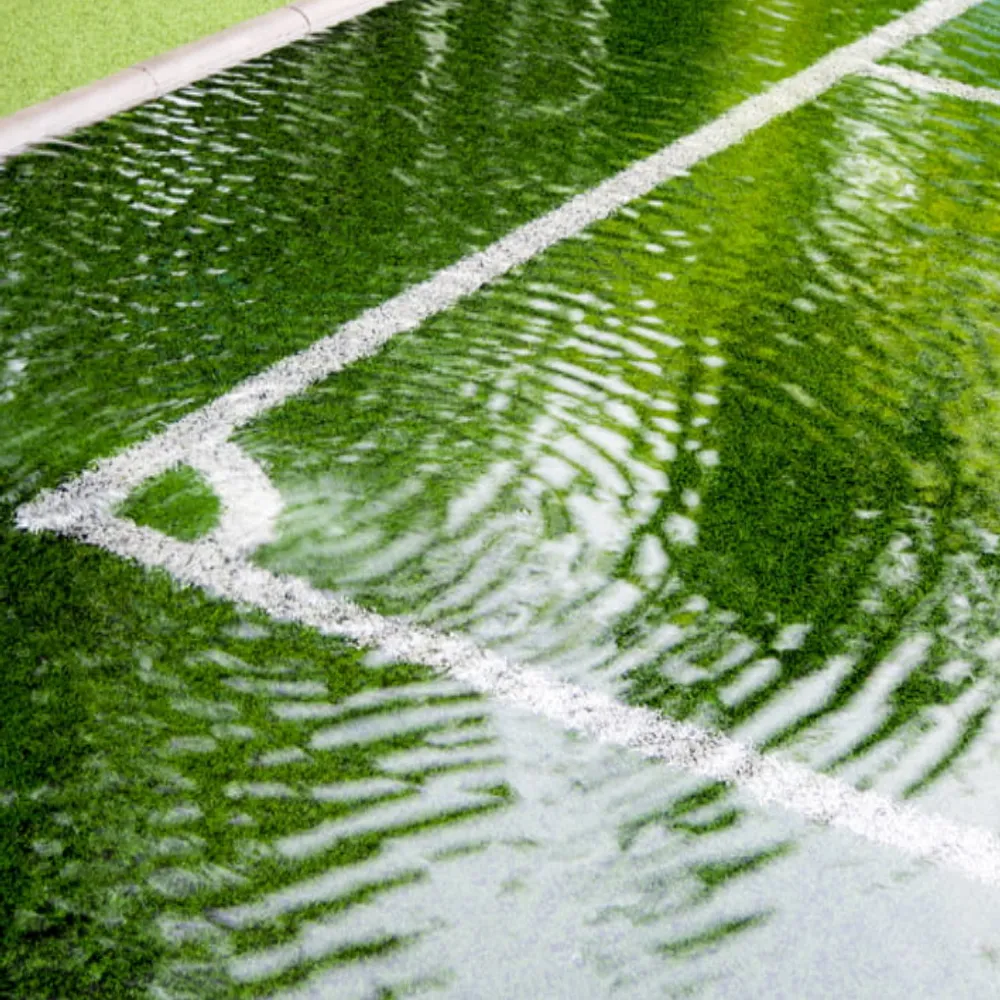
Begin each football turf drainage report check with its specimen description. Was the subject a backing sample, a specified surface combination, a base layer, or an installed area? Write that description beside the reported result before using the number in a comparison.
In a football turf drainage file, retain the report identifier, issuer, issue date, method, sample reference, units, and stated conditions. Ask for the relevant complete document if only a selected page is supplied. Keep the supplier’s claim separate from what the report actually states.
Use the following table to organise the scope question. The questions are buyer prompts, not a test procedure or pass standard.
| Evidence offered | First question | Further question |
|---|---|---|
| Backing or carpet sample | Which exact material was tested? | What does it establish about the proposed construction? |
| Surface-system report | Which components were included? | Do they match the quotation? |
| Base or ground test | Where and how was it measured? | How does the designer use it? |
| Installed-area record | Which location and method apply? | What acceptance decision does it support? |
Compare units without changing the claim
A rate expressed as millimetres per hour and a discharge expressed as litres per second describe different quantities. Area and the relevant conditions matter when relating them. A unit conversion cannot supply missing design assumptions or demonstrate an outlet’s capacity.
For a simple unit illustration, one millimetre of water over one square metre is one litre. This follows from volume units alone. It is not a field drainage calculation: it does not establish the timing, storage, losses, flow route, or allowable discharge for a project.
Keep football turf drainage comparisons tied to the original test scope. Do not take a laboratory value, multiply it by a field area, and describe the result as a proven site discharge capacity. Ask the responsible designer to explain how the test fits the project analysis.
Keep performance and certification questions separate
If a quotation says a product drains quickly, ask which model, construction, method, and result support that wording. If the evidence is unavailable, record the gap. Avoid replacing a missing document with a generic figure from a different product page.
Use the FIFA Quality document verification guide for questions about supplier, system, and field evidence. A material permeability result alone should not be presented as proof that the completed field holds certification. Verify the actual claim through the relevant records.
For football turf drainage specifications, confirm the applicable test edition with the project team. This guide does not reproduce current FIFA numerical thresholds or prescribe how many test locations a field needs.
Coordinate base, drainage layers and outlets
Review interfaces and changes
For football turf drainage coordination, put the layer drawing beside the drainage layout. Ask the design team to identify the interfaces that need coordination: surface to pad, pad to base, collection to outlet, and the field boundary. Use the actual construction. Don’t add parts that aren’t specified.
Ask which party supplies each material and which party confirms the connection details. Record the answer in the scope sheet. A separate supplier for a pad or drainage component should not leave the project team guessing who resolves its interface with the rest of the work.
Illustrative scenario: A proposed pad changes after the initial layout review. The coordinator asks the designer and relevant suppliers to confirm the water route and supporting documents for the revised construction. This fictional example does not assume the replacement is suitable or predict a test result.
Keep football turf drainage changes visible through a revision log. Note what changed, who reviewed it, and which drawing or document now applies. Leave a question open if the response does not address the specific interface.
Plan access and containment questions
Ask where inspection points are located and how the operator will reach them. Include access responsibilities in the handover plan. Don’t rely on a drawing symbol if access is still unclear.
Where the system uses infill, ask the relevant parties how sediment and material migration are addressed in the design and care plan. Obtain the project-specific requirements for any capture or cleaning features. Do not add a generic filter or modify an outlet without review.
For football turf drainage, keep pipe sizes, gradients, layer depths, and storage volumes in the approved design documents. This article does not set universal values for them. Ask for the basis and responsible approval when a quotation contains an unexplained dimension.
Inspect and record football turf drainage problems
Map the observations after rain
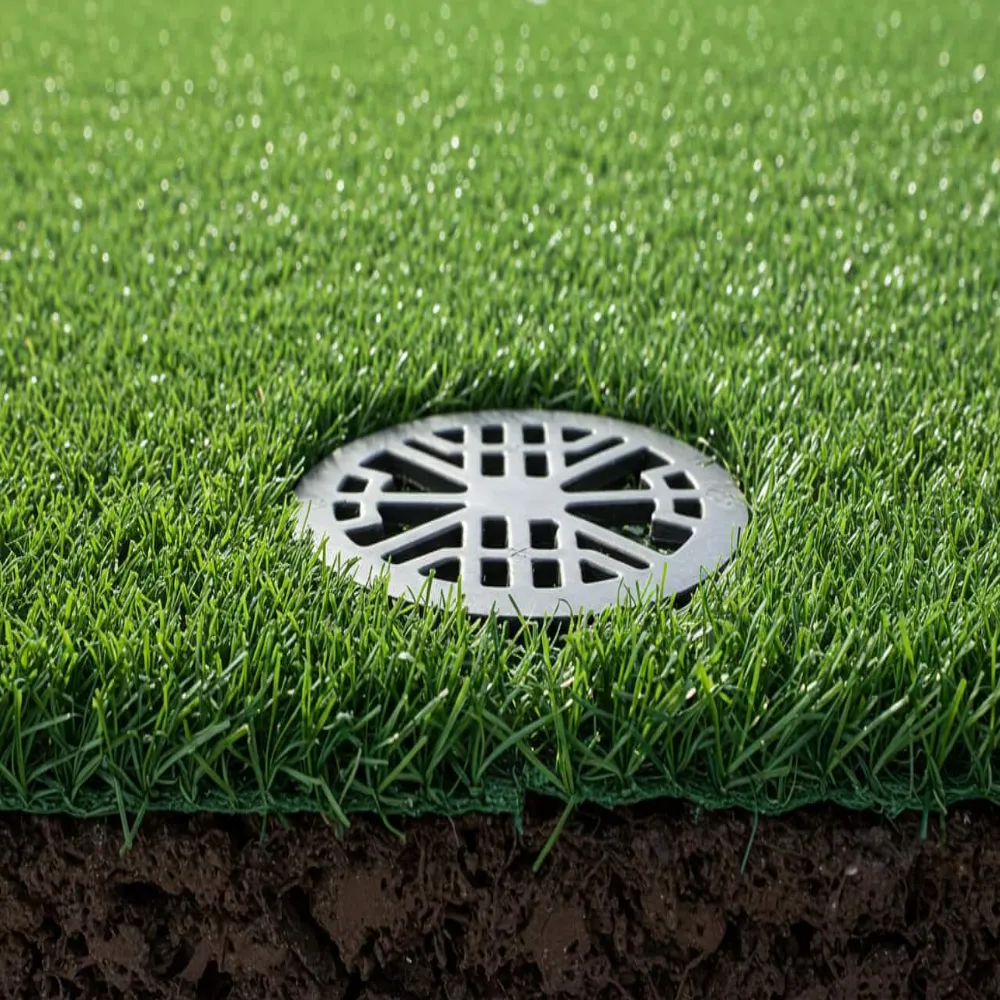
When reviewing football turf drainage problems, record where water ponds and when you saw it. Use a field map and photographs with location references. Note relevant weather information and whether the observation was made during rain, soon after it, or later.
Record what you saw rather than assigning a cause from appearance alone. “Water remained near the marked corner at the recorded time” is a useful observation. “The backing failed” is a diagnosis that needs evidence beyond that photograph.
Use this football turf drainage observation checklist:
- Mark the location and approximate affected area.
- Record the observation time and available weather context.
- Attach dated photographs with a field reference.
- Note known recent works, care tasks, and earlier reports.
- Identify who will review the concern and record the next action.
Our football turf maintenance guide can help organise routine inspection and care records. Keep those records available for the review. They provide context without proving a single cause for a water problem.
Escalate the concern through the project process
Follow the operator’s process for access and use decisions while the issue is reviewed. Send the observations and relevant drawings to the parties responsible for the surface and drainage. Ask them to identify the next checks and who is authorised to perform them.
Do not improvise a repair by puncturing the backing, changing infill, adding layers, or altering drainage connections. Ask for a method that fits the actual system and findings. Keep the proposed work, approval, and follow-up record together.
Set responsibilities and acceptance records
Agree who checks what
FIFA’s installation overview includes drainage and sub-base work within the wider project and describes testing of the final pitch. It supports treating these as connected project stages, rather than expecting a carpet specification to answer every site question.
For football turf drainage handover, name who provides the design, who builds it, who supplies product records, and who reviews the specified checks. Also identify who releases the base before covering work and who resolves departures from the drawing.
Use the installation acceptance checklist for broader site records. This drainage review should point to the relevant design and evidence without repeating every roll, seam, and marking check.
Keep unresolved actions in the file
Request these football turf drainage handover files:
- Current design basis and installed layout.
- Relevant material identities and check records.
- Outlet information and care responsibilities.
Identify the location and reference for each record. Keep final documents distinct from superseded drawings.
Illustrative scenario: The handover file contains a drainage layout but leaves an outlet inspection item unanswered. The owner requests a named action and a documented review before treating that item as closed. This fictional example does not establish field performance or describe an X-Nature project.
If a product record is missing, send X-Nature the model code and the specific document question. Ask what information can be provided for the project team’s review. Site drainage diagnosis and design decisions remain with the appropriate responsible parties.
Close the football turf drainage record with the reviewer, date, supporting references, and remaining conditions. A clear handover lets the operator find the right contact and explain what has already been checked.
Frequently asked questions
Does permeable backing guarantee a dry pitch?
No. It addresses one part of the proposed construction. Review the route beyond it, the site design, and the relevant evidence. Do not treat a sample result as a guarantee that every field using that carpet will be free of standing water.
Is a drainage pad a complete drainage system?
Ask how the proposed pad fits the actual construction and connects to the intended water route. Request the relevant layout, component information, and design review. A product name alone does not identify the final destination of water from the field.
What information does the drainage designer need?
Start with the site location, intended use, surveys, ground information, known surrounding water, and proposed outlet. Ask the designer which further investigations and requirements apply. Mark missing inputs rather than borrowing assumptions from another project’s drawing.
Can an existing hard base be reused?
Ask the project designer to assess it against the proposed complete construction and site requirements. Provide records and surveys where available. The fact that a hard surface already exists does not establish its condition, water route, or suitability for the new system.
What should I record when water ponds after rain?
Record location, time, weather context, photographs, known recent work, and earlier observations. Send that file through the agreed review process. Keep observations separate from a conclusion about the cause until the responsible parties have assessed the evidence.
Does a laboratory permeability value prove field certification?
No. Check the specimen and scope of the report, then verify any certification claim against the actual system and field records. Keep a material test, a drainage design decision, and the field’s certification status separate in the project file.
For football turf drainage, connect the product evidence to the site design and the complete water route. Contact X-Nature with your location, model references and remaining product-document questions to discuss the information available for your planning file.