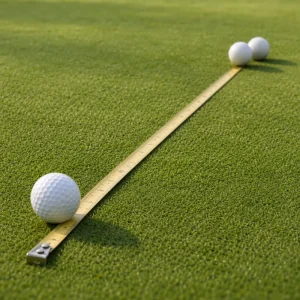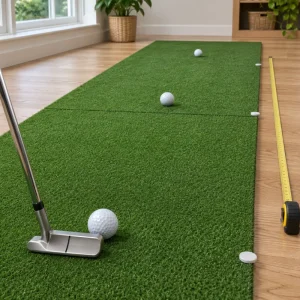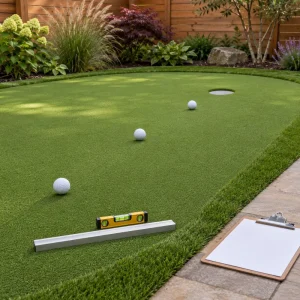
Choose mini golf turf with a dense, even putting surface, then test it with the base, seams, and drainage your course will use. A better-looking roll can’t correct a poorly prepared lane. The finished system determines whether a ball follows the intended line or catches an unwanted ridge.
Comparing small samples is difficult because color and softness are easier to judge than ball behavior. Two products sold as putting green turf may need different substrates, adhesives, or infill. A material that suits a practice green may also behave differently on a narrow lane with banks and obstacles.
This guide helps you compare miniature golf turf by its intended use, published specifications, and performance on a trial section. You’ll learn what to check before ordering, how to plan mini golf carpet installation, and which costs belong in the project budget. You’ll also get a practical inspection routine for keeping lanes ready for play.
Start with the course you want to build or renew: indoor or outdoor, permanent or portable, family recreation or a busy public venue. Those choices make the specification useful.
Key takeaways
- Evaluate the playing lane, intentional rough, and decorative surrounds as separate surface choices.
- Test ball roll across a seam and around a cup before approving an installed system.
- X-Nature lists 7016 at 16 mm pile height; that specification alone doesn’t establish putting speed.
- Budget from a cutting plan and installation scope, rather than multiplying playable area by turf price alone.
What makes mini golf turf different?
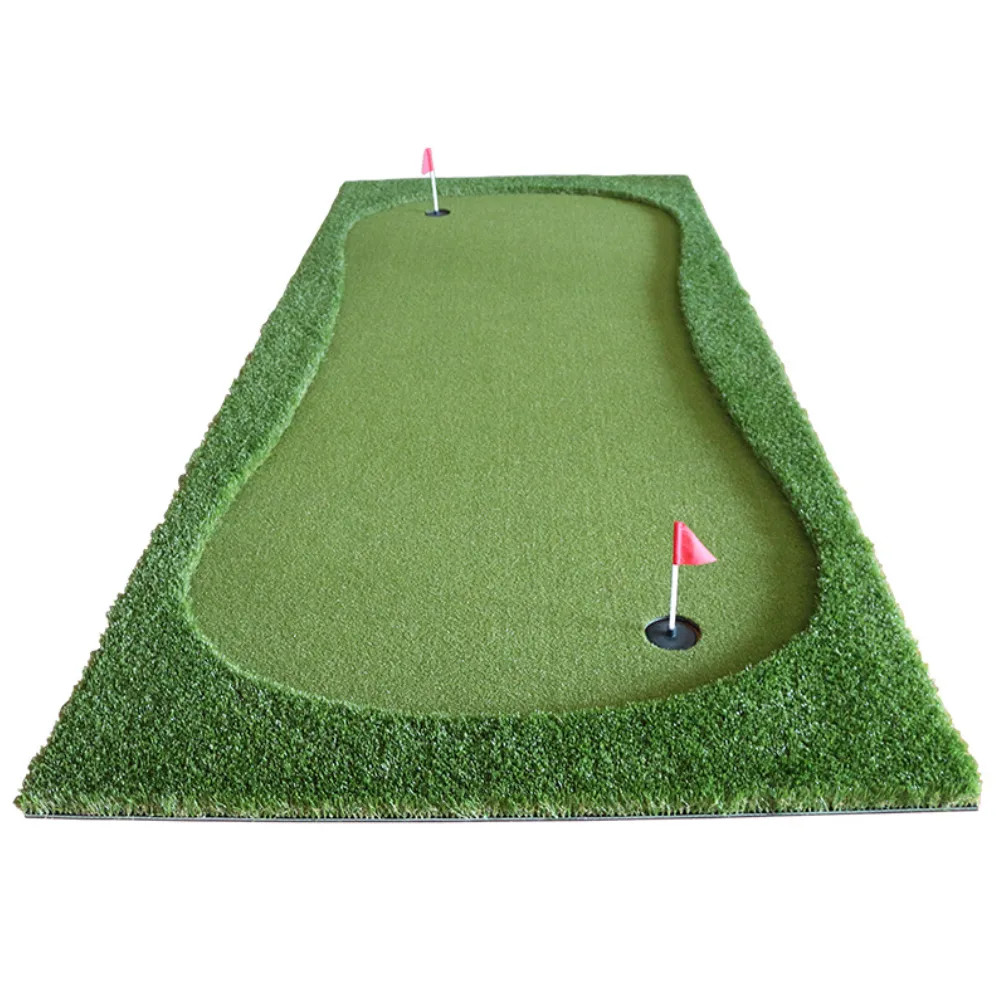
Mini golf turf serves a ball path as well as foot traffic. Mini golf turf needs predictable behavior around slopes, cups, and obstacles. Long, soft lawn fibers may look attractive beside a course, but appearance alone doesn’t qualify them as a putting surface.
Separate the layout into three zones. The main lane carries normal putting shots. Rough creates an intentional challenge or slows an off-line ball. Decorative surrounds frame the course and may sit outside play entirely.
Specialist suppliers make similar distinctions. Miniature Golf Store’s turf range includes putting surfaces, fringe, and bunker-style products. Those are different products for different jobs, so don’t compare their pile heights as interchangeable options for a lane.
Also distinguish miniature golf turf from a hitting mat. A mat designed to absorb club strikes doesn’t automatically provide the surface a permanent course needs. Ask what the supplier designed each product to do and what substrate its installation requires.
The names mini golf carpet and putting green turf can overlap in supplier catalogs. Neither name tells you whether a product needs infill or a particular base. For mini golf turf, the useful comparison is the proposed product plus its complete installation method.
For an initial shortlist, explore putting green turf options and match the intended application to your lane design. Keep the playing surface separate from the decorative finish in your request.
How to compare mini golf turf specifications
A mini golf turf specification sheet narrows the choice; it doesn’t replace a playing trial. Ask for details for the exact miniature golf turf being quoted. Similar product names can hide different constructions.
| Detail | What to ask | What to examine on a sample |
|---|---|---|
| Pile height | What is the finished height? | Ball response on a representative lane |
| Fiber | What is the stated material and yarn structure? | Directional effects and surface recovery |
| Density and gauge | How are both figures defined? | Surface coverage and consistency |
| Backing | Which substrate and bonding method are specified? | Flatness, edge behavior, and joint detail |
| Infill | Is it required, and at what specification? | Roll with the prescribed installed system |
| Roll dimensions | What widths and cut lengths are available? | Seam locations and offcuts on the plan |
Gauge is the spacing between tuft rows. Stitch density counts stitches per unit of area. Neither figure, by itself, proves how fast putting green turf will play.
For a concrete example, X-Nature’s published 7016 table lists a 16 mm pile height, 5/32 inch gauge, and 84,000 stitches/m². It also lists two colors, XPU coating, and 4 m × 25 m rolls. Compare 7016’s published specifications with your required base and ball behavior before approving it as mini golf turf.
The separate GOLF7016G colored model lists 16 mm pile, 70,560 stitches/m², and red, yellow, blue, and purple colors. Pattern customization is advertised; confirm the options in your quotation. Color choices don’t establish equivalent speed between different products.
Fictional planning example: Alex is choosing miniature golf turf for a 6 m backyard lane. They prefer the softer of two samples, but a trial joint changes the ball’s line near the cup. Alex asks the installer to revise the joint detail and repeats the test before ordering. The decision now rests on a working lane section, rather than the feel of a loose sample.
That same approach works for mini golf carpet. Confirm the exact construction, then compare its behavior after installation.
Test the surface before you approve an order
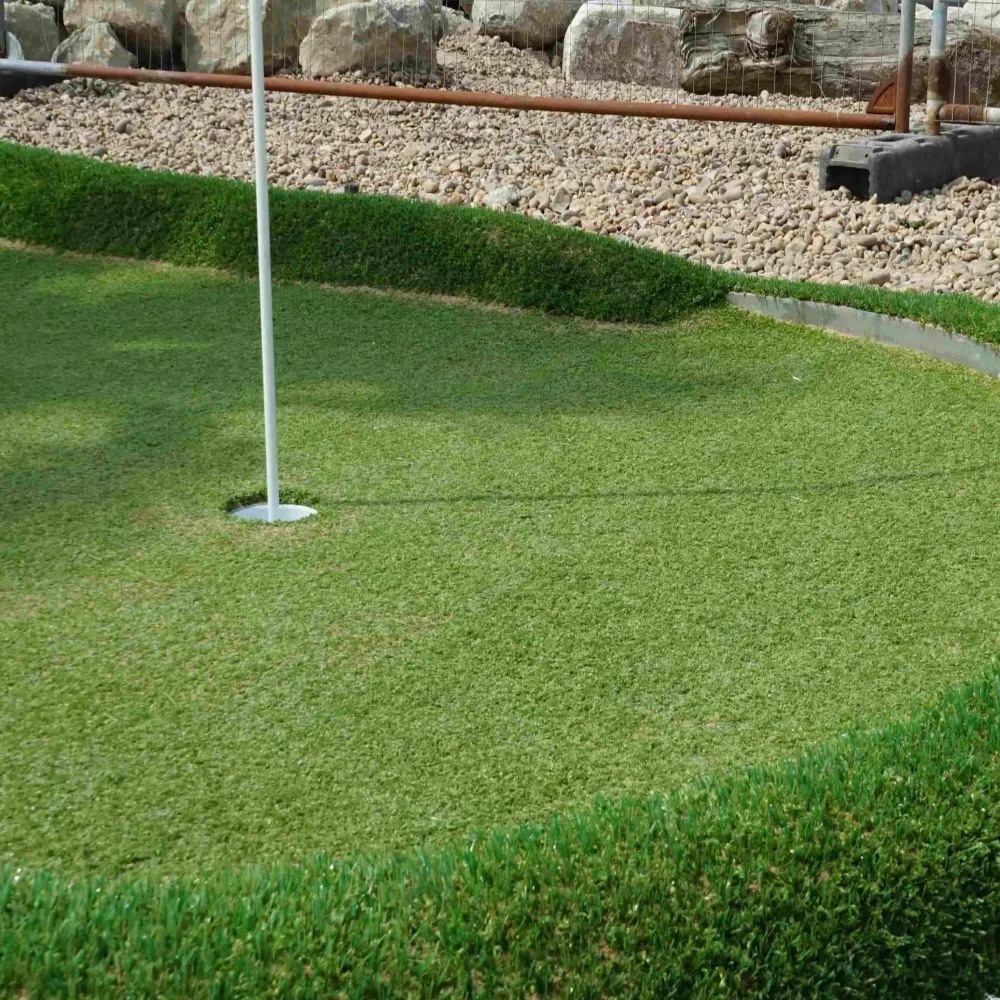
A small mini golf turf sample shows texture and color. A mock-up shows how mini golf turf works with the substrate, bonding, joints, and features beneath it. Ask for a trial section large enough to include the details that matter on your course.
Use this proposed comparison procedure for miniature golf turf; it isn’t an industry certification test:
- Use the same clean ball and repeatable release point for each candidate.
- Roll along and across the proposed fiber direction, repeating each route.
- Cross a representative joint from both sides and watch for bumps or deflection.
- Test near a cup and on a planned curve or bank.
- Inspect the surface after walking across it, then repeat the roll comparison.
- For outdoor use, agree on suitable wet-condition checks with the installer.
Record the product, substrate, infill if specified, and test conditions. Photograph the joint and note where each ball finishes. Without those details, a later comparison may test the installation method as much as the material.
A supplier’s putting green turf speed claim needs a stated method and conditions. A number without the installed construction, preparation, and test direction tells you little about your own course. Don’t assign a target Stimp speed to every family venue or backyard lane.
Agree on acceptance criteria before buying mini golf turf. Include acceptable roll behavior, seam finish, cup transitions, and responsibility for corrections. If the mini golf carpet requires grooming or infill adjustment before testing, record that procedure too.
Keep an identified mini golf turf sample and the approved specification with the order. When the miniature golf turf arrives, check the labels and batch against those records. Raise differences before cutting or bonding, when replacement and clarification are simpler.
Plan the base, seams, and drainage together
The mini golf turf base must hold the intended contours without adding unintended bumps. For resurfacing, inspect beneath the old mini golf carpet before accepting a preparation allowance. Cracks, loose patches, and trapped moisture can change the required work.
X-Nature’s published paving instructions for 7016 describe a hardened foundation. Other systems may use different bases, so don’t transfer a crushed-stone backyard method to every miniature golf turf product. Get a substrate-specific installation plan.
Confirm the sequence before installation
Start with a survey of levels, cups, edges, and drainage routes. Repair or prepare the base to the chosen system’s requirements. For outdoor mini golf turf, identify where water will go after it reaches the base; holes in a backing don’t create an outlet through concrete.
Next, dry-fit the mini golf turf panels and check their direction. Place seams with the lane shape, ball paths, and replacement access in mind. Cut neatly around cups and obstacles, avoiding stretched material or overlapping joints.
Bond the mini golf carpet using products approved for its backing and substrate. Follow the adhesive manufacturer’s surface, moisture, temperature, and curing instructions. A generic glue recipe can’t cover every backing or site condition.
Specialist installer Mini Golf Carpet lists carpet, adhesive, and seam sealer separately, alongside removal and preparation services. That separation is a useful reminder: material supply and a finished installation are different scopes.
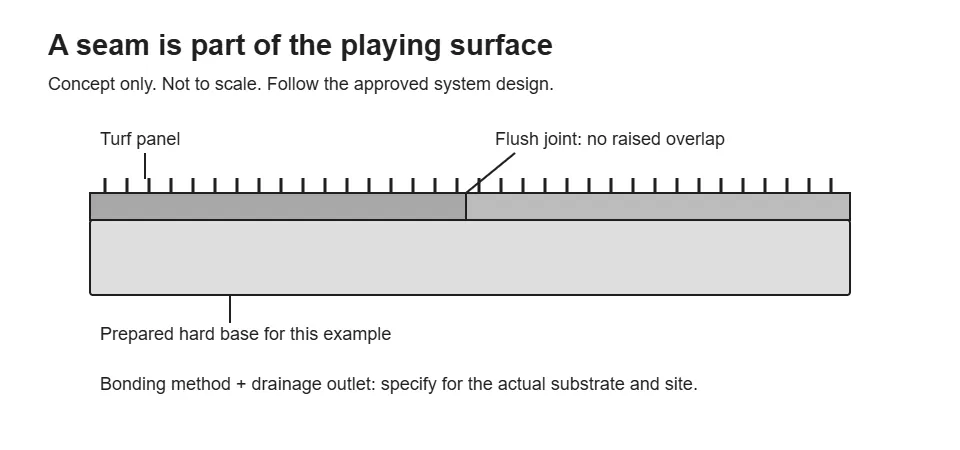
Conceptual detail only, not to scale. Specify bonding and drainage for the selected system and site.
Check access and reopening conditions
For US projects, the United States Access Board’s miniature golf guide describes stable, firm, slip-resistant accessible routes and a minimum of 50% accessible holes. Access depends on the whole course layout and applicable requirements; choosing putting green turf alone doesn’t establish compliance.
Inspect mini golf turf joints and transitions before reopening. Confirm curing is complete under the adhesive instructions, then repeat the agreed roll checks. Correct raised edges and loose joints before players return.
Calculate material needs and installed cost
Compare mini golf turf quotes against the same drawing and scope. A low material rate doesn’t show whether the order covers cutting waste, base repair, adhesive, freight, or installation. Use the price units shown in each quotation.
A useful mini golf turf planning formula is:
Installed budget = ordered material + preparation + drainage + bonding and seams + specified infill + labor + freight and applicable taxes.
For miniature golf turf, ordered area and playable area can differ. Irregular holes, roll widths, matching direction, and minimum order quantities affect the cutting plan. Request a layout showing each panel rather than applying a universal waste percentage.
For example, 7016’s published 4 m × 25 m roll covers 100 m² before cutting. That is gross roll area, not a promise of 100 m² of finished lanes. A curved design may leave offcuts that won’t fit another hole.
Keep the units for putting green turf consistent throughout the estimate. If one quotation uses square feet and another uses square meters, convert them before comparing. Also confirm whether a quoted roll price includes cutting or only full rolls.
Fictional renovation example: Morgan plans to replace mini golf carpet on three outdoor holes during a scheduled closure. After removing one section, the installer finds a damaged base near a cup. Morgan separates base repairs from the material order and adjusts the work sequence. That exposes the real scope before the remaining miniature golf turf is cut, rather than hiding the repair inside an unclear allowance.
For an existing venue, include access restrictions and reopening conditions in the mini golf turf quotation. Ask who removes old material and adhesive, who repairs the substrate, and who signs off the finished lane. Keep spare mini golf turf identified by product and batch if replacement panels are part of the plan.
Obtain written warranty terms for the quoted product and installation. Check exclusions and maintenance duties; don’t treat a supplier’s lifespan description as a warranty.
Maintain the playing surface and inspect wear
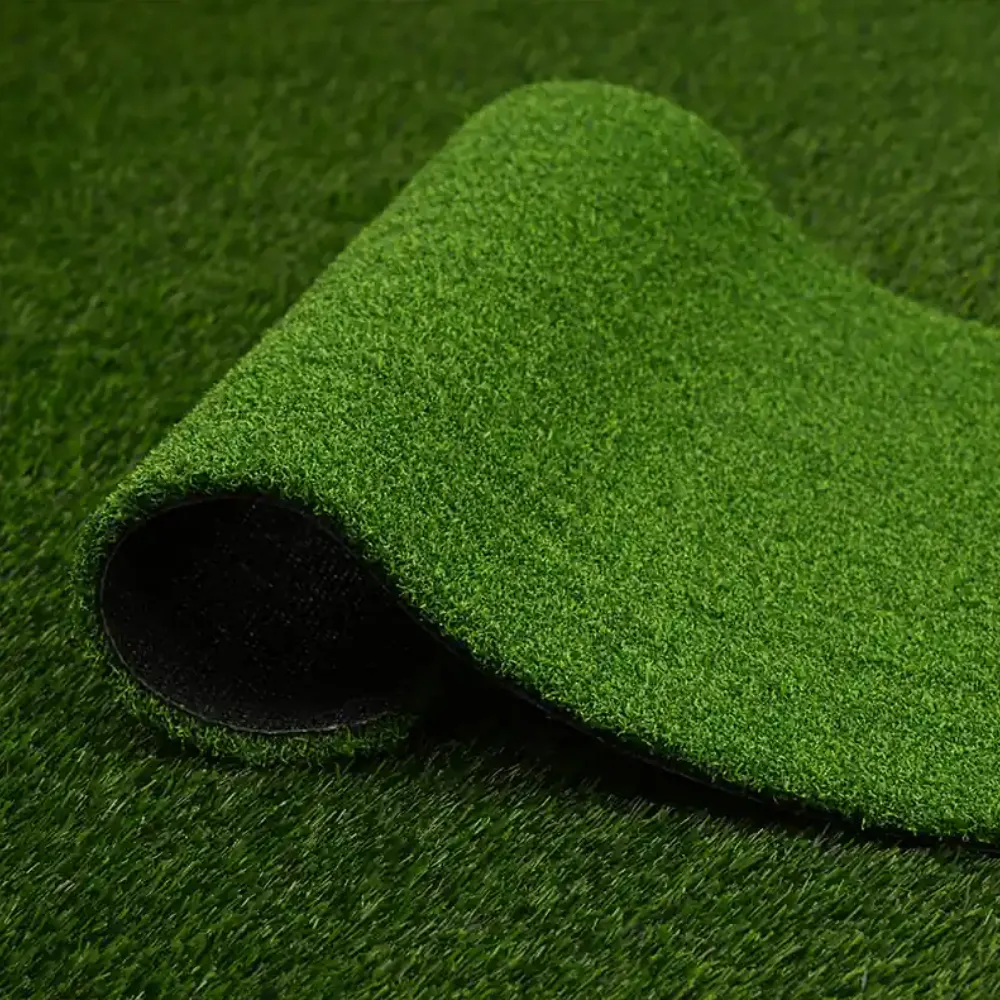
Mini golf turf still needs cleaning and inspection. Debris can interrupt a ball’s path, while loose edges or seams need attention before play. Set a routine around traffic, weather, and the selected product’s care instructions.
Before opening, inspect cups, obstacles, entrances, and joints. Remove leaves, grit, and litter with tools approved for the surface. For indoor mini golf carpet, confirm suitable vacuum equipment and settings instead of assuming every powered brush is compatible.
After rain, inspect outdoor miniature golf turf for ponding, movement, and blocked outlets. Repeated water in the same place calls for a drainage investigation, rather than extra brushing. Record where the water collects and how long it remains.
Use only compatible cleaning products and methods. Test any new cleaner on a spare piece before treating a visible lane. Aggressive solvents, pressure settings, or mechanical brushes should never become a default care method without product guidance.
Keep the prescribed infill condition if the putting green turf system uses it. Don’t add sand to another system merely to change its speed. Ask the supplier how to restore play if cleaning or grooming doesn’t correct a problem.
For a busy course, keep a mini golf turf inspection log: date, hole, condition, action, and person responsible. Photograph recurring mini golf carpet joint problems so the installer can assess whether the cause is bonding, movement, or the substrate.
Distinguish appearance changes from functional wear. A faded area and a lifted seam present different decisions. Compare miniature golf turf with the approved sample and original roll checks, then repair or replace according to condition and the supplier’s instructions.
There is no single replacement age for every installation. Usage, sunlight, drainage, cleaning, and repairs all matter. Inspect how the putting green turf performs instead of promising a fixed service life from its pile height.
Mini golf turf questions and next steps
Can I use ordinary lawn turf for mini golf?
Choose a surface specified for putting, then test it on the proposed lane. Lawn turf may suit decorative surrounds, but softness and color don’t prove predictable roll. For miniature golf turf, compare the playing function before judging appearance.
Does mini golf carpet need sand infill?
It depends on the exact system. Some putting green turf products require specified infill, while other constructions use a different installation method. Follow the quoted product’s instructions; adding or omitting sand changes the system you approved.
Can miniature golf turf go over concrete?
Yes, where the selected product and adhesive are specified for that substrate. Assess concrete condition, moisture, contours, and drainage before installing mini golf carpet. New putting green turf won’t correct a loose or poorly shaped base underneath it.
Can I use the same putting green turf indoors and outdoors?
Only when the supplier specifies both uses and the installation suits each setting. Outdoor mini golf turf needs a drainage plan and appropriate weather-exposure documentation. Confirm care requirements for each site rather than extending an indoor recommendation to an outdoor course.
Choose your next step
Start with a measured plan showing the lanes, surrounds, cups, and obstacles. Identify the current base, indoor or outdoor exposure, and expected use. That gives a supplier enough context to discuss miniature golf turf without guessing what your project needs.
Next, compare exact specifications and request a sample or trial section for the proposed system. Evaluate the roll, seams, and cup transitions together. Keep the accepted construction and test conditions on record, so the installed putting green turf can be checked against the same expectations.
Build the budget from ordered material and a clear preparation scope. Include removal, drainage, bonding, and maintenance responsibilities where relevant. Those details make mini golf carpet quotations easier to compare and expose gaps before work starts.
To discuss mini golf turf for your project, send X-Nature your layout and requirements. Include the destination, area, substrate, and intended use, and ask about suitable specifications and sample availability. Confirm the product, service scope, and commercial terms in the quotation before ordering.