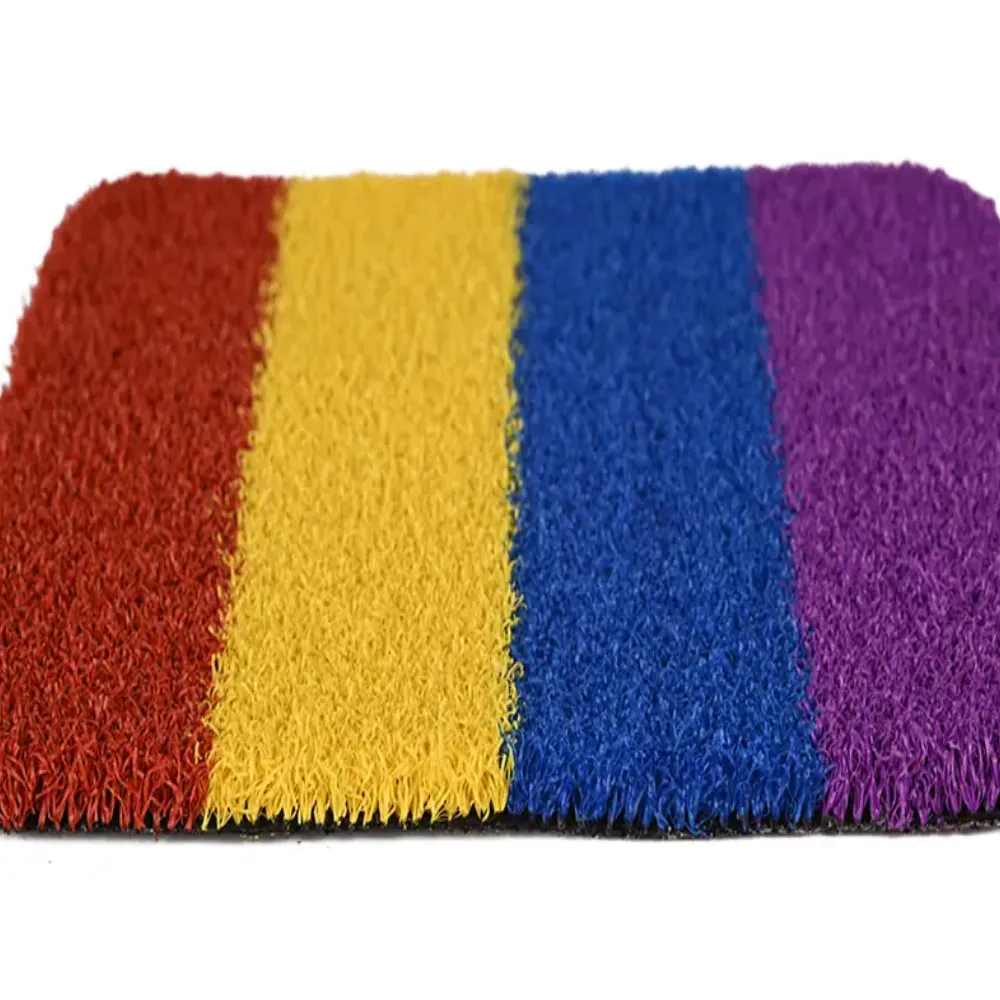
Mini golf course design is not only about creating a space where players can practice putting. It also involves arranging playing areas, defining visual themes, and making the course attractive to different groups of visitors. For commercial projects, including resorts, leisure facilities, and entertainment venues, the appearance of the playing surface can influence the overall design of the space.
Traditional golf areas often use green grass to create a natural appearance. However, mini golf courses offer more flexibility in visual design. Different colors and patterns can help distinguish playing zones, create themed layouts, and make recreational spaces more visually engaging. This is one reason why Putting Green Turf is available in more varied design options for projects beyond conventional golf facilities.
This article explores how color selection, layout planning, material properties, and installation methods influence mini golf course design, as well as what buyers should consider when selecting artificial turf for these projects.
1. Why Does Color Matter in Mini Golf Course Design?
Color is an important part of recreational space planning. Unlike traditional golf courses, which generally maintain a consistent green appearance, mini golf facilities can incorporate different visual themes to create a distinctive playing environment.
Creating Distinct Playing Zones
Using different turf colors can help visually separate individual sections of a mini golf course. For example, designers can use contrasting colors to distinguish playing areas, pathways, or decorative sections.
This approach can make the overall layout easier to understand, particularly in facilities with multiple holes or themed areas. It also gives designers more flexibility when planning the appearance of each section.
Building a Consistent Visual Theme
Color selection can support the overall theme of a recreational project. A course designed for a family entertainment center may use a different visual style from one located at a hotel or resort.
Multiple colors provide more design possibilities without requiring every area to follow the traditional green appearance. When combined with appropriate landscaping and decorative elements, colored turf can contribute to a more distinctive environment.
Making Mini Golf Areas More Visually Engaging
Mini golf is a recreational activity that often attracts families, children, and casual players. A visually varied course can make the environment more interesting and help create a recognizable identity for the venue.
However, color should be selected according to the overall design rather than used without a clear plan. Consistent color combinations help maintain visual balance across the course.
2. What Should Buyers Consider When Choosing Artificial Turf for Mini Golf Projects?
Before selecting a turf material, buyers need to understand the requirements of the project. Different installation environments and design objectives can influence the choice of artificial grass.
Color and Customization Options
Color availability is an important consideration for projects with specific visual requirements. Buyers should confirm whether the available colors match the planned design and whether customized colors or patterns can be provided.
For commercial projects, customization can help maintain consistency between the playing surface and the overall design concept.
Pile Height and Density
Pile height and stitch density are two basic technical specifications used to describe artificial turf.
Pile height refers to the length of the visible grass fibers, while density indicates how closely the stitches are arranged across a given area. These specifications help buyers compare different turf products and understand their construction.
The appropriate specifications should be evaluated according to the intended application and project requirements. Buyers should avoid selecting turf based on pile height alone.
Drainage and Weather Resistance
Outdoor recreational areas need to account for changing weather conditions. Drainage is particularly relevant because accumulated rainwater can affect the condition and usability of an outdoor surface.
Artificial turf with built-in drainage holes can provide a route for water to pass through the backing. Buyers should also consider UV resistance and other material properties when evaluating turf for outdoor applications.
Maintenance Requirements
Natural grass requires regular watering and mowing. Artificial turf reduces the need for these routine activities, making it an option for projects where ongoing landscape maintenance needs to be simplified.
When comparing different options, buyers should consider the initial installation requirements as well as the expected maintenance workload.
3. How Can Artificial Grass Support Different Mini Golf Course Layouts?
The flexibility of artificial grass allows it to be considered for different recreational environments. Its application depends on the course layout, available installation area, and overall design requirements.
Indoor Mini Golf Facilities
Indoor mini golf courses are often located in entertainment centers, shopping complexes, and other leisure venues. In these environments, the visual appearance of the playing surface can help establish the theme of the facility.
Artificial grass can be incorporated into indoor recreational layouts without the watering and mowing associated with natural grass.
Outdoor Mini Golf Courses
Outdoor courses need surfaces that can accommodate changing weather conditions. UV resistance, drainage, and ease of maintenance are relevant factors when selecting materials for these locations.
The use of different colors can also help create distinctive course sections while maintaining a consistent overall design.
Hotels and Resort Leisure Areas
Hotels and resorts may include recreational golf areas as part of their leisure facilities. These spaces can be designed to complement surrounding outdoor landscaping, terraces, and other shared areas.
A suitable turf selection can help establish a defined recreational zone without requiring natural grass maintenance.
Residential and Community Recreational Spaces
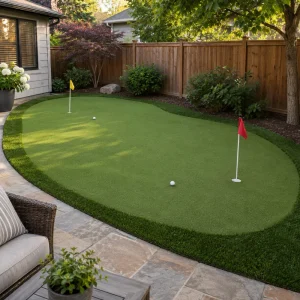
Backyards and residential community facilities can also include small putting areas. In these projects, buyers may prioritize visual appearance, installation convenience, and low maintenance requirements.
The choice of color and layout should correspond to the available space and intended recreational use.
4. GOLF7016G: Rainbow Putting Green Turf for Customized Mini Golf Designs
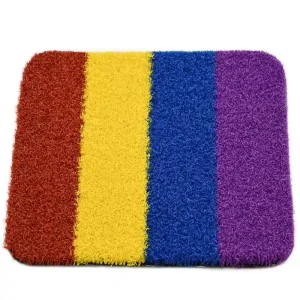
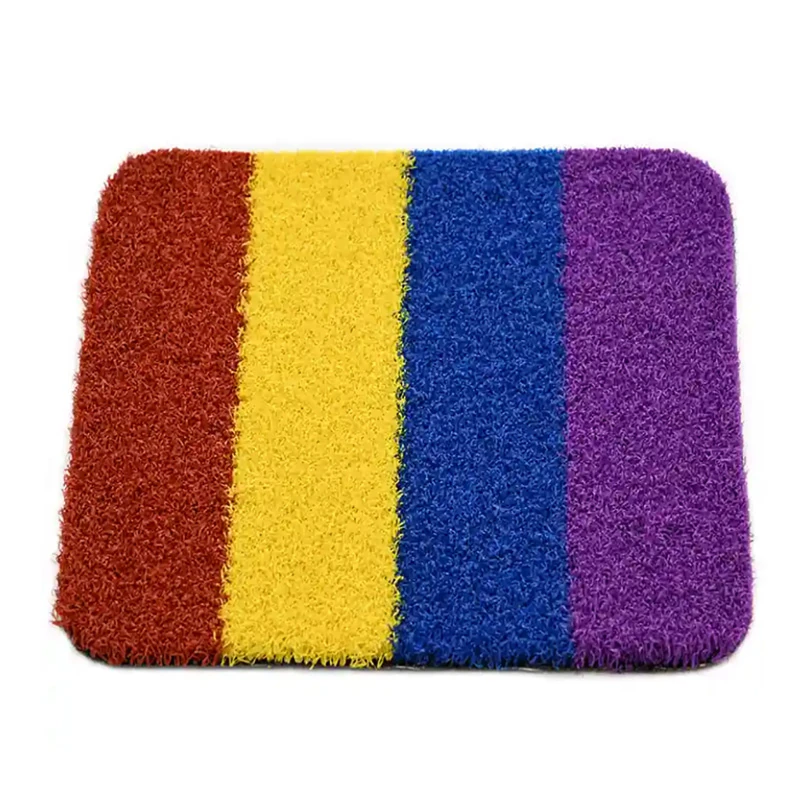
For projects that require more than a conventional green playing surface, GOLF7016G Rainbow Putting Green Turf provides multiple color options and supports customized patterns.
GOLF7016G is available in four colors: red, yellow, blue, and purple. These options give project designers more flexibility when creating visually differentiated recreational areas.
Product Specifications
The GOLF7016G model has a 16mm pile height and a stitch density of 70,560 stitches/㎡.
| Specification | Details |
| Model | GOLF7016G |
| Product Name | Rainbow Putting Green Turf |
| Material | FPA/6500 |
| Pile Height | 16mm |
| Gauge | 5/32 inch |
| Density | 70,560 stitches/㎡ |
| Colors | Red, Yellow, Blue, Purple |
| Weight | 2.56kg/㎡ |
| Roll Size | 4m width × 25m length |
| Backing | Three-layer fiberglass high-stabilization anti-aging black-green base fabric |
| Packaging | Rolled in PP bags |
Key Features and Benefits
Multiple Color and Pattern Options
The four available colors allow buyers to select different visual combinations for their projects. Pattern customization is also supported, providing additional flexibility for customized mini golf course designs.
UV Resistance and Heat Insulation
UV-resistant and heat-insulating features are included in the product specifications, making these properties relevant when evaluating the turf for outdoor recreational applications.
Built-in Drainage Holes
The turf features built-in drainage holes that allow water to pass through the backing, an important consideration for outdoor installations.
Flame-Retardant Properties
Flame retardancy is another listed product feature. Buyers can refer to the product’s technical documentation when evaluating material requirements for their projects.
Easy Installation and Simple Maintenance
The turf can be freely cut to fit different installation areas. It does not require watering or mowing, helping reduce routine maintenance work and associated costs.
As a type of Custom Artificial Grass, GOLF7016G can be considered for projects that require specific color combinations or customized patterns rather than a uniform green appearance.
5. Installation Considerations for Rainbow Putting Green Turf
Proper installation is important for achieving a flat surface and secure seams. The following process outlines the recommended paving steps for GOLF7016G.
Step 1: Prepare and Harden the Ground
A hard foundation is required before installation. Suitable base materials include cement, asphalt, and concrete.
If the existing ground has not been hardened, it needs to be prepared in advance. The turf can be installed directly on an appropriately hardened surface.
Step 2: Position and Unfold the Turf Rolls
Transport the large turf panels to their designated positions and unfold them carefully. Flatten the material before proceeding with the installation.
Check the direction of the turf fibers before laying the panels. According to the recommended paving process, the fiber direction should be arranged to avoid light reflection when viewed from the entrance.
Step 3: Apply Adhesive to the Seams
Apply adhesive along the center seam and onto the joining tape. Allow the adhesive to become slightly dry before attaching the joining tape.
Apply another layer of adhesive to the tape. When it becomes slightly tacky, press the turf onto the joining tape to complete the connection.
Step 4: Secure the Seams and Inspect the Surface
Before the adhesive fully sets, press the bonded areas back and forth manually to ensure that the turf edges are firmly attached to the joining tape.
Finally, groom the turf fibers and inspect the surface to check the installation.
Conclusion
Color selection, layout planning, material specifications, and installation methods all contribute to the design of a mini golf course. Compared with conventional green surfaces, colorful artificial turf provides additional possibilities for creating themed recreational areas and visually differentiated playing zones.
For buyers planning customized golf facilities, GOLF7016G Rainbow Putting Green Turf offers four color options, a 16mm pile height, built-in drainage holes, and pattern customization. Its easy installation and low-maintenance characteristics also make it worth considering for residential, commercial, and recreational projects.
If you are planning a mini golf course or sourcing Artificial Grass for Golf Courses, contact our team to discuss GOLF7016G specifications, available colors, and customization options for your project.
FAQ
1. What colors are available for GOLF7016G Rainbow Putting Green Turf?
GOLF7016G is available in four colors: red, yellow, blue, and purple. Custom patterns are also supported.
2. What is the pile height of GOLF7016G Putting Green Turf?
GOLF7016G has a 16mm pile height and a density of 70,560 stitches/㎡.
3. Does GOLF7016G artificial turf require regular watering or mowing?
No. GOLF7016G does not require watering or mowing, helping reduce routine maintenance work and costs.