Artificial grass backing is the structure beneath the yarn that supports the tufts and, depending on its construction, helps hold them in place. Compare its layers, coating and test records together before choosing a product.
Two samples can look much alike from above while their quoted backing details mean different things. A dark underside, a heavier roll or a familiar coating name gives you only part of the picture. The useful question is what the supplied model contains and what evidence supports its claimed properties.
This guide turns an artificial grass backing comparison into a practical document check. Start with construction, then match reports to the model and confirm installation and care instructions. For the wider purchase decision, use our landscape artificial grass buying guide.
Key takeaways
- Separate the primary fabric, reinforcement and secondary coating in each quote.
- Compare test results only after checking methods, units, samples and conditions.
- Keep total turf weight separate from coating weight and yarn weight.
- Request instructions for the actual backing, adhesive and intended use.
- Check what a recycling claim means at the planned disposal destination.
Comparing X-Nature options? Send your model names and intended use and ask which backing documents are available for those products.
Understand artificial grass backing layers
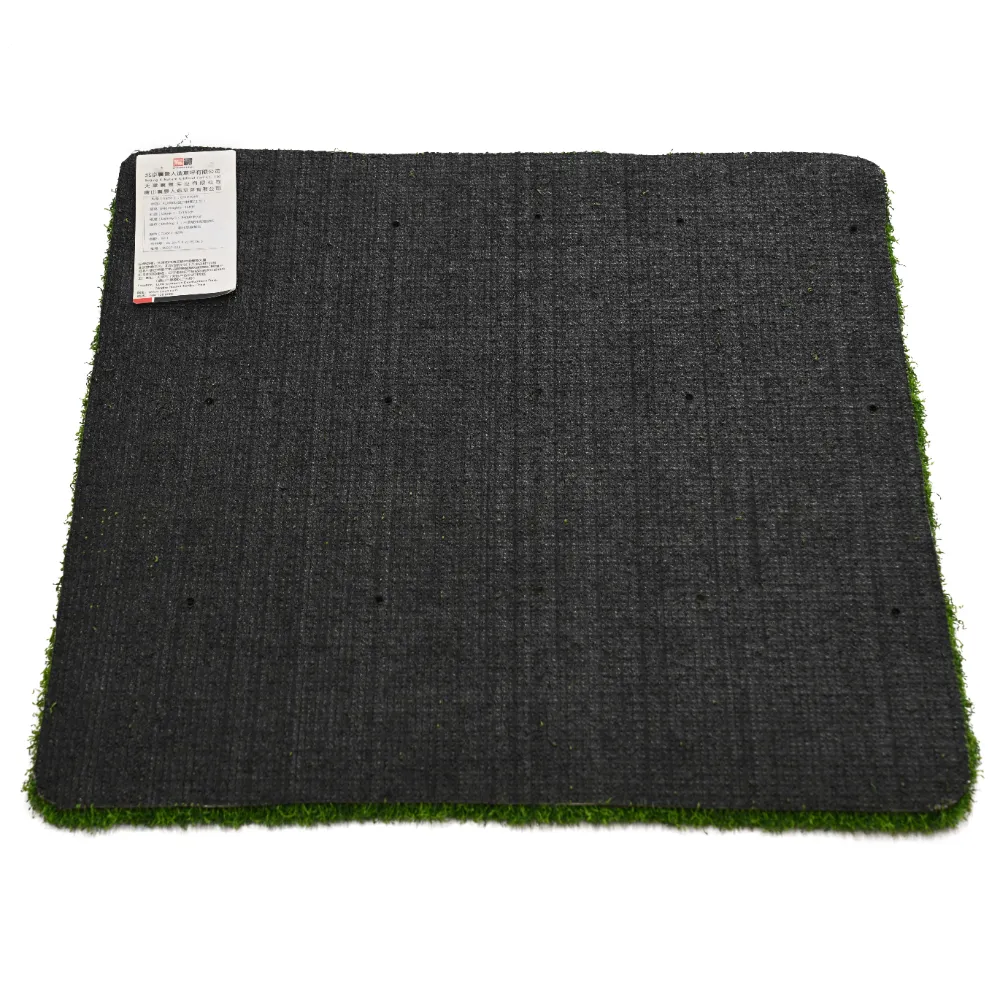
Primary fabric and reinforcement
The primary backing is the fabric through which yarn is tufted. A product may use more than one fabric or add reinforcement. Ask the supplier to name each component and show where it sits in the construction.
Purchase Green’s terminology guide separates primary backing from the secondary coating used to secure yarn. That distinction helps you read a quote, but it does not establish the strength of another manufacturer’s product. Its product-specific coating weights should stay attached to its own products.
For artificial grass backing, layer count needs a definition. Does “double backing” describe two primary fabrics, a fabric and mesh, or the primary fabric plus its coating? Write the answer beside the model code rather than comparing the number alone.
Illustrative scenario: A contractor receives two quotes marked “double backing.” One supplier means fabric plus reinforcement; the other means fabric plus coating. The contractor requests a labeled layer description before treating the quotes as equivalent.
Secondary coating and supplier terms
The secondary coating is a separate part of many tufted constructions. CCGrass’s backing FAQ describes coating and yarn retention in its manufacturing explanation. Use that source to understand the role of a coating, while keeping its performance claims within their stated product scope.
A useful artificial grass backing description names the primary fabric, any mesh and the secondary material. If a trade name replaces the material description, ask for a technical explanation. You don’t need the secret recipe. Ask what the material is and how to handle it.
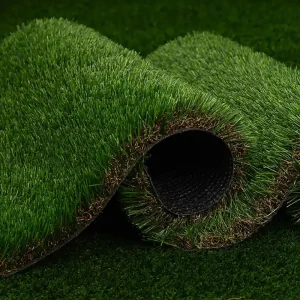
A simple conceptual sequence is: yarn tufted through primary fabric, any specified reinforcement, then the specified coating. This is a reading aid, not a cross-section of every product or an HBA40 construction drawing. The actual arrangement must come from the quoted model’s documents.
Compare coating options by documented properties
Latex and polyurethane proposals
Latex and polyurethane labels identify proposed coating families. They don’t tell you how long the turf will last. They also don’t prove its strength or fit for your site. Compare artificial grass backing through the properties your project needs and the evidence supplied for them.
Start by asking what material the label describes. Then request the relevant construction sheet, test report and use instructions. If a supplier claims better tuft retention or moisture performance, ask which product it was compared with and how the comparison was measured.
Compare like with like. One model may have a report from a test under stated conditions. The other may have only a brochure claim. Mark the missing information and request it before ranking those proposals.
Price comparisons need the same care. Ask whether both quotes cover the same model specification, quantity, delivery terms and supporting documents. A claimed coating upgrade does not explain the full difference in an installed project price.
There is no universal material winner established by the sources in this guide. Your artificial grass backing decision should follow the model’s documented properties, the intended use and the installation requirements. A supplier can explain a proposed advantage without turning it into a claim about every latex or polyurethane system.
Alternative systems and end-of-life claims
Other constructions also exist. Domo describes its Infinitum backing as an alternative without latex or polyurethane, designed to facilitate recycling through suitable routes. This is Domo’s account of its own system, not proof that a quoted X-Nature product has the same construction or disposal route.
For any artificial grass backing recycling claim, request the accepted product form and destination. Does the receiving facility accept the complete used turf, or only a separated material? Who removes contamination, arranges transport and confirms acceptance?
Record those answers with the quote. A design intended to help recycling and a confirmed local collection route answer different buying questions. Avoid assigning a disposal benefit to your project until the relevant route has been checked.
Read artificial grass backing test information
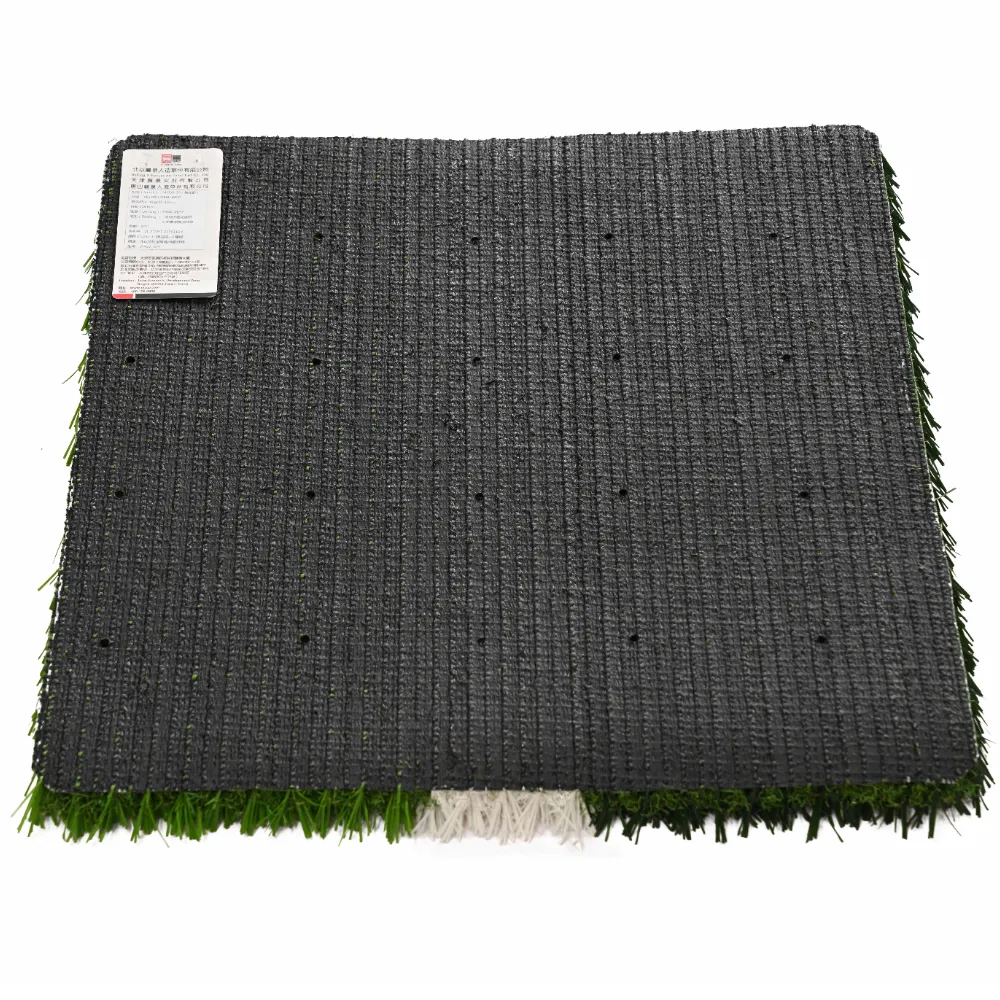
Tuft retention, stability and report scope
A test number becomes useful when you know what was tested. For artificial grass backing, ask for the method, sample identity, test date, units and conditioning details. Also check who issued the report and which result supports the claim under discussion.
Tuft retention concerns the force needed to pull yarn from the tested construction under the stated method. It does not describe every form of wear or damage. A dimensional stability result also needs its test conditions before you use it to compare proposals.
Use this original review checklist when reading a report:
| Report field | Question for the supplier |
|---|---|
| Product identity | Does this code match the quoted model and construction? |
| Method and edition | Which procedure produced the result? |
| Sample condition | What treatment or conditioning occurred before testing? |
| Result and units | Are these directly comparable with the other proposal? |
| Issuer and date | Who performed the test, and when? |
| Scope | Which claim does this result support, and what remains untested? |
Illustrative scenario: A buyer receives a strong tuft retention result with a sample code absent from the quotation. The buyer asks the supplier to explain the link between that sample and the offered model. Until that link is documented, the result stays outside the like-for-like comparison.
Weight and drainage descriptions
Ask what each artificial grass backing weight includes. Total turf weight, yarn weight, primary fabric weight and coating weight are separate fields. Check the area unit as well, and request clarification when a sheet uses “backing weight” without defining it.
Our artificial grass density guide covers the related yarn and stitch questions. Keep those separate from coating mass. Neither a dense pile nor a heavy underside replaces a relevant retention test.
Drain holes and material permeability describe only part of a water route. An artificial grass backing water-flow result cannot, on its own, establish drainage through the installed base and outlet. Ask whether the measurement covers a sample, a complete system or an installed area.
Missing information and safety claims
Use “not supplied” for a missing report rather than guessing a result. Assign a person and response date to each important question. This keeps artificial grass backing evidence gaps visible when buyers compare prices.
Smell, color and touch are not substitutes for safety documentation. Where the intended use requires chemical or other compliance evidence, specify the applicable requirement and request a report with a matching product scope. Do not infer health claims from a coating name.
Check installation and care compatibility
Adhesives, joints and the receiving surface
Before installation, collect instructions covering the actual turf and jointing products. Ask the installer to confirm which adhesive, tape and fixing method are proposed for the artificial grass backing. Record any limits stated by the relevant manufacturers.
Do not transfer glue quantities, cure times or temperature ranges from a different backing system. Those details belong in the applicable product instructions and installation plan. If two suppliers’ instructions conflict, get an agreed method before work starts.
The receiving surface also needs a defined role. Ask who checks its condition and who confirms that the installation method suits the project. A backing specification alone cannot settle the suitability of the complete base or drainage design.
Keep approved instructions with the order, including their version and date. If the contractor proposes a change, ask for written acceptance from the party responsible for that product or method. This gives future maintenance staff a useful record of what was installed.
Cleaning, storage and later changes
Request care guidance for the artificial grass backing as well as the visible pile. Ask about approved cleaning products, storage conditions and any stated limits on chemical contact or heat. Use the product’s instructions to plan care rather than a general online cleaning recipe.
For a spill or damaged seam, record the model, affected area and action already taken. Send photographs and product details with the enquiry. Trying several unconfirmed treatments can make the original problem harder to assess.
Before a future repair, check whether the replacement turf and jointing materials match the original specification. Artificial grass backing compatibility is a document check worth repeating when products change. Keep the final care instructions with the handover file so the operator can find them.
Interpret XPU and the quoted model
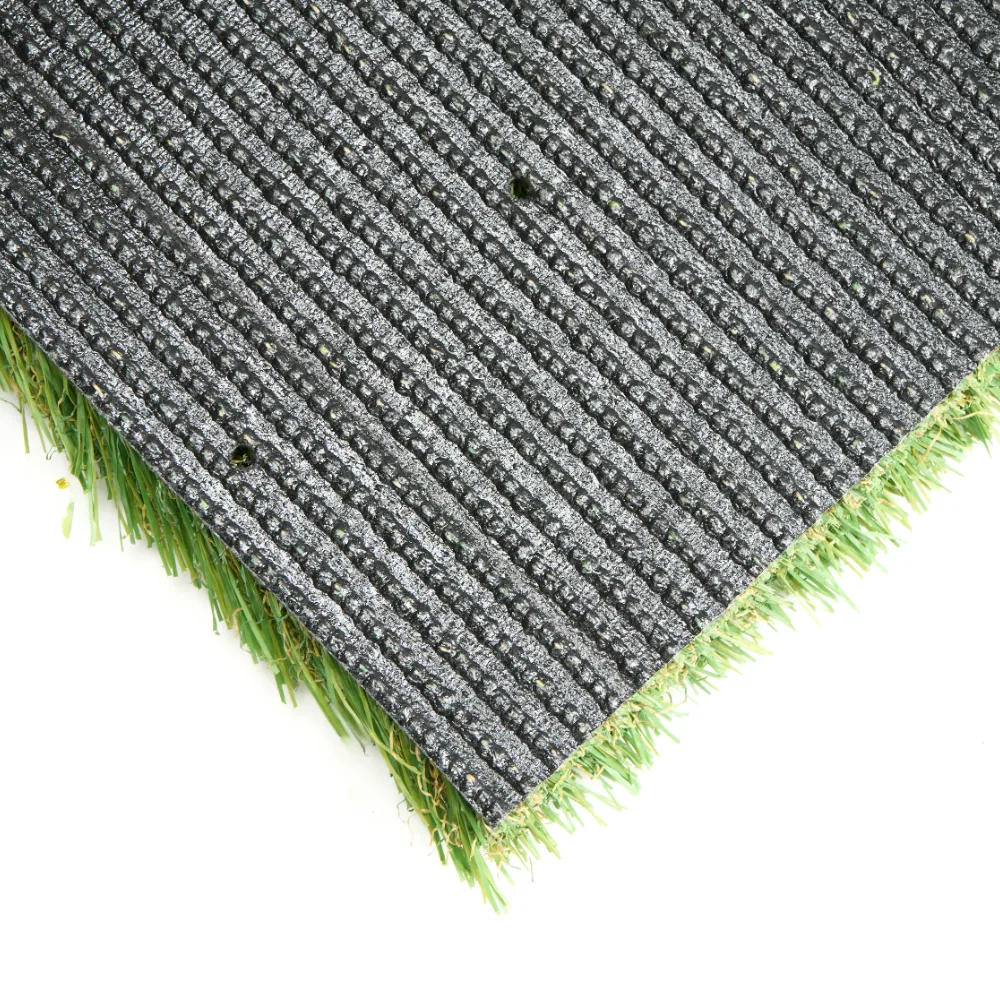
What the HBA40 page states
The HBA40 landscape turf page lists XPU backcoating and describes a black-green anti-aging base with reinforced mesh. These are the manufacturer’s published product descriptions. They are a starting point for questions about this artificial grass backing.
The label XPU alone does not establish its chemical composition, a patent, certification or an environmental result. Ask what the term means for the supplied model and which document defines it. Keep the product code and specification revision attached to the answer.
Likewise, wording about an anti-aging base or reinforced mesh needs supporting detail if it affects your buying criteria. Ask which component the wording refers to and what evidence is available. Do not convert the product description into an independently verified performance conclusion.
What to request with an X-Nature quote
For an artificial grass backing enquiry, send the intended location, use and proposed installation method. Identify the exact model from the landscape grass range. Then ask which documents can be supplied for that configuration.
Ask for these items with the quote:
- A labeled description of each layer.
- The meaning of XPU, where that term is used.
- Reports that match the offered model.
- Installation and care instructions.
- The warranty terms and conditions.
Keep brochure claims separate from the warranty. Check what the contract covers.
If the proposed configuration changes, update the document list before placing the order. Ask whether earlier reports still apply and why. The model name may stay the same even when its backing changes. Check the version.
Keep commercial choices tied to the same technical version. A final quote should identify what is being offered clearly enough for the buyer to match it to approved samples and documents. Record unresolved artificial grass backing questions beside that version.
Build a backing comparison and document request
Start with a blank comparison sheet
Use the table below for each shortlisted model. It is an editorial purchasing aid, not an official test form. Replace every blank with a document reference, a supplier answer or “not supplied.”
| Comparison field | Model A | Model B |
|---|---|---|
| Model code and specification revision | , | , |
| Primary fabric and layer description | , | , |
| Reinforcement, if specified | , | , |
| Secondary coating identity | , | , |
| Relevant report and sample identity | , | , |
| Method, conditions, result and units | , | , |
| Installation and care compatibility | , | , |
| Disposal route and acceptance evidence | , | , |
| Open question, owner and response date | , | , |
Keep the artificial grass backing comparison attached to the quotation. This helps the buyer see whether a lower price comes with a different specification or simply less information. It also prevents an unanswered question from disappearing during negotiation.
Close the questions that affect selection
Illustrative scenario: A distributor compares two recycling statements. One names a receiving route; the other says only “recyclable.” The distributor requests acceptance details for the planned destination and records the unanswered route as an open procurement question.
Rank questions by their effect on the intended use, installation and contract. Set a decision point for essential missing information. A clear response can support selection; an unresolved gap should remain visible to the person approving the order.
For X-Nature proposals, request available backing documents for your shortlist. Include the model codes and the table fields you still need answered. That gives the enquiry a concrete scope without assuming that every requested report is available.
Frequently asked questions
What is the difference between primary and secondary backing?
The primary backing is the fabric through which yarn is tufted. A secondary coating helps secure the yarn in many constructions. For artificial grass backing with extra fabrics or mesh, ask the supplier to label each component so the layer count is clear.
Is polyurethane always better than latex?
No universal conclusion follows from the material name alone. Compare the offered models using relevant test methods, conditions and use instructions. For an artificial grass backing claim such as stronger tuft retention, request evidence that identifies the tested construction and comparison product.
Does heavier backing mean stronger turf?
Weight alone does not establish strength. First check whether the figure means total turf, coating or another component. Then use the relevant test result for the property you need, keeping the method and sample conditions visible beside the number.
Do holes in the backing guarantee good drainage?
No. Holes describe a feature of the turf, while installed drainage also involves the layers below it and the water outlet. Ask what any artificial grass backing flow test covers. A sample measurement should not become a promise about the complete site.
Is XPU a certification?
The HBA40 page uses XPU as a backcoating label. That wording does not establish certification. Request its technical meaning for the quoted model and ask separately for any required certificate or report, including the issuer, scope and applicable product identity.
Does recyclable mean a local facility will accept it?
Ask the receiving facility what it will accept. Check whether it takes the complete used turf and what preparation it needs. An artificial grass backing design claim does not confirm that collection and processing are available where your project will be removed.
A useful purchase file connects the model, construction, reports and use instructions. Before deciding, send X-Nature your remaining backing questions and ask which product documents are available. Use those answers to complete the comparison and make any remaining gaps clear to the buyer.