Introduction
Amid the nationwide fitness boom, football is making its way into schools, communities, commercial venues, and private training grounds, making football grass the core material for field construction. Traditional infilled football turf suffers from drawbacks such as particle pollution, complicated maintenance, and long construction periods. As a revolutionary fourth-generation sports turf solution, infill-free technology perfectly addresses these industry pain points.
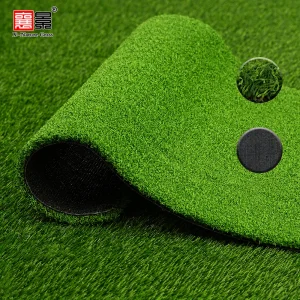
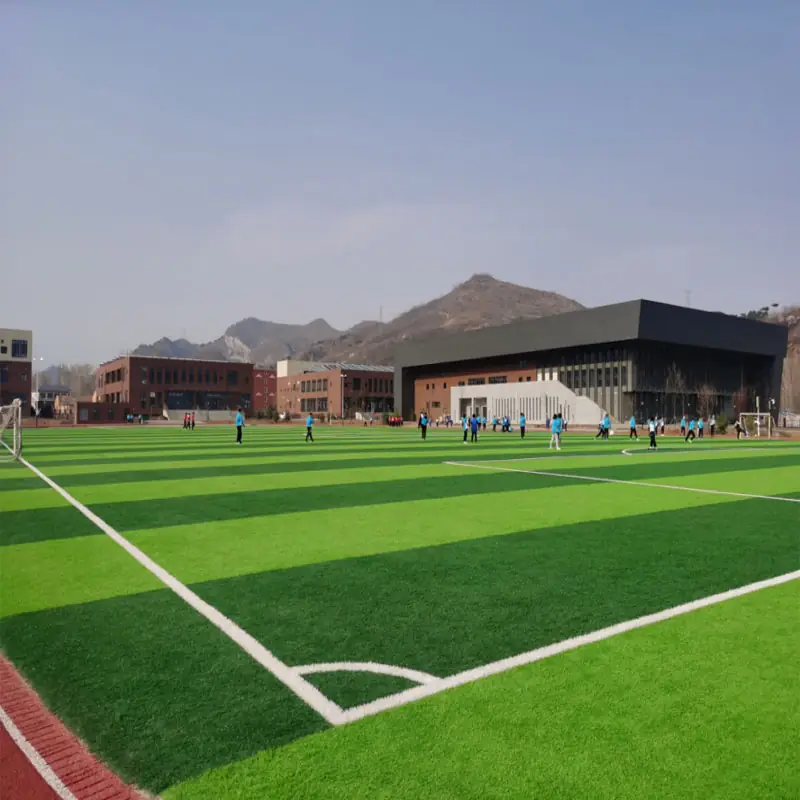
The X-Nature MCDS30 30mm infill-free football turf, featuring a high-density straight-and-curled hybrid weaving process, an eco-friendly infill-free structure, and all-weather durability, covers a wide range of scenarios including amateur training, youth coaching, cage football pitches, and indoor arenas. As a standard sports-specific turf, it balances professional athletic performance, low maintenance costs, and green safety. It is currently the mainstream choice for renovation and new construction projects of small to medium-sized football fields, offering a professional sports solution that sets it apart from ordinary landscaping turf and fence grass.
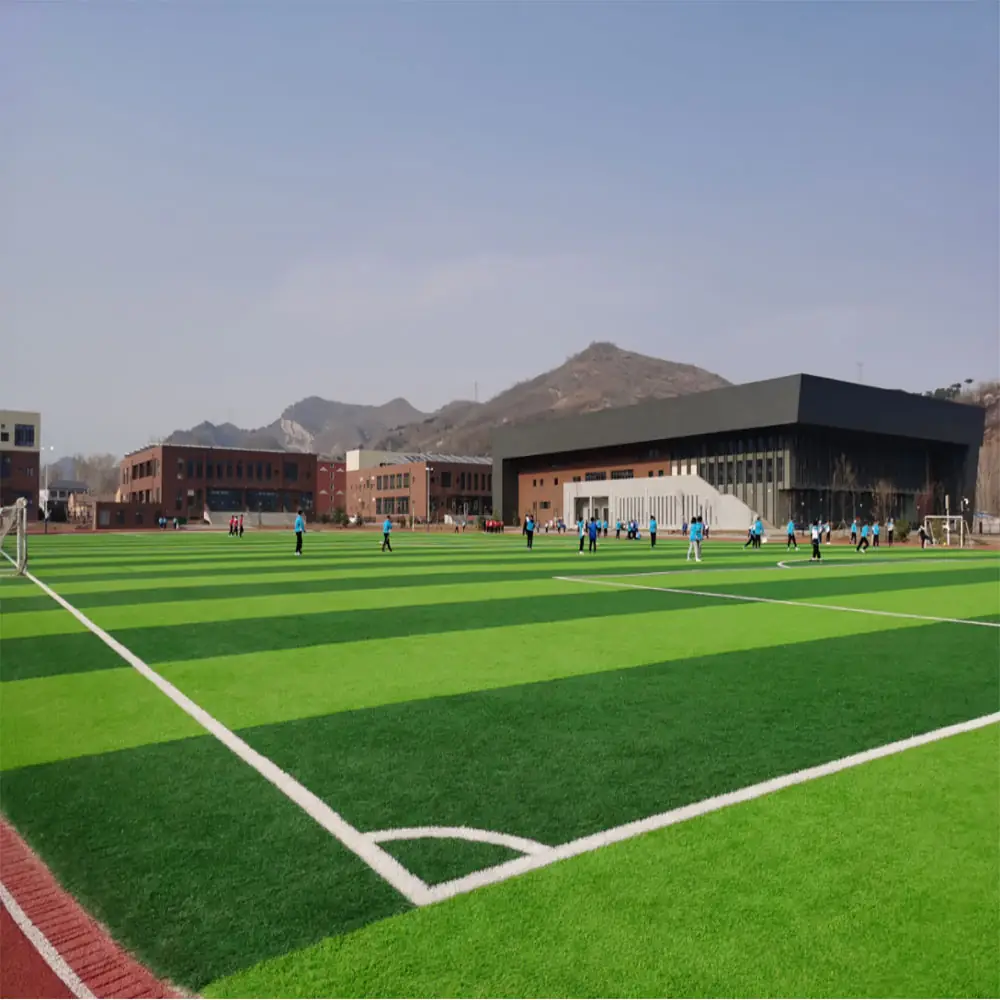
Classification of Football TurfClassification of Football Turf: Core Differences Between Infilled and Infill-Free Types: Core Differences Between Infilled and Infill-Free Types
Football turf on the market is mainly divided into two categories: infilled and infill-free. X-Nature MCDS30 is a mature infill-free football turf with a fixed pile height of 30mm, specifically engineered to optimize internal structure for football movements such as kicking, sudden stops, and sliding tackles. Infilled turf requires a layer of quartz sand combined with EPDM rubber granules to provide cushioning and support, and is mostly used in large-scale 11-a-side professional venues. In contrast, the MCDS30 infill-free turf relies on the woven structure of its yarns to deliver resilience and cushioning without any filler materials, making it suitable for non-commercial football fields and rugby pitches.
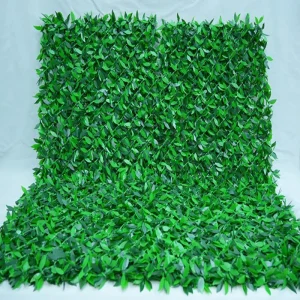
Landscape grass is used only for garden greening and park landscaping, while fence grass is mainly used for construction site hoardings and exterior wall decoration. Both types serve only decorative purposes and lack the mechanical support structure required for football play. Their density, toughness, and shock absorption fail to meet sports standards, and they can never replace football turf for pitch construction. Forced use would lead to rapid wear and tear, as well as safety hazards such as abrasions from falls and ankle sprains.
Core Technical Structure of X-Nature MCDS30 InfiCore Technical Structure of X-Nature MCDS30 Infill-Free Football Turfll-Free Football Turf
Yarn Weaving Process
The turf adopts a straight-and-curled hybrid weaving process using high-toughness PE monofilaments and thickened PP curled yarns, achieving a high density of 29,400 stitches/m² and a turf weight of 2.86 kg/m². The upright monofilaments bear stepping pressure and ensure traction for pushing off, while the curled yarns intertwine and wrap around the straight yarns to fix them in place. This design prevents large-area flattening even after prolonged high-intensity running and sliding tackles, allowing players to change direction and shoot smoothly and powerfully.
Double-Layer Reinforced Waterproof Backing
The double-layer composite backing fabric combined with eco-friendly X-PU double-layer adhesive ensures that the turf does not lose yarns or delaminate even after prolonged water exposure. Fine drainage holes are evenly distributed across the backing fabric, enabling rapid water drainage during heavy rain, leaving no standing water on the field and preventing mold growth. Under low-temperature frost conditions, the backing material remains flexible and does not become brittle, crack, or deform, making the turf suitable for stable installation in rainy and cold regions alike.
Infill-Free Intrinsic Cushioning System
The turf’s own woven structure provides built-in resilience and shock absorption. For youth fields requiring higher protective performance, a 5–10 mm TPE elastic pad can be added to enhance cushioning, reducing impact force on ankles and knees by 15%–20% upon landing. Throughout the process, no quartz sand or rubber granules are added, eliminating from the source pollution risks such as microplastic dispersion and heavy metal leaching. The product is made from safe, eco-friendly raw materials, is non-toxic and odorless, making it a reliable choice for primary and secondary schools, as well as youth training facilities.
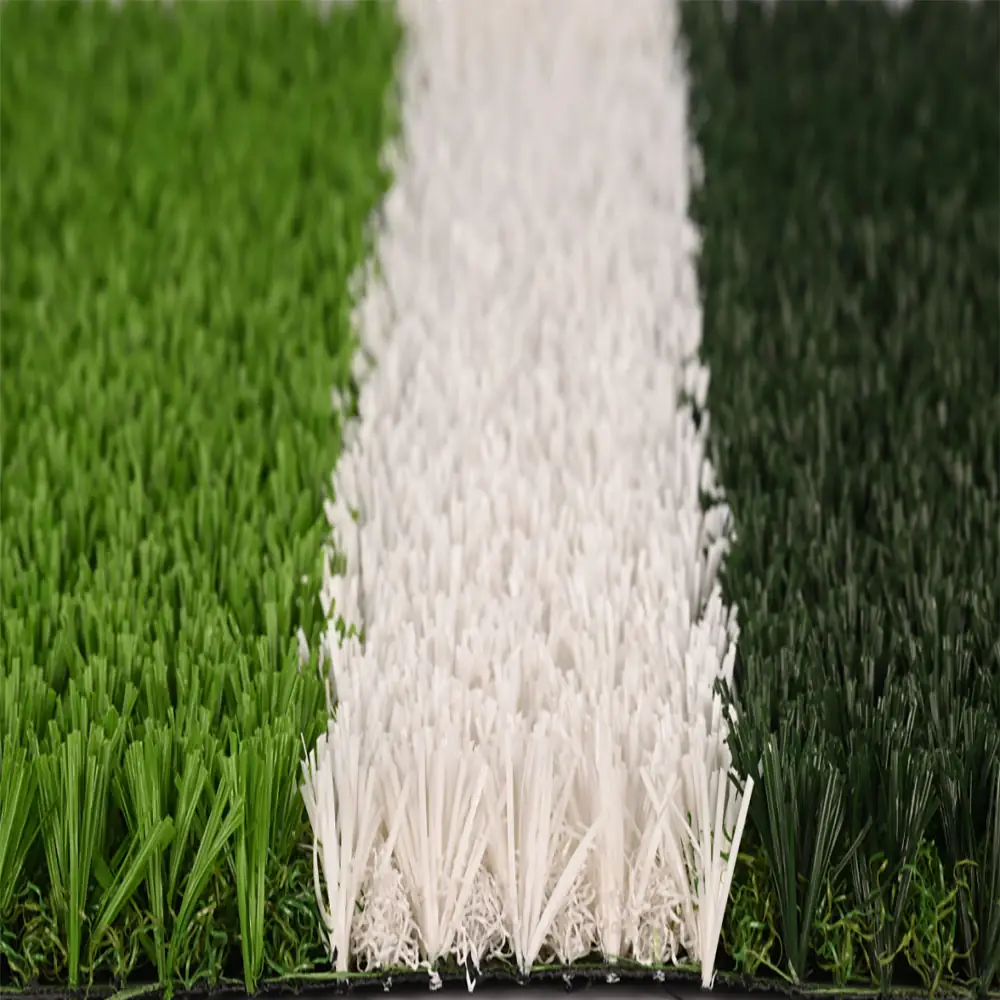
Core Advantages of MCDS30 Compared to TrCore Advantages of MCDS30 Compared to Traditional Infilled Football Turfaditional Infilled Football Turf
1. Faster Installation and Lower Overall Construction Cost
Traditional infilled football turf requires a complicated installation process: ground leveling, turf laying, spreading quartz sand, even distribution of rubber granules, and multiple steps of brushing and compacting. The MCDS30 infill-free football turf needs only two steps—ground leveling and turf splicing/fixing—cutting manual labor in half. Meanwhile, it eliminates the material costs of sand and rubber granules as well as the labor costs for spreading them, significantly reducing the upfront investment pressure for small and medium-sized fields.
2. Simple Maintenance and Extremely Low Long-Term Operating Cost
After 2–3 years of use, infilled football turf experiences substantial loss of rubber granules, requiring periodic replenishment, as well as annual grooming and removal of compacted debris, resulting in persistently high maintenance expenses. The MCDS30 has no granule loss issue. Daily maintenance only requires sweeping away fallen leaves and debris and rinsing stains with high-pressure water. Annual maintenance costs are reduced by more than half compared to infilled turf. For venues where large-scale maintenance is inconvenient—such as rooftop pitches, indoor enclosed arenas, and high-rise terraces—this infill-free football turf offers outstanding adaptability. It is ready for football training and matches on the very day of installation.
3. Higher Safety and Hygiene Standards with Outstanding Eco-Friendliness
Under high-temperature exposure, traditional infilled rubber granules tend to emit irritating odors. Rainwater runoff can also cause the granules to infiltrate the soil and contaminate groundwater. The MCDS30 is made entirely of recyclable PP+PE eco-friendly materials, with no pollution risk from filler additives. The turf surface is smooth and clean, reducing the chance of abrasion injuries from falls. There is no risk of granules embedding into shoes or being inhaled by children, making it the preferred football turf for parent-child football and youth training facilities.
4. Stable Four-Season Performance and Long-Term Consistent Playing Feel
Natural grass becomes muddy and slippery after heavy rain, turns yellow and dormant in winter, and is prone to bare patches in high summer heat. After rain, infilled turf becomes a muddy mix of slurry and granules, causing large fluctuations in ball speed and rebound height. The MCDS30 features specialized UV-resistant and anti-aging formulas—it does not fade or soften under intense summer sun, and remains tough without cracking under winter frost. The entire turf has perfectly uniform yarn density, height, and elasticity, resulting in minimal deviation in ball rolling distance and rebound height. Athletic performance does not significantly degrade over years of use, reliably supporting players’ training consistency.
Full-Scenario Adaptability of MCDS30
X-Nature offers comprehensive customization for the MCDS30 football turf in terms of size, line marking, and color matching, covering the vast majority of football field applications:
Campus youth training and primary/secondary school pitches: School venues have strict requirements for environmental safety and health. The particle-free design protects students’ health in all aspects, while providing sufficient wear resistance and durability for high-frequency use between classes and after school.
Indoor air-supported structures and basement enclosed pitches: Indoor venues often have limited ventilation, making it difficult for odors from infilled granules to dissipate. The odorless, eco-friendly nature of MCDS30 makes it perfectly suited for enclosed spaces.
Rooftop and terrace small training fields: For small-area pitches, surveying, customization, and installation can be completed in as little as 1 to 3 days. Custom markings such as penalty area lines, center circles, and brand logos can be pre-woven into the turf, creating an exclusive private training space.
FAQ
Q1: Does the hardness of infill-free football turf affect sports safety?
No. The X-Nature MCDS30 infill-free turf features a high-density structure combining straight and curled yarns. The yarns themselves provide excellent resilience and cushioning properties. Together with the elastic shock-absorbing pad installed underneath, it effectively absorbs impact forces generated during sports activities.
Q2: Are the artificial yarns of infill-free football turf durable? How wear-resistant are they?
Very durable. The X-Nature MCDS30 adopts a high-density structure and high-quality PE/PP composite yarns. With a specialized thermally integrated one-piece backing process, the yarn’s pull-out resistance and tensile strength far exceed those of ordinary turf. Through rigorous simulated testing, its wear resistance is extremely strong—it does not easily break or lose yarns, and is fully capable of withstanding high-intensity running, sudden stops, and sliding tackles in football.
Q3: Is there any difference in ball speed and rebound between infill-free football turf and natural grass?
According to actual testing, the ball speed and rebound trajectory of infill-free artificial turf are very close to those of natural grass. Since the field requires no infill, the surface is extremely flat and remains stable over the long term. There is no directional deviation in ball roll or rebound, making sports performance more controllable.
Q4: How does infill-free football turf perform in cold or hot climates?
It offers stronger adaptability. Under freezing conditions, traditional infilled turf tends to freeze and harden, increasing the risk of sports injuries. In hot summer weather, rubber granules become hot and may release odors. The X-Nature MCDS30 features an infill-free design that completely avoids these issues. With excellent weather resistance, it maintains good elasticity and underfoot feel regardless of heat or cold.
Summary
In the domestic football field construction market, infill-free football turf is rapidly emerging and gradually becoming the mainstream material choice for public sports venues. Leveraging four core advantages—30mm optimal pile height, high-density straight-and-curled hybrid self-supporting structure, zero-infill eco-friendly safety, and ultra-low long-term maintenance costs—the X-Nature MCDS30 has become a flagship sports product within the brand’s artificial turf system. Compared to traditional infilled football turf, which is costly and labor-intensive to maintain, as well as landscape grass and fence grass that are purely decorative and fall far short of sports standards, the MCDS30 is precisely tailored to the vast majority of public football scenarios, including campuses, communities, indoor facilities, rooftops, and more.
As the concept of green sports continues to gain traction, and as cost reduction, efficiency improvement, safety, and environmental protection become industry imperatives, the MCDS30 not only significantly lowers the long-term operating expenses of a field but also consistently delivers professional, safe, and comfortable playing conditions year after year. It effectively supports the large-scale popularization and sustained development of mass football participation.