Intro
Artificial grass material selection determines the durability, comfort, and overall performance of sports and landscape turf projects. In the global synthetic turf industry, PE and PP artificial grass are the two most common raw materials, each with unique physical properties and applicable scenarios. Choosing the right material is essential for buyers to obtain high-quality, cost-effective turf products. This article professionally compares the differences between PE and PP turf, and analyzes the practical value of PE+PP hybrid turf with the WD8225 model, helping buyers make accurate project procurement decisions.
PE (Polyethylene): Soft and Resilient for Contact Scenarios
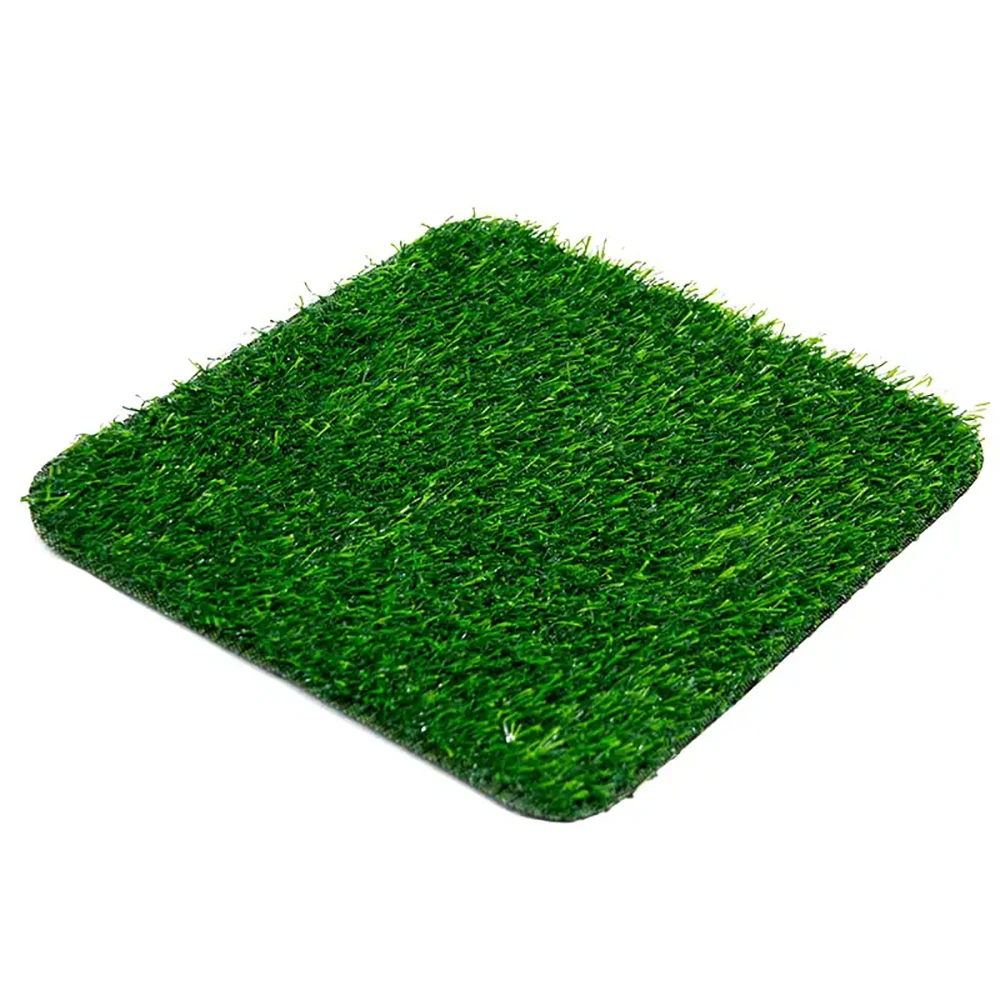
PE is the most widely used raw material for outdoor landscape and sports artificial grass at present. Its biggest feature is soft fiber texture, which is highly similar to natural grass, without hard friction feeling, and will not cause skin scratches during contact. In terms of physical performance, PE fiber has excellent resilience, can quickly recover its original state after being squeezed and trampled, and has strong fatigue resistance.
In terms of outdoor adaptability, high-purity PE materials are equipped with professional UV stabilizers in the production process, which can effectively resist ultraviolet radiation, avoid fiber brittleness and fading caused by long-term sun exposure, and maintain long-term color stability. Therefore, pure PE turf is mostly used in scenarios with frequent human contact and high comfort requirements, including football fields, kindergarten activity venues, high-end residential garden landscapes, and leisure terrace greening.
PP (Polypropylene): Rigid and Stable for Functional Scenarios
Polypropylene is a functional synthetic turf material with rigid physical attributes, serving as an ideal supplementary material for scenario-specific functional turf rather than daily sports grass. It focuses on structural stability and friction performance to meet special usage demands.
PP artificial grass boasts high fiber uprightness and a larger friction coefficient compared with PE turf. Its rigid fiber structure ensures neat and upright turf shape without lodging under external pressure.
PP material features high cost performance with stable industrial production quality. It maintains excellent structural stability under long-term high-strength extrusion and vertical tension, making it suitable for fixed functional laying environments.
Typical Applications: Pure PP turf is widely used for tennis court auxiliary areas, venue passage buffer zones, and the bottom support layer of putting green turf. Its rigid support property effectively improves the overall flatness and load-bearing capacity of composite turf venues.
PE+PP Blended Turf: Optimal Solution for Vertical Greening Projects
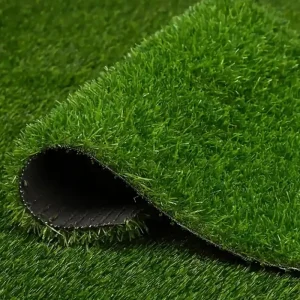
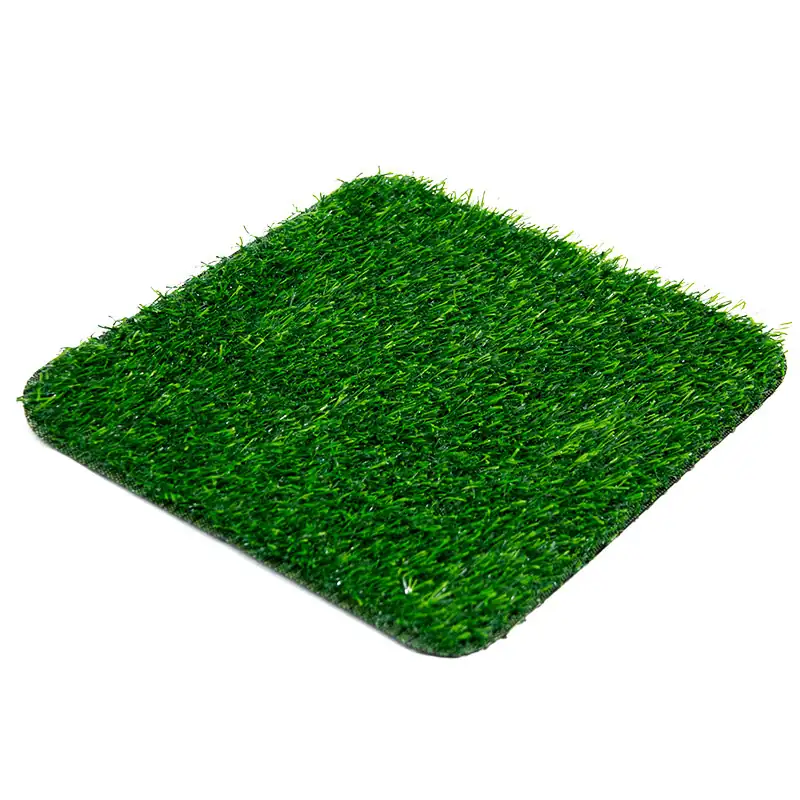
To solve the single performance limitation of pure PE and pure PP materials, most professional synthetic grass manufacturers adopt PE+PP blended material formulas to balance appearance, comfort and structural stability, which is also the mainstream development trend of mid-end landscape turf in the market. The 25mm Hoarding Turf—WD8225 is a typical representative of high-quality blended turf, adopting professional PE+PP/8000 material configuration, which perfectly combines the advantages of the two polymers and is specially optimized for outdoor enclosure shielding and wall decoration scenarios.
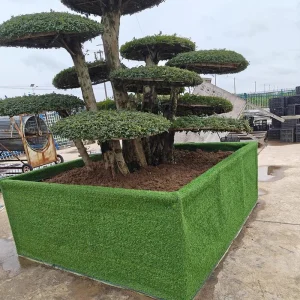
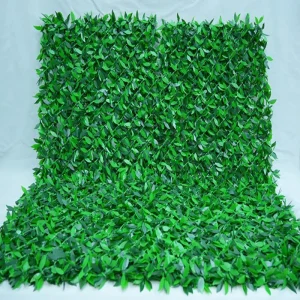
As a multi-functional blended turf, WD8225 is also highly compatible with interior and exterior wall decoration. As a practical wall artificial grass, it can create a natural green vertical landscape, realizing environmental beautification without daily maintenance. This material collocation mode abandons the defects of single material, and becomes the preferred choice for engineering greening, enclosure shielding and wall decoration projects with its balanced performance and high cost performance.
Comprehensive Performance Comparison: PE vs. PP vs. PE+PP Blended Turf
| Evaluation Dimension | PE (Polyethylene) | PP (Polypropylene) | PE+PP Hybrid (WD8225) |
| Texture & Touch | Extremely soft, skin-friendly, no stabbing hurt | Relatively hard, strong friction sense | Moderate hardness, balances aesthetic and support performance |
| Resilience Performance | Excellent, fast rebound after compression | Average, slow recovery speed | Good, easy to restore original shape after pressure |
| UV & Weather Resistance | Superior, suitable for long-term outdoor exposure | Medium, prone to slight aging in extreme environments | Good, optimized for long-term outdoor vertical use |
Detailed Technical Specifications of WD8225 Blended Turf
Basic Product Parameters
- Pile Height:25mm±1
- Gauge:150 stitches/m
- density:10500 stitches/㎡
- Back Coating:Black SBR Latex
- Color:Two-color
- Weight:1.27kg/㎡
- Size:Roll Specification:2m (Width) ×25(length)
- Package:By roll in pp bag
- Backing:Black-green anti-aging base + tear-resistant reinforced mesh
Core Functional Advantages
This wall artificial grass integrates multiple practical functions required for outdoor use. It has professional UV resistance and heat insulation, which can effectively block solar heat radiation and avoid high-temperature aging of the turf in summer. The flame-retardant performance meets public safety standards and is suitable for construction sites and public space decoration. The auto-permeable design realizes rapid water drainage, with no water accumulation in rainy days. In addition, the product is non-toxic and antibacterial, safe for human contact, and has excellent dust suppression and noise reduction effects. In daily use, almost no maintenance is needed, which greatly reduces later operating costs. At the same time, the dense fiber structure provides an excellent privacy shielding effect, which is the core advantage of enclosure and wall decorative turf.
Standard Paving Process for Hoarding and Wall Artificial Turf
Standardized paving is the key to maximizing the performance of fencing grass.
Step 1: Site Leveling and Hardening
Turf paving requires a solid and flat rigid base, including cement, asphalt, concrete and other hard base materials. For construction hoardings and wall installation, the base surface must be smooth, free of protrusions, depressions and floating dust. If the original foundation is loose or unhardened, it must be leveled and hardened in advance to ensure the firmness of subsequent turf bonding and avoid overall deformation caused by an uneven base.
Step 2: Unfold and Position the Turf Panels
Transport the whole roll of turf to the construction area, and unfold and flatten the turf panels completely. Before fixed paving, confirm the uniform direction of grass filaments of all turf rolls. The unified fiber direction can ensure no obvious light reflection and color difference from the viewing angle of the entrance, ensuring the overall decorative uniformity of the fence and wall surface.
Step 3: Seam Bonding with Special Adhesive
Apply professional turf adhesive evenly along the splicing seam and the matching joining tape. After the adhesive is slightly dry and turns tacky, fit the joining tape closely to the seam position. Then apply a second layer of adhesive on the surface of the joining tape. When the adhesive reaches the optimal bonding viscosity, press the turf firmly on the tape to complete the seamless splicing of the interface.
Step 4: Detail Adjustment and Compaction Finishing
Before the adhesive is completely set, repeatedly press the splicing area back and forth manually to ensure tight bonding between the turf edge and the joining tape, avoiding hollowing and warping. After bonding and fixing, comb the messy grass filaments to restore the upright and neat state of the turf, and comprehensively check all construction details to ensure no missing seams and uneven positions.
Global Market Trend and Professional Purchasing Suggestions
With the continuous improvement of global urban greening standards and the increasing demand for low-maintenance landscape facilities, the artificial turf industry has maintained a stable growth trend. According to the authoritative industry research data of Grand View Research, the global artificial turf market scale is expected to reach 7.03 billion US dollars by 2030, with a compound annual growth rate of 7.5% from 2024 to 2030. (Source: https://www.grandviewresearch.com/industry-analysis/artificial-turf-market)
The report points out that the Asia-Pacific region has become the world’s core production and export base of synthetic turf, and the market demand for PE+PP blended functional turf is rising year by year. Different from single sports turf, functional turf used for enclosure shielding and wall vertical greening has become the fastest growing segment in the industry, which also verifies the broad application prospect of blended PP artificial grass products.
Combined with market trends and product performance, professional purchasing suggestions are summarized as follows: First, for sports venues such as soccer fields and children’s activity areas, 100% pure PE turf must be selected to ensure user safety and sports comfort. Second, for engineering hoardings, residential fence shielding, and wall decoration projects, PE+PP blended turf represented by WD8225 is the most cost-effective choice, which can balance aesthetic effect and vertical service life. Third, in the process of goods inspection, buyers can forcibly fold the grass filaments. The high-quality blended turf has good resilience, no whitening, and no fiber fracture after folding, which can effectively identify product quality.
Frequently Asked Questions (FAQ) & Official Answers
Q1: Does the product have color difference problems?
A: All product pictures are real shots of physical products. A slight color difference may occur due to different shooting lighting, display device resolution, and personal color perception. In addition, slight color deviation may exist in different production batches of turf. It is recommended to complete one-time purchasing for large-area projects to ensure overall color consistency. Meanwhile, the turf must be paved flat along the unified fiber direction; reverse paving will also cause a visual color difference.
Q2: Will the new turf have a peculiar smell? Is it harmful to health?
A: The turf products are packaged immediately after production and molding, so a slight plastic odor may be detected when opening the package for the first time, which is a completely normal physical phenomenon. After paving and placing in a ventilated environment for several days, the odor will completely dissipate. All products have passed strict factory quality inspection, adopt non-toxic and environmentally friendly raw materials, and have no health risks for the human body or environmental contact, which can be used safely in residential, commercial, and public scenarios.
Q3: What should I do with the problems caused by cutting and transportation?
A: According to project construction needs, turf products support customized cutting. A small amount of loose fibers and debris will appear on the trimmed edge, which can be used normally after simple cleaning. In addition, extrusion and bending during long-distance transportation will cause temporary creases and wrinkles on the turf surface. These deformations are not permanent. After a period of natural placement and combing, the turf can automatically recover to a flat and upright state, which will not affect the overall decorative effect and service life.
Conclusion
Material selection is the core of artificial turf procurement, far more important than simple price comparison. Pure PE turf is suitable for high-comfort sports and activity spaces, while pure PP turf is more inclined to low-cost functional auxiliary laying. The PE+PP blended turf represented by WD8225 perfectly integrates the advantages of the two materials, making it a professional special product for fence shielding, wall greening and engineering hoarding beautification. As a mature and stable vertical greening solution, fencing grass made of high-quality blended PP turf can meet the dual needs of project functionality and aesthetics, while greatly reducing later maintenance costs. For engineering contractors, landscape designers and bulk purchasers, choosing targeted material matching and product models according to project scenarios is the key to realizing high-cost performance and high-quality project delivery.
Contact X-Nature Grass today for certified samples, technical data sheets, and bulk pricing for WD8225 and the entire product line.