Introduction
How long does artificial putting green turf last? A typical service life is around 8–12 years. According to the USGA, synthetic turf used in practice areas generally has a product life expectancy within this range. However, actual lifespan can vary depending on turf quality, installation, usage conditions, and maintenance.
This guide explains the key factors that affect turf durability and helps you choose a putting green solution that fits your application, usage level, and maintenance needs.
What Factors Affect the Service Life of Putting Green Turf?
Evaluating turf lifespan requires more than looking at the expected service life provided by a supplier. Different parts of a turf system are affected by sunlight, moisture, wear, and repeated use in different ways.
The key is not only knowing how long the turf can last, but also understanding which conditions can accelerate aging or affect its long-term performance.
UV Exposure and Weather Conditions
Ultraviolet radiation is one of the main environmental factors affecting outdoor synthetic turf.
Continuous exposure to sunlight can gradually affect the appearance and performance of synthetic fibers. This is why UV stabilization is an important factor when choosing turf for outdoor applications.
Outdoor turf is exposed to more than just sunlight. Rain, temperature fluctuations, humidity, and moisture exposure can also affect the overall turf system. Poor drainage may allow water to remain in or around the system longer than necessary, which can lead to moisture-related issues and affect long-term performance.
Outdoor turf should therefore be selected based on local climate conditions rather than using the same specifications for every location.
Fiber Material and Wear Resistance
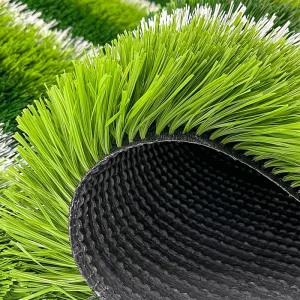
The turf fibers are made from synthetic yarn materials, which play an important role in the durability and wear resistance of artificial turf. During use, the fibers are exposed to repeated foot traffic, golf practice, and other forms of surface wear. Over time, these factors can affect fiber resilience and the ability of the turf to maintain its original appearance and performance.
Different yarn materials have different characteristics, and there is no single polymer that is always the best choice for every application. Common synthetic turf yarn materials include polyethylene, nylon, and polypropylene. According to the Synthetic Turf Council, these materials can provide properties such as durability, resilience, moisture resistance, color retention, and UV resistance when properly engineered for turf applications.
For buyers, the focus should not be only on the specific polymer used, but also on the complete yarn specification, turf construction, and how the material matches the intended application.
Turf Density, Pile Height, and Resilience
Pile height and density influence the appearance, performance, and playing characteristics of an artificial turf surface.
The appropriate pile height helps control how golf balls roll across the surface and affects the overall feel of the putting green during use. Density refers to the amount of yarn contained within a specific area and is usually measured by stitches per square meter. It can be a useful reference when comparing turf products with similar pile heights and yarn specifications.
Resilience is another important factor affecting long-term performance. Turf fibers need to recover after repeated foot traffic and use rather than becoming permanently flattened over time.
For this reason, pile height, density, and fiber resilience should be evaluated together. A single specification, such as pile height alone, cannot determine how long a putting green turf system will maintain its performance.
Backing and Coating Quality
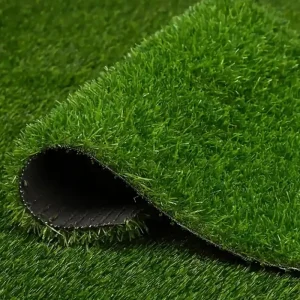
The turf surface is only one part of the complete turf system. The backing helps hold the turf fibers in place and contributes to the dimensional stability of the installed turf.
Weak seams, poor adhesive bonding, or improper installation can lead to premature wear and performance issues, even when the turf fibers themselves are durable. The USGA highlights construction quality, UV protection, suitable synthetic materials, and proper adhesive selection as important factors affecting the durability of synthetic putting greens.
For outdoor applications, backing quality and drainage performance should be evaluated together. The turf needs to maintain structural stability while allowing water to drain effectively according to the requirements of the installation environment.
How Does Maintenance Affect Artificial Putting Green Turf Lifespan?
Artificial turf requires less routine maintenance than natural grass, but it is not completely maintenance-free.
Regular care helps keep debris from accumulating, reduces avoidable surface problems, and makes it easier to identify damaged seams or areas of abnormal wear before they become more serious.
Routine Cleaning and Debris Removal
Leaves, dirt, dust, and other debris should be removed regularly, particularly on outdoor putting greens.
Keeping the surface clean helps preserve its appearance and prevents debris from becoming embedded in the turf. Maintenance frequency should reflect the surrounding environment. A putting green located beneath trees may require more frequent cleaning than one installed in an open area.
USGA guidance on synthetic practice areas also notes that artificial turf reduces many of the routine inputs associated with natural turf, while regular maintenance is still needed to keep the surface clear of debris and preserve performance.
Regular Inspection to Extend Turf Lifespan
A putting surface needs to remain reasonably consistent to provide predictable practice conditions.
Regular inspection can help identify flattened fibers, loose seams, surface contamination, or localized wear. These issues are easier to address when they are detected early.
The objective is not to perform complicated maintenance procedures. It is to keep the turf surface clean, properly maintained, and free from avoidable installation or usage problems.
How to Choose Long-Lasting Putting Green Artificial Turf?
Choosing long-lasting putting green artificial turf requires more than comparing product prices or a single technical specification. Buyers should consider the intended application, turf construction, environmental conditions, and available product information before making a decision.
Check Fiber Material and UV Protection
Start by asking what polymer is used for the turf fiber and whether the yarn contains UV stabilizers.
For outdoor projects, also ask whether the supplier can provide test reports or technical documentation supporting claims about UV resistance. The Synthetic Turf Council recommends validating important yarn characteristics through independent laboratory testing and identifies artificial weathering and UV-related testing as relevant considerations for synthetic turf evaluation.
This is more useful than simply accepting a general statement such as “UV resistant.”
Evaluate Backing Stability and Durability
Ask the supplier for information about the backing structure, coating, and seam construction.
Important questions include:
- What type of backing is used?
- Is there a secondary coating?
- How is dimensional stability achieved?
- What adhesive or joining method is recommended?
- How should seams be installed and maintained?
These questions help buyers evaluate the complete turf system instead of focusing only on the visible grass fibers.
Consider Climate, Usage Frequency, and Application
The right turf specification depends on where and how the putting green will be used.
For example, an outdoor residential putting green, a golf academy practice area, and a resort leisure facility may have very different traffic patterns and environmental conditions.
Consider the following before selecting a product:
Climate: How much direct sunlight, rainfall, and seasonal temperature variation will the turf receive?
Traffic: How many people will use the area, and how frequently?
Location: Is the turf intended for a backyard, training facility, rooftop, hotel, simulator venue, or another setting?
Maintenance: How frequently can the surface be cleaned and inspected?
Matching the turf to these conditions is more reliable than choosing solely according to price or appearance.
Ask Suppliers for Product-Specific Evidence
A professional supplier should be able to explain the construction of the turf and the conditions under which its performance claims apply.
Instead of asking only, “How many years will it last?”, buyers can ask more specific questions:
- What is the expected service life under normal use?
- What type of fiber and backing does the product use?
- What UV protection is incorporated into the yarn?
- What testing or technical documentation is available?
- What installation method does the manufacturer recommend?
- What maintenance routine should be followed?
Clear answers to these questions make product-to-product comparisons much more meaningful and reduce the risk of choosing turf based only on marketing language.
Rainbow Putting Green Turf—GOLF7016G: Designed for Long-Term Use
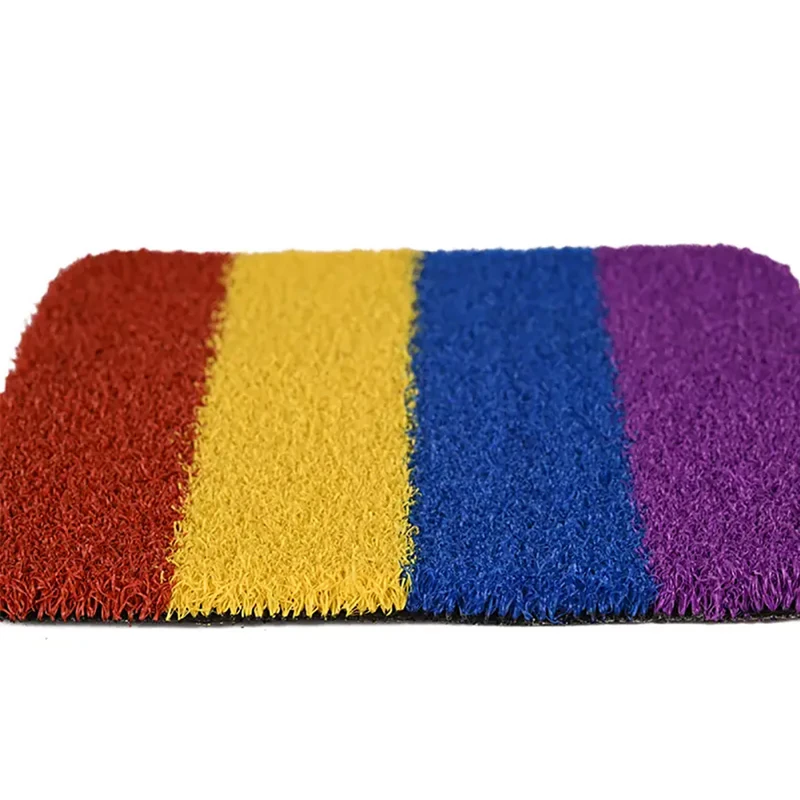
Considering the factors that influence artificial putting green turf durability, Rainbow Putting Green Turf—GOLF7016G is designed to provide a stable, low-maintenance putting surface for residential, recreational, and selected commercial applications.
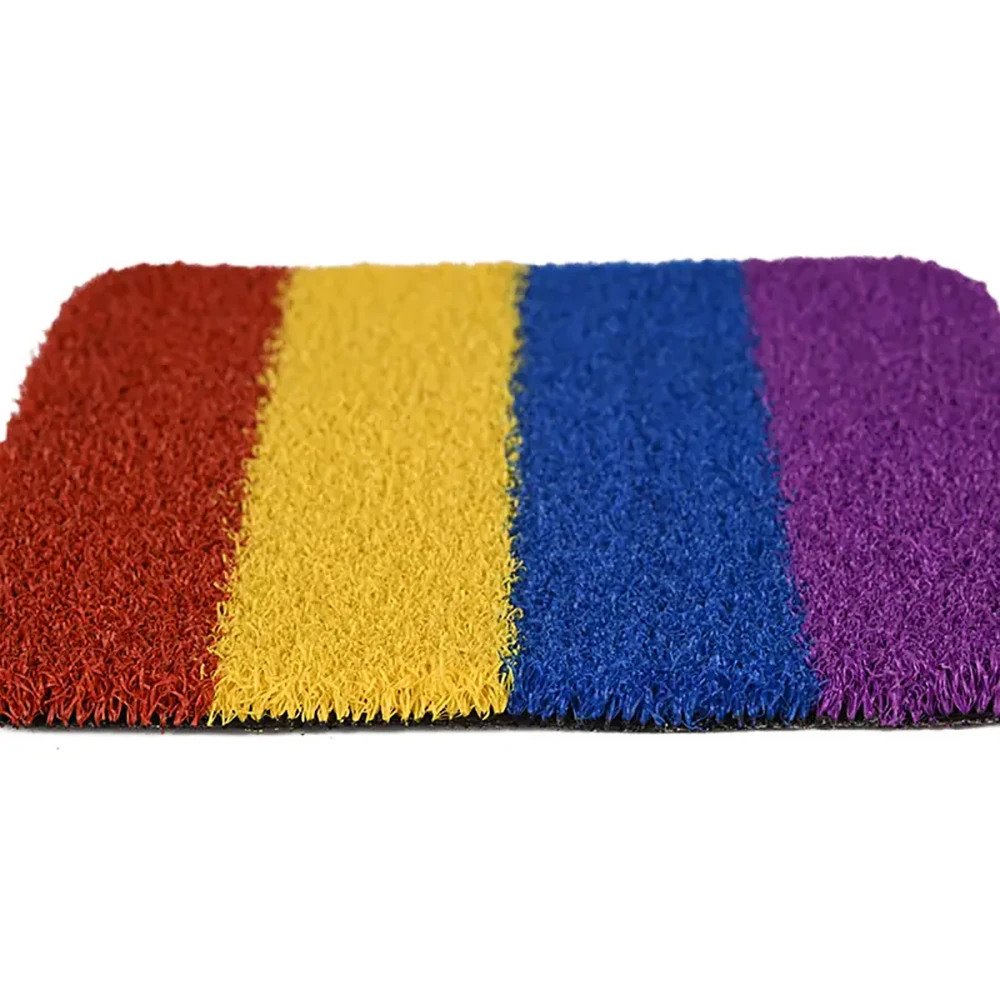
This 16mm artificial putting green turf is suitable for golf practice, leisure areas, and other putting-related projects. The main technical specifications include:
| Specification | Details |
| Model | GOLF7016G |
| Material | FPA/6500 |
| Pile Height | 16mm |
| Density | 70,560 stitches/㎡ |
| Gauge | 5/32 inch |
| Weight | 2.56kg/㎡ |
| Roll Size | 4m × 25m |
| Backing | Three-layer fiberglass high-stabilization anti-aging black-green base fabric |
| Back Coating | XPU coating |
| Colors | Red, Yellow, Blue, Purple |
Durable Fiber Structure for Regular Putting Use
GOLF7016G uses FPA/6500 synthetic yarn with a 16mm pile height and a dense turf structure to provide a stable surface for putting practice and recreational use.
The turf features crimped fibers with a non-directional surface design. This structure helps provide stable footing and supports more controllable ball speed and direction during regular use.
UV-Resistant Fibers and Stable Backing Construction
Designed for outdoor and all-weather applications, the turf features UV-resistant fibers, an XPU back coating, and a three-layer fiberglass high-stabilization anti-aging black-green base fabric.
These construction features help maintain the stability of the turf system under environmental exposure and repeated use. The backing structure also supports overall durability while allowing the turf to maintain its intended shape, stability, and performance over time.
Low-Maintenance Design and Application Flexibility
Compared with natural grass, this turf does not require watering or mowing and is designed for applications where simple maintenance and consistent appearance are important.
The turf supports water permeation, can be freely cut according to installation requirements, and is suitable for different putting green projects.
GOLF7016G is primarily designed for residential and recreational applications, including:
- Residential backyard putting greens
- Private leisure areas
- Luxury community amenity spaces
It can also be used in selected commercial and practice environments, including:
- Golf clubs and training academy practice areas
- Hotel and resort leisure zones
- Indoor golf simulator supporting venues
- Corporate rooftops and terraces
- Mini golf courses
The turf is available in red, yellow, blue, and purple and supports customization options, including pattern customization and woven field lines.
Frequently Asked Questions
Q1: How long does artificial putting green turf usually last?
A: Artificial putting green turf can typically last 8–12 years under normal residential or recreational use, depending on turf quality, installation method, usage level, climate, and maintenance.
Q2: Does artificial putting green turf require regular maintenance?
Yes. Although artificial turf requires much less maintenance than natural grass, regular cleaning, debris removal, and surface inspection help maintain its appearance and performance.
Q3: Is GOLF7016G suitable for outdoor putting greens?
A: Yes. GOLF7016G is designed for outdoor and all-weather applications. With UV-resistant fibers, a stable backing system, and low-maintenance features, it is suitable for residential putting greens, leisure areas, and selected commercial applications.
Conclusion
The service life of putting green artificial turf depends on more than the turf itself. Factors such as UV exposure, fiber structure, pile height, density, backing quality, installation method, usage frequency, and maintenance practices all influence how well the turf performs over time.
When choosing artificial putting green turf, buyers should evaluate the complete system rather than relying on a single specification or lifespan estimate. Matching the turf construction with the intended application, environmental conditions, and maintenance requirements is essential for achieving consistent long-term performance.
With its 16mm pile height, FPA/6500 yarn structure, UV-resistant fibers, stabilized backing system, and low-maintenance design, Rainbow Putting Green Turf—GOLF7016G is a practical option for residential, recreational, and selected commercial putting green applications. Contact X-Nature, a professional putting green turf supplier, for suitable turf solutions and customization options.