Artificial hoarding turf is rapidly becoming the go-to solution for concealing construction sites, improving urban aesthetics, and even adding a touch of green to private gardens and events. If you’ve ever walked past a building site wrapped in vibrant, realistic-looking grass, you’ve already seen it in action. This guide explains its materials, benefits, applications, and key factors to consider when choosing the right product.
What Is Artificial Hoarding Turf?
Definition and Main Purpose
Artificial hoarding turf is a synthetic grass made for vertical and semi-vertical use — wrapping temporary site fencing, perimeter walls, and construction hoardings — with no need for soil, water, or sunlight, turning dull barriers into a clean green facade instantly. Applied to walls, it’s also called wall artificial grass or wall decoration artificial grass, an instant visual upgrade for otherwise unattractive surfaces. Beyond looks, it serves practical functions like dust control, privacy screening, and noise reduction.
How Artificial Hoarding Turf Differs from Standard Landscaping Turf
Both products look similar from a distance, but hoarding turf is engineered differently. Standard landscaping grass is built for horizontal foot traffic, comfort underfoot, and drainage, while hoarding turf prioritizes vertical hang, light weight, backing strength, and resistance to sagging. It typically has a shorter, denser pile and a reinforced backing that won’t stretch or tear when fixed to a fence, with UV and flame-retardant properties suited to exposed outdoor hoardings rather than a shaded lawn.
What Materials Are Used in Artificial Hoarding Turf?
PE and PP Grass Fibers
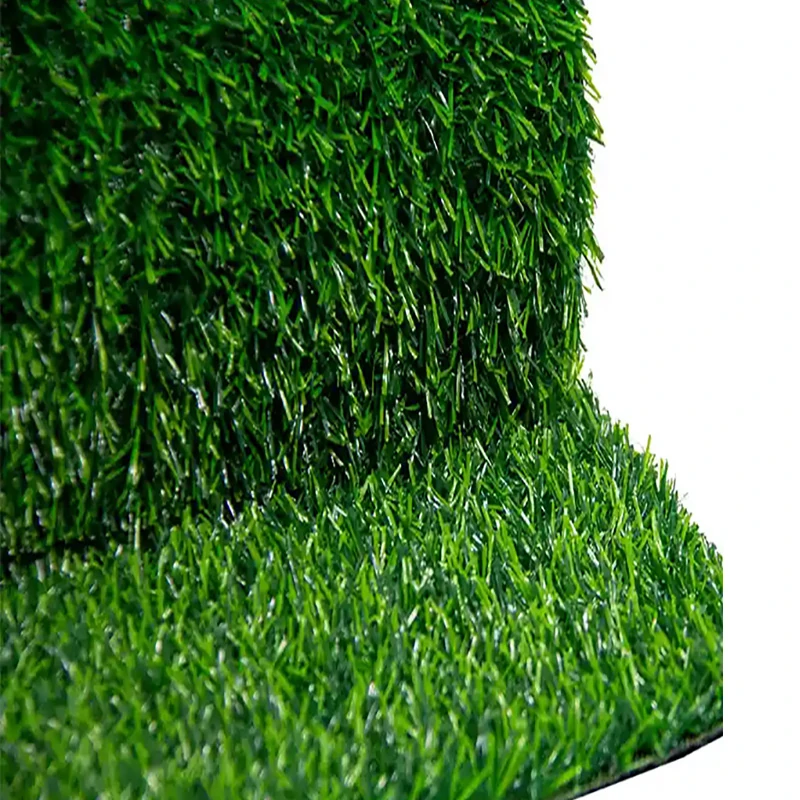
The face fibers of hoarding turf are usually a blend of Polyethylene (PE) and Polypropylene (PP). PP artificial grass fibers offer rigidity and spring-back, keeping blades upright on a vertical surface, while PE fibers add a softer, more natural texture with realistic color retention. Together, straight PE blades and crimped PP thatch create a two-tone, non-reflective surface that looks full and natural from street level.
Backing Materials and Reinforcement Mesh
Behind the green blades, the backing layer does the heavy lifting. High-quality products use a multi-layer backing that bonds the fibers in place: a black-green anti-aging base fabric coated with a strong latex, such as Black SBR Latex, and integrated with a tear-resistant reinforced mesh. This construction resists ripping at nail points and withstands wind suction without distorting, unlike cheap, single-layer alternatives.
UV-Resistant and Flame-Retardant Technology
Because hoarding turf often spends months or years in direct sunlight, the yarn is treated with advanced UV inhibitors to prevent fading and brittleness. Flame-retardant technology matters just as much for construction sites and public spaces. Reputable manufacturers add fire-resistant additives during production so the material won’t easily ignite and self-extinguishes if exposed to flame.
What Are the Key Benefits of Artificial Hoarding Turf?
Improves Construction Site Appearance
The most immediate benefit is a cleaner, greener look. Instead of bare plywood or metal fencing, a project presents a landscaped appearance that integrates better with the surrounding community.
Provides Privacy Screening
The dense face weight of a good hoarding turf creates an effective visual barrier. It shields unsightly work areas, stored materials, and site operations from public view, acting as a superior privacy screen.
Reduces Dust and Noise
On a functional level, the turf acts as a physical filter. It helps trap airborne dust generated by construction, and the fibrous structure can absorb and diffuse a certain amount of job site noise, lessening the impact on neighboring businesses and residences.
UV Resistance for Long-Term Outdoor Use
Unlike natural vines or cheap plastic sheeting that fade and crack within weeks, UV-stabilized artificial hoarding turf retains its color and structural integrity through intense sun, rain, and frost. This weatherproof nature is what makes it a viable choice for multi-year infrastructure projects.
Low Maintenance and Cost Savings
Once installed, the upkeep is virtually zero. There is no watering, no pruning, and no need for pesticides or replacement plants. The only maintenance required is occasional brushing or rinsing to remove accumulated dust. Over a project’s lifecycle, this represents a significant cost saving compared to live green walls or repeated repainting of hoardings.
Eco-Friendly and Safe Materials
Leading products are manufactured from non-toxic, lead-free materials with antibacterial properties. They do not leach chemicals into the ground, making them safe for use around waterways and in sensitive urban environments. The absence of soil and water also eliminates problems with mold and insects.
Where Is Artificial Hoarding Turf Commonly Used?
Construction Site Hoardings
The primary application remains wrapping temporary fences and perimeter panels around building sites, major renovations, and infrastructure works. This use has become a common requirement in many city planning permits.
Municipal and Urban Greening Projects
Cities use it to beautify vacant lots, cover aging retaining walls, and green up public walkways during long-term upgrade works. It delivers an immediate lift to streetscapes without the resource commitment of live planting.
Soil Windproofing Applications
In areas with exposed soil or sand, the turf is laid over vulnerable slopes and stockpiles. It prevents wind erosion and dust generation, acting as a protective and permeable cover that still allows water infiltration. This is a key use for wall artificial grass and similar heavy-duty rolls on non-vertical surfaces.
Gardens, Courtyards and Rooftops
Homeowners and designers have embraced hoarding turf to transform blank fences, boring courtyard walls, and rooftop parapets into green features. It provides a maintenance-free backdrop for potted plants and outdoor seating areas, and works beautifully as wall decoration artificial grass for residential accent walls.
Event and Wedding Decorations
The same turf finds its way into the events industry as a backdrop for photo booths, stage skirts, and themed wedding arches. It creates a lush, natural-looking setting without the mess of real grass or the risk of wilting.
How to Choose the Right Artificial Hoarding Turf
Below is a real-world spec sheet for WD8225, useful as a reference point when comparing hoarding turf options.
| Specification | WD8225 |
| Pile Height | 25mm ±1 |
| Material | PE + PP |
| Color | Two-color |
| Density | 10,500 stitches/m² |
| Gauge | 150 stitches/m |
| Weight | 1.27kg/m² |
| Back Coating | Black SBR Latex |
| Backing | Anti-aging base + tear-resistant mesh |
| Roll Size | 2m × 25m |
| Features | UV-resistant, flame-retardant, auto-permeable |
Select the Appropriate Pile Height
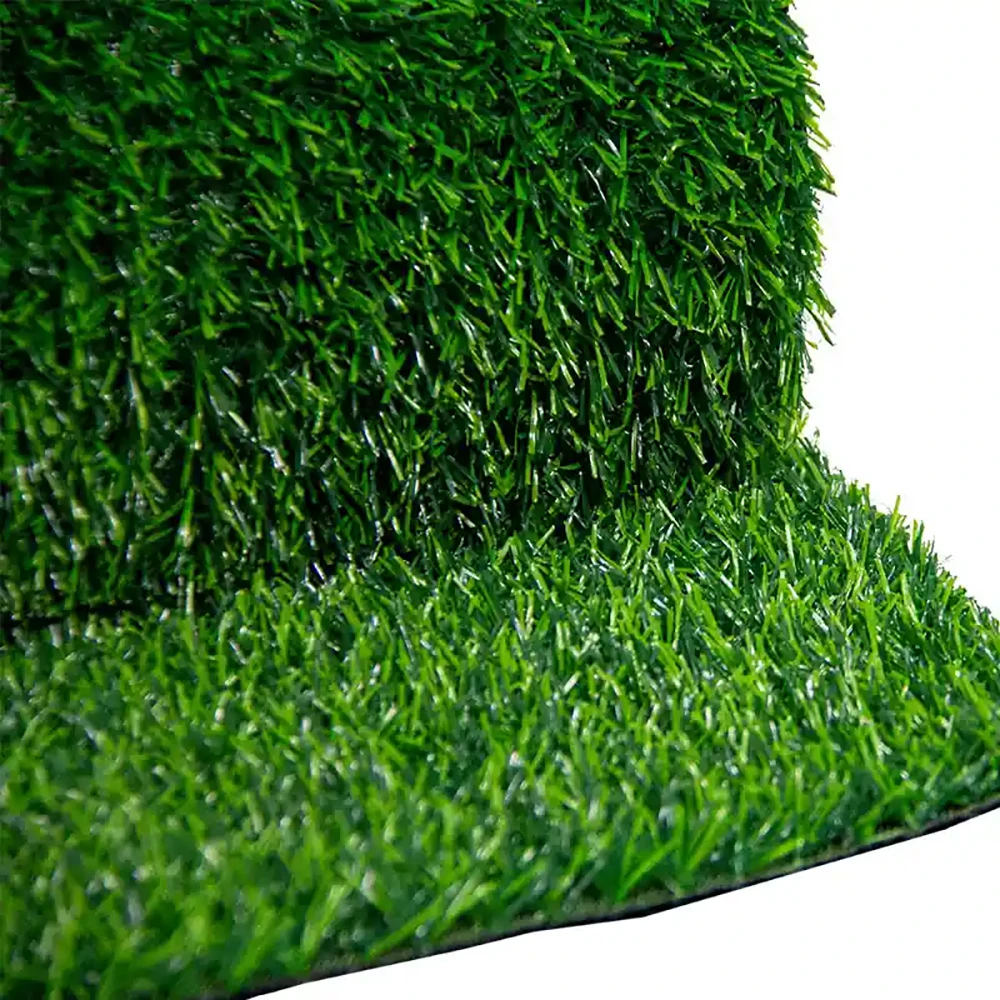
Pile height dictates the look and performance. For hoardings, anything between 10mm and 30mm is common. Too short, and it can look sparse; too long, and the blades may droop. The 25mm height of the WD8225 hits the sweet spot, delivering a plush, upright appearance that effectively conceals the backing without adding unnecessary weight.
Evaluate Density and Yarn Quality
A high stitch density and quality yarn give the turf a fuller, more durable face. Look for a combination of straight and crimped fibers for realism. WD8225 uses a two-tone PE+PP yarn system, with a density of 10,500 stitches per square meter and a 150-stitch gauge. This high density ensures a non-reflective surface and excellent screening capability from day one.
Consider Backing Strength and Durability
The backing must resist tearing when heavy-duty staples are driven through it. Choose a product with a black-green anti-aging base and a tear-resistant reinforced mesh. The WD8225 is built with exactly this, plus a black SBR latex coating, ensuring that even in high winds, the seams and fixing points stay intact.
Check UV Resistance and Fire Performance
Never compromise on safety or longevity. Insist on verified UV-stabilized yarns and flame-retardant treatment. WD8225 is engineered to be both UV-resistant and heat-insulating, and fully flame-retardant, making it suitable for use on sites with strict safety controls and prolonged sun exposure.
Choose the Right Roll Size for Your Project
Standard rolls should minimize waste for typical fence panel dimensions. The WD8225 comes in a convenient 2-meter width by 25-meter length. This size allows for efficient coverage of standard hoarding sections with fewer horizontal joins, speeding up installation and creating a cleaner final look. For large-scale needs, partnering with a professional artificial turf supply company ensures you can secure consistent batch quality and the roll quantities required.
How Is Artificial Hoarding Turf Installed?
Site Preparation
Paving must be done on a rigid base like concrete, asphalt, or cement-hardened ground. The surface should be level, clean, and dry. If the ground is not hardened, it must be compacted and set before installation begins.
Turf Layout and Positioning
Transport the large rolls to the site and unfold them. Before fastening, identify the fiber direction—viewing from the most common angle (like the site entrance) should present a non-reflective, uniform green. Position the panels to run in the same fiber direction to avoid an obvious color split.
Seaming and Adhesive Application
Apply a specialized outdoor adhesive along the center seam and onto a joining tape. Allow the adhesive to become slightly tacky, then bond the tape to the seam. Apply another coat of adhesive over the tape and, when tacky, press the turf edges firmly together to complete a tight, invisible splice.
Final Inspection and Grooming
Before the adhesive fully sets, walk along the seams and press them down to ensure full contact. Use a stiff brush to groom the grass fibers, lifting any blades trapped in the seam, and check all perimeter fixings are secure. The result should be a smooth, continuous green wall.
Frequently Asked Questions
Q1: How long does artificial hoarding turf last outdoors?
A: A well-made, UV-stabilized hoarding turf typically lasts 5 to 8 years outdoors without significant fading. Extreme climates can shorten that slightly, but a dense, reinforced-backing product like the 25mm WD8225 holds up well across a standard multi-year project.
Q2: Will the color match exactly across large orders?
A: Minor color variation between production batches is normal in synthetic turf manufacturing, so for large hoarding projects, it’s best to order everything in a single batch. Laying panels with a consistent fiber direction also helps avoid visible color differences from light reflection.
Q3: Can artificial hoarding turf be installed on different surfaces?
A: Absolutely. It can be fixed to plywood hoardings, metal fences, concrete walls, and scaffolding wraps, as long as the surface can support mechanical fasteners or a suitable adhesive bond. For soil windproofing on slopes, it can also be pegged directly into a hardened or prepared earth base.
Why Choose High-Quality Artificial Hoarding Turf for Commercial Projects?
For site managers, contractors, and municipal planners, material choice affects more than appearance — it affects budget. A product that fades or tears mid-project means costly rework, while a well-built option like the 25mm WD8225, with its reinforced backing and UV-stabilized PE+PP yarn, holds up for the length of a multi-year project without repeat costs.
As an artificial turf supply company, we support commercial orders with expert sizing advice and flexible OEM options for custom branding or specification requirements. For construction hoardings, urban greening, or long-term site screening, it’s a low-maintenance material built to last.