If you pick the wrong type of fencing grass, it can blow your budget or just look cheap and lifeless. The right choice, on the other hand, stays compliant, keeps the site looking neat, and saves you a ton on long-term maintenance.
This guide provides a detailed comparison of two professional products: the 10mm 108J model and the 25mm WD8225 model. This comparison will help contractors or landscaping professionals make an informed choice, especially when working with a reliable synthetic grass manufacturer.
What Exactly Is Hoarding Turf?
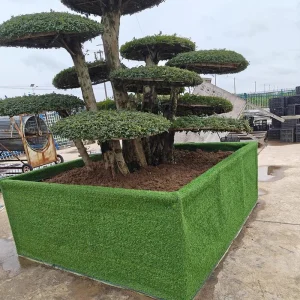
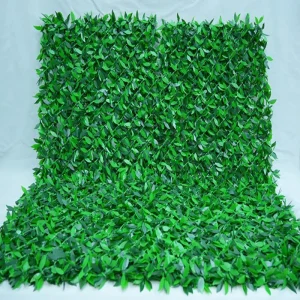
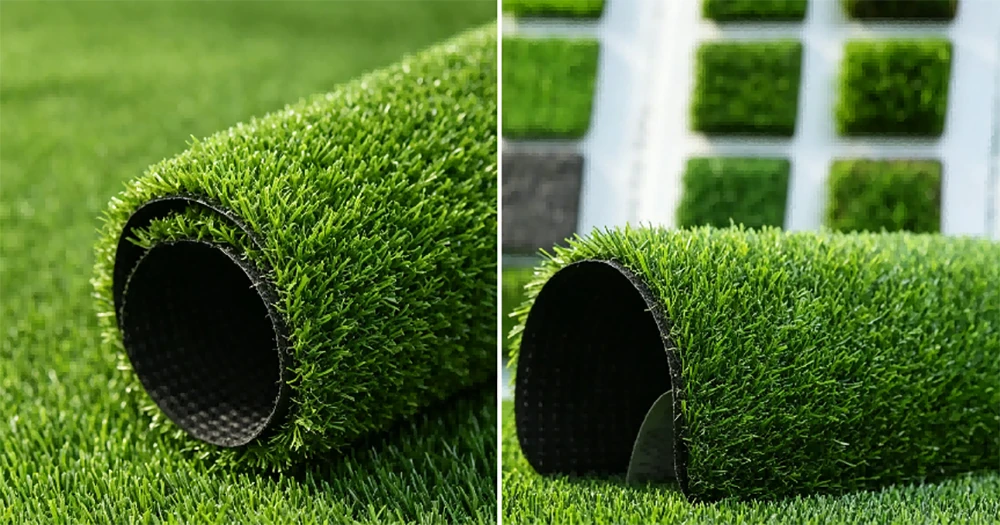
Hoarding turf is a type of wall artificial grass specifically designed for use on construction site barriers and partition walls. Unlike landscaping artificial turf, it is lighter in weight, easier to lay vertically, and can withstand wind, rain, and ultraviolet radiation.
The global synthetic turf market hit roughly $4.1 billion in 2023 and continues growing at around 6.8% annually, driven heavily by urban construction and site beautification requirements. Within that market, two pile heights dominate the hoarding category: 10mm and 25mm. They differ in appearance, installation methods, and applications, with both being top options from a trusted synthetic grass manufacturer.
Quick Comparison Table: 10mm vs 25mm Hoarding Turf
| Feature | 10mm (Model 108J) | 25mm (Model WD8225) |
| Pile height | 10mm | 25mm (±1mm) |
| Material | PP (Polypropylene) / 3500 | PE + PP blend / 8000 |
| Color | Solid green | Two-tone (straight + crimped fibers) |
| Stitch density | 22,608 stitches/m² | 10,500 stitches/m² |
| Weight | 0.42 kg/m² | 1.27 kg/m² |
| Backing | Single-layer | Anti-aging base + tear-resistant mesh |
| Gauge | 5/16 inch | 150 stitches/meter |
| Roll size | 2m × 50m | 2m × 25m |
The 10mm option is lightweight, dense, and budget-friendly, a great basic fencing grass pick. The 25mm version is more realistic and has a longer lifespan, standing out as a premium wall artificial grass choice from leading suppliers.
Appearance and Realism
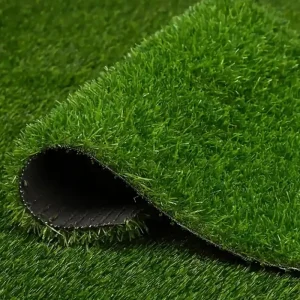
The surface of the 10mm artificial lawn is flat and uniformly colored in solid green. Its simple color scheme works well for basic enclosure and isolation, making it a practical fencing grass option for basic screening needs.
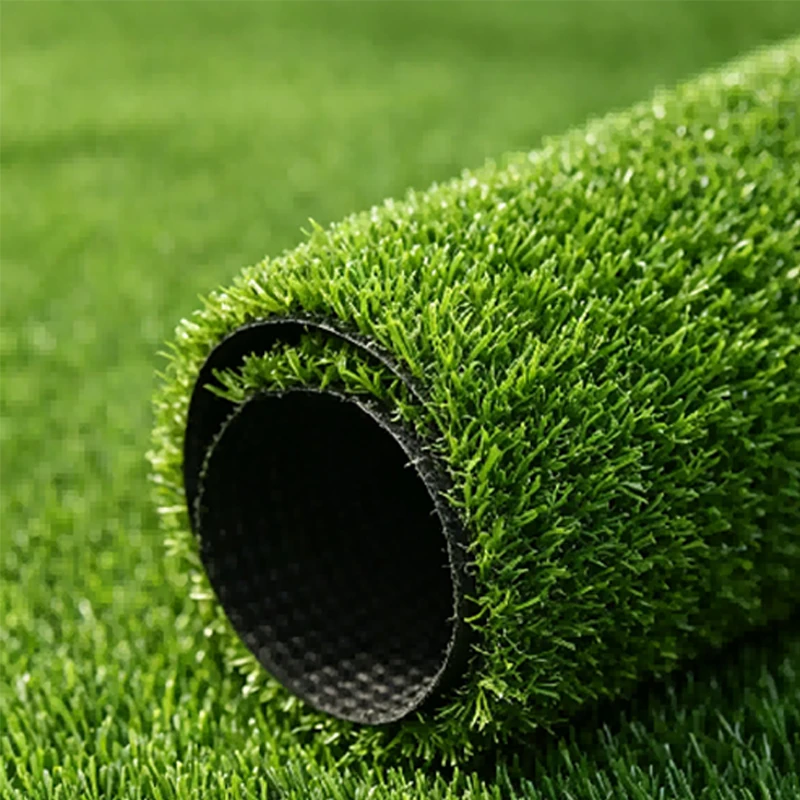
The 25mm style looks far more natural. It uses a mixed weaving technique of straight and crimped fibers, creating layered depth and dimension. Even from a distance, it closely resembles natural grass. The longer blades sway gently in the wind to add a natural texture that the 10mm short lawn simply cannot match. As a top-tier wall artificial grass, it is ideal for high-visibility public-facing sites.
If you need turf for event venues where visual appeal is a priority, the 25mm lawn is the better choice. When there are no additional aesthetic requirements, the 10mm model will fully meet your needs. Both are high-quality products from a professional synthetic grass manufacturer.
Durability and Weather Handling
Both products offer UV resistance and work in all-weather conditions. Where they differ is structural toughness, a key factor when selecting fencing grass for harsh outdoor sites.
The 25mm artificial turf weighs three times as much as the 10mm. This extra weight, combined with its double-layer backing and integrated tear-resistant mesh structure, makes it far more stable in high-wind environments. This is particularly important for open construction sites and tall fencing areas, making it a durable wall artificial grass for long-term use. In most cases, 10mm artificial turf can be used with reinforcement measures, but in areas with extremely strong winds, you will need to add extra fixing points and additional reinforcement – a detail your synthetic grass manufacturer can provide guidance on.
Fire resistance is also a critical consideration. Both products meet standard flame-retardant requirements, but do not rely solely on verbal promises from suppliers. Always request a formal fire test certificate that complies with local building codes. This is an easily overlooked detail, but it is essential for life and safety in an emergency, so it must be verified before installation – regardless of whether you choose fencing grass or wall artificial grass.
Installation: What’s Easier, What’s Trickier
Weight is a key influencing factor in the installation process. The 10mm lawn weighs only 0.42 kg per square meter, which is convenient for handling and installation on scaffolding. Two people can easily carry a large roll of lawn, making it a user-friendly fencing grass for quick setups.
The 25mm-thick lawn is also suitable for use, but at 1.27 kg per square meter, it is more laborious to hoist at height. If you plan to lay it on tall fencing, you should factor in the additional labor costs when installing this premium wall artificial grass.
Longer grass blades make seams much easier to hide. After laying the 25mm thick lawn, simply brush the grass fibers over the seam tape, and the seams will be almost invisible. In contrast, splicing 10mm-thick lawn requires very high precision;
Cutting both types of lawn is straightforward, but the short, dense grass of the 10mm model cuts more cleanly. When cutting 25mm thick lawn, use a sharp blade and cut from the backing side to avoid pulling the grass fibers – a tip shared by experienced teams from leading synthetic grass manufacturer companies.
Cost Breakdown: Upfront vs Long-Term
The 10mm artificial lawn has a lower cost per square meter, is lightweight, and can be laid much faster. For temporary construction site fences with a typical lifespan of only 6 to 12 months, it is the most cost-effective option, making it a budget-friendly fencing grass for short-term projects.
The 25mm artificial turf has a higher upfront cost. However, it is ideal for permanent or semi-permanent installations such as roof garden walls or long-term construction site fences, where its premium appearance makes it well worth the investment as a high-end wall artificial grass.
For these on-site installations, the higher initial investment is well justified. It is more durable, retains its appearance and texture for much longer, and requires less frequent replacement. This makes it a cost-effective long-term investment, especially when sourced from a reliable synthetic grass manufacturer.
Which One Fits Your Project?
Choose 10mm (Model 108J) if:
Budget is the primary driver: You need lightweight material for fast installation on tall fencing; The main goal is dust control and visual screening—not realism; The installation is temporary (under one year); You’re covering a large area and need to keep costs down; You need a practical Fencing grass for basic site needs.
Choose 25mm (Model WD8225) if:
Visual quality matters—sales suites, public-facing hoardings, urban beautification: You want maximum privacy screening from the denser, taller pile; The installation is long-term or permanent; The site gets strong winds and you need the extra weight and strength; You value the added noise-dampening effect of thicker material; You want a premium Wall Artificial grass for high-visibility projects.
FAQ
Q: Is there a color difference between different rolls?
A: Reputable manufacturers strictly control color consistency. However, due to variations between dye batches, there may still be slight color differences between different production runs. Different lighting conditions will also affect how the colors appear visually. For the same project, you should order all required lawn in the same batch whenever possible. When laying the rolls, ensure that all grass blades are facing the same direction to minimize this issue – a standard practice recommended by your synthetic grass manufacturer.
Q: Is there any smell when the lawn is first laid?
A: A slight odor is normal when first unrolling a new product. This smell comes from the manufacturing and packaging process, is non-toxic, and will dissipate within a few days in a well-ventilated area – this applies to both Fencing grass and wall artificial grass.
Q: What maintenance does it require?
A: Almost none. Simply rinse with water occasionally to remove dust. Mild soap will handle any stubborn stains. Avoid using harsh chemical cleaners. The UV treatment prevents fading, so the color will remain vibrant for years without additional treatment – a key benefit of quality turf from a professional synthetic grass manufacturer.
Q: Can I install it in wet or cold weather?
A: The turf itself can withstand any weather conditions. However, during installation, adhesives require a dry surface to bond properly. Avoid applying adhesive in rain or freezing temperatures – this applies to both Fencing grass and Wall Artificial grass.
Q: Which offers better long-term value?
A: For temporary installations under one year, the 10mm turf is more cost-effective. For permanent installations, the 25mm turf’s superior durability and appearance justify its higher price over time – a key point emphasized by experts from top Synthetic Grass Manufacturer companies.
Conclusion:
Neither turf is universally better. The 10mm 108J is a practical fencing grass that gets the job done reliably. The 25mm WD8225 is a premium wall artificial grass solution – dense, realistic, and able to withstand years of wind and sun exposure while enhancing the overall appearance of your construction site.
The right choice depends entirely on how long you need it to last, the visual standards you require, and the environmental conditions it will face. Answer these three questions clearly, and the decision will become obvious – with expert guidance always available from a trusted synthetic grass manufacturer.
Ready to green up your construction site? Contact us today to discuss your specific project requirements, and we will recommend a solution tailored to your unique needs.